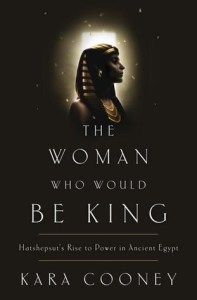
The Woman Who Would Be King: Hatshepsut’s Rise to Power in Ancient Egypt by Kara Cooney (Review #8)

The Woman Who Would Be King: Hatshepsut’s Rise to Power in Ancient Egypt by Kara Cooney 
Blurb

An engrossing biography of the longest-reigning female pharaoh in Ancient Egypt and the story of her audacious rise to power in a man’s world.

Hatshepsut, the daughter of a general who took Egypt’s throne without status as a king’s son and a mother with ties to the previous dynasty, was born into a privileged position of the royal household. Married to her brother, she was expected to bear the sons who would legitimize the reign of her father’s family. Her failure to produce a male heir was ultimately the twist of fate that paved the way for her inconceivable rule as a cross-dressing king. At just twenty, Hatshepsut ascended to the rank of king in an elaborate coronation ceremony that set the tone for her spectacular twenty-two year reign as co-regent with Thutmose III, the infant king whose mother Hatshepsut out-maneuvered for a seat on the throne. Hatshepsut was a master strategist, cloaking her political power plays with the veil of piety and sexual expression. Just as women today face obstacles from a society that equates authority with masculinity, Hatshepsut had to shrewdly operate the levers of a patriarchal system to emerge as Egypt’s second female pharaoh.

Hatshepsut had successfully negotiated a path from the royal nursery to the very pinnacle of authority, and her reign saw one of Ancient Egypt’s most prolific building periods. Scholars have long speculated as to why her images were destroyed within a few decades of her death, all but erasing evidence of her rule. Constructing a rich narrative history using the artifacts that remain, noted Egyptologist Kara Cooney offers a remarkable interpretation of how Hatshepsut rapidly but methodically consolidated power—and why she fell from public favor just as quickly. The Woman Who Would Be King traces the unconventional life of an almost-forgotten pharaoh and explores our complicated reactions to women in power.

Review

I have been wanting to read this book for ages as I have always been fascinated by Ancient Egypt and have always been interested in Hatshepsut. My wonderful husband bought me the book for Christmas so I decided it would be my nonfiction read of February. 

Hatshepsut was an amazing woman and one who was unrivalled for hundreds of years but as usual she was also a woman who was driven out of history. Due to the destruction of her statues, monuments and building projects a lot of her history is lost so Cooney has had to do some educated guesswork about certain aspects of Hatshepsut’s life. Cooney explains her reasoning for the guesswork and it is clear that it is all backed by what she knows about the period in history and also by the evidence of Hatshepsut’s life that does thankfully still survive. 

Cooney’s writing is packed full of information but it is still an easy read that doesn’t make you feel bogged down with information. It almost reads in places like historical fiction but it isn’t. The only criticism that I do have and it did start to drive me a little crazy was the repetition. Cooney would tell you a fact then repeat it either on the next page or a few pages along and it really wasn’t necessary. I started to find myself sighing and thinking why are you telling me this again when you have literally just told me, I don’t need to be told again but with slightly different wording. I will definitely read more books by Cooney and I give this book 4 out of 5 Dragons. 

🐲🐲🐲🐲

Purchase Links

Book Depository | Bookshop.org | Foyles | Waterstones | Wordery

(All purchases made using one of the above affiliate links gives a small percentage of money to myself with no extra cost to yourself. All proceeds go towards the upkeep of this blog. Thank you ever so much, your support is gratefully received.)

About the author

Dr. Kathlyn M. Cooney aka Dr. Kara Cooney is an Egyptologist and Assistant Professor of Egyptian Art and Architecture at UCLA. She was awarded a PhD in 2002 by Johns Hopkins University for Near Eastern Studies. She was part of an archaeological team excavating at the artisans’ village of Deir el Medina in Egypt, as well as Dahshur and various tombs at Thebes.

In 2002 she was Kress Fellow at the National Gallery of Art and worked on the preparation of the Cairo Museum exhibition Quest for Immortality: Treasures of Ancient Egypt. She was a member of the teaching staff at Stanford and Howard University. In 2005, she acted as fellow curator for Tutankhamun and the Golden Age of the Pharaohs at the Los Angeles County Museum of Art. Raised in Houston, she obtained her B.A. from the University of Texas.

She worked on two Discovery Channel documentary series: Out of Egypt, first aired in August 2009, and Egypt’s Lost Queen, which also featured Dr. Zahi Hawass.

Etsy

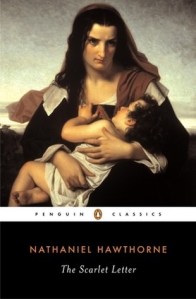
The Scarlet Letter by Nathaniel Hawthorne (Review #7)

The Scarlet Letter by Nathaniel Hawthorne

Blurb

Set in 17th-century Puritan Boston, Massachusetts, during the years 1642 to 1649, it tells the story of Hester Prynne, who conceives a daughter through an affair and will not reveal her lover’s identity. The scarlet letter A (for adultery) she has to wear on her clothes, along with her public shaming, is her punishment for her sin and her secrecy. She struggles to create a new life of repentance and dignity. Throughout the book, Hawthorne explores themes of legalism, sin, and guilt.

Review

I have wanted to read this book since it was mentioned in an episode of Downton Abbey and the Dowager thought the book sounded most unsuitable. It is also one of the books on my Classics Club list. 

I will be honest I almost lost the will to live with this book. The introductory chapter of this book is a lengthy chapter about the author and his life in the Customs office and I must admit I found it extremely dull. I was determined to carry on because the main story had not started yet but I will be honest I almost gave up with the book there and then. 

The storyline of this book is great but sadly Hawthorne could not have written it in a more boring and long winded way. I found that Hawthorne is quite similar to Washington Irving in his writing style and I will be honest I also struggle with Irving. Basically something that could be said in 500 words they insist on using 5000 and I just find myself shouting at the author ‘why? Get to the point!’. 

Hester Prynne is a wonderful character who is thoroughly wronged but because of the time and the place she lives in she is the one who is held up to blame and judged. After Hester’s disgrace she forms a life for herself living in repentance and trying to be the best Christian she can be and because of this people start to accept her again. 

I had to really think about my rating of this book because I just could not get on with Hawthorne’s writing style. I almost gave it a lot lower rating but I reconsidered because I really enjoyed the storyline and the character Hester. Overall, I give this book 3 out of 5 Dragons but I will definitely say it won’t be a book that I read again.

🐲🐲🐲

Purchase Links

Book Depository | Bookshop.org | Foyles | Waterstones | Wordery

(All purchases made using one of the above affiliate links gives a small percentage of money to myself with no extra cost to yourself. All proceeds go towards the upkeep of this blog. Thank you ever so much, your support is gratefully received.)

About the author

Nathaniel Hawthorne was a 19th century American novelist and short story writer. He is seen as a key figure in the development of American literature for his tales of the nation’s colonial history.

Shortly after graduating from Bowdoin College, Hathorne changed his name to Hawthorne. Hawthorne anonymously published his first work, a novel titled Fanshawe, in 1828. In 1837, he published Twice-Told Tales and became engaged to painter and illustrator Sophia Peabody the next year. He worked at a Custom House and joined a Transcendentalist Utopian community, before marrying Peabody in 1842. The couple moved to The Old Manse in Concord, Massachusetts, later moving to Salem, the Berkshires, then to The Wayside in Concord. The Scarlet Letter was published in 1850, followed by a succession of other novels. A political appointment took Hawthorne and family to Europe before returning to The Wayside in 1860. Hawthorne died on May 19, 1864, leaving behind his wife and their three children.

Much of Hawthorne’s writing centers around New England and many feature moral allegories with a Puritan inspiration. His work is considered part of the Romantic movement and includes novels, short stories, and a biography of his friend, the United States President Franklin Pierce.

Etsy

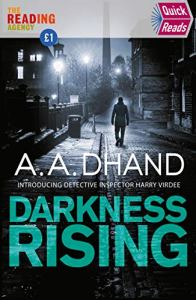
Darkness Rising by A. A. Dhand (Review #6)

Darkness Rising by A. A. Dhand

Blurb

Detective Inspector Harry Virdee has a lot on his plate. His team is facing government cuts, tensions are building between Bradford’s two rival drugs gangs and his wife Saima is due to give birth any day now.

So when bodies start turning up in the old industrial district, the pressure is on to get the case wrapped up as quickly as possible, or risk a full-scale gang war.

But the man behind the murders is ruthless and pushy. And things are getting personal. Harry must think fast and bend the rules if he wants to keep his city, and his family, safe . . .

Review

I picked this up because I was craving a quick and easy read and I always find the Quick Reads series perfect for this. As soon as I picked this book up and started reading it I couldn’t put it down. 

I really like the character of Harry Virdee. Harry wants to protect Bradford, he wants to make it a good place again because it is his home and he has happy memories there as well as painful ones. However, Harry doesn’t always play by the rules that a man of the law should play by. He likes to bend them slightly to get the results he needs. 

Along with cleaning the streets of Bradford from crime with a skeleton team due to cuts he also has a heavily pregnant wife at home who could go into labour at anytime. This can lead to quite a stressful situation when multiple murders suddenly take place and Harry must try and find the murderer.

This book is fast paced and action packed and keeps the reader engaged from start to finish. And unlike certain Quick Reads books it feels like a proper story and not a cut down or rushed story. Although the book doesn’t give much chance for the characters to develop or for the reader to learn the characters’ history, it is a perfect introduction to the series where you hope that you will learn more about the main characters. 

I really enjoyed this book and I plan on reading the next book in the series as soon as it arrives because I am not willing to abandon the characters just yet. I give this book 4 out of 5 Dragons. 

🐲🐲🐲🐲

Purchase Links

Book Depository | Foyles | Waterstones | Wordery

(All purchases made using one of the above affiliate links gives a small percentage of money to myself with no extra cost to yourself. All proceeds go towards the upkeep of this blog. Thank you ever so much, your support is gratefully received.)

About the author

A.A. Dhand was raised in Bradford and spent his youth observing the city from behind the counter of a small convenience store. After qualifying as a pharmacist, he worked in London and travelled extensively before returning to Bradford to start his own business and begin writing. The history, diversity and darkness of the city have inspired his Harry Virdee novels.

Etsy

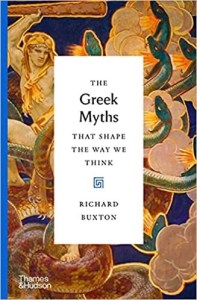
The Greek Myths that Shape the Way We Think by Richard Buxton (Review #5)

The Greek Myths that Shape the Way We Think by Richard Buxton

Blurb

How do ancient Greek myths find themselves retold and reinterpreted in cultures across the world, several millennia later? In this volume, bestselling author Richard Buxton explores the power that eight iconic Greek myths hold in the modern world. Buxton traces these stories and archetypes from their ancient forms through their transformations over time in literature, art, cinema, psychology, and politics.

Review

I bought this book and started reading it last year but I only read the first chapter then for some reason I stopped reading it. This week I decided to pick the book back up and I will be honest I couldn’t put it down or work out why I stopped reading it in the first place. 

As my regular followers will probably know I completed a Masters degree in Classics a couple of years ago and since then I try to regularly read nonfiction about Ancient Greece and Rome. I have never read anything by Buxton before so I was excited to read this book and see what Buxton had to say about some of the myths we know so well. 

The first thing I realised about this book was just how accessible it was. You really don’t have to have a background in Classics to understand this book because Buxton explains everything in a way that anybody can understand. He explains the original myth and what texts the myth appears in. He then explains how the myths appear in Ancient Roman texts and plays and goes from there through history right to modern day. There were some films that he mentioned like The Others (2001) starring Nicole Kidman that I hadn’t even associated with an Ancient Greek myth but when Buxton highlighted the fact it all became clear. 

The other thing I loved about this book was the clever use of images. It is really clear that Buxton has carefully selected his visual sources to help highlight his examples. The images are of ancient vases, ancient sculptors, medieval paintings and modern day images from movies. The images are mainly black and white but there are also some fantastic colour images. 

I will be honest the book only skimmed the edges of the political and psychological aspects of the ancient myths but I suspect that was because Buxton wanted to keep the book as accessible as possible. The focus on the literature, art and cinema definitely makes it more relatable for people. I would have liked a more in-depth look at the political and psychological aspects but I’m not overly disappointed. 

I really enjoyed this book and once I started reading it this week I couldn’t put it down. The book is a fantastic introduction for people who are not familiar with the Ancient Greek myths and makes the myths applicable and relevant to modern day thinking. The book is expertly researched and written and a fantastic read. I will definitely be reading more books by Buxton. 5 out of 5 Dragons from me. 

🐲🐲🐲🐲🐲

Purchase Links

Book Depository | Bookshop.org | Foyles | Waterstones | Wordery

(All purchases made using one of the above affiliate links gives a small percentage of money to myself with no extra cost to yourself. All proceeds go towards the upkeep of this blog. Thank you ever so much, your support is gratefully received.)

About the author

Richard Buxton works on ancient Greek literature (especially tragedy), and ancient mythology and religion. One of his main aims is to explore the contexts – for example, social life and the landscape – which can help us to recover the meanings which myths had for their tellers and hearers/readers (see his Imaginary Greece, 1994, and The Complete World of Greek Mythology, 2004).

In 1996 he organized a major international conference at Bristol, whose proceedings appeared as From Myth to Reason? (1999) Since 2003 he has been one of the editors of Thesaurus Cultus et Rituum Antiquorum and since 2006 he has been President of the LIMC Foundation. His book ‘Forms of Astonishment: Greek Myths of Metamorphosis’ was published in 2009. He will next be revising for publication a selection of his papers on Greek myth and tragedy.

He has taken part in a number of radio programs about myth. His work has been translated into nine languages.

Etsy

If you enjoy reading my blog and would like to make a donation I would be very grateful. Thank you

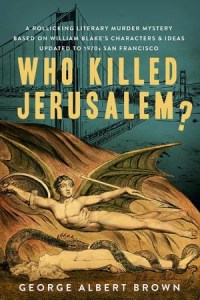
Who Killed Jerusalem? by George Albert Brown (Review #4)

Who Killed Jerusalem? By George Albert Brown

Blurb

In 1977, Ickey Jerusalem, San Francisco’s golden-boy poet laureate, is found dead in a locked, first-class toilet on an arriving red-eye flight.

Ded Smith, a desperately unhappy, intelligent philistine with a highly developed philosophy to match, is called in to investigate the poet’s death. Thus begins a series of hilarious encounters with the members of Jerusalem’s coterie.

Ded soon realizes that to find out what happened, he must not only collect his usual detective’s clues but also, despite his own poetically challenged outlook, get into the dead poet’s mind. Fighting his way through blasphemous funerals, drug-induced dreams, poetry-charged love-making, offbeat philosophical discussions, and much, much more, he begins to piece together Jerusalem’s seductive, all-encompassing metaphysics.

But by then, the attempts to kill Ded and the others have begun.

Before Ded’s death-dodging luck runs out, will he be able to solve the case, and perhaps in the process, develop a new way of looking at the world that might allow him to replace his unhappiness with joy?

Review

Firstly, I would like to say a massive thank you to Mindbuck Media Book Publicity for sending me an advance copy of this book. 

I was really excited to get the opportunity to read this book because I went through a massive William Blake phase when I was at University. I even composed a four part choral piece to Blake’s poem The Tyger and went to several exhibitions of his art work. This knowledge did help me whilst reading this book but I will be honest even at times I had to do some research to make sense of certain things which makes me worry that people with no experience of Blake’s work and his metaphysics would struggle with this book. 

There are some great characters within this book and some characters that I really did not get along with. Sadly, the one character I really did not like was Ded. Ded is rather a sad character who has not had a very happy life so far. His childhood was sheltered and not happy and he has basically been just going through life working and just existing. Although I felt sorry for Ded I really did not like how he acted and found him painfully socially awkward. I also did not like his sexual habits very much. The other character I did not particularly like was Beulah. I found Beulah to be rather childish and very naive. At times I felt sorry for her but at the same time I just wanted her to get angry and react to things. 

Most of the members of Jerusalem’s coterie were hilarious and were the reason I kept reading the book. Ghostflea the chauffeur was definitely my favourite character. Ghostflea had an interesting upbringing and I love how he learnt to drive by reading a book. The image of an erratic driver who really can’t drive driving like a drunk person around San Fransisco in an English hearse was hilarious and had me laughing a great deal. 

The other character that had me laughing was Tharmas. Tharmas basically spends his life as high as a kite and going from one sexual encounter to the next. It was hard to imagine him as a business manager for Jerusalem. 

I will be honest I did find this book a hard slog and what made it worse was that I guessed who the killer was very early on and when I was right it felt like rather a let down and extremely predictable. The ending where Ded explains all his theories in the plane was in my opinion not needed and it felt like Brown was trying to imitate a Poirot book but not as successfully as Christie. Overall, if this book had been shorter I think I would have enjoyed it more but from about half way through it was becoming too much like hard work. I give this book 3 out of 5 Dragons. 

🐲🐲🐲

Purchase Links

Book Depository | Wordery

(All purchases made using one of the above affiliate links gives a small percentage of money to myself with no extra cost to yourself. All proceeds go towards the upkeep of this blog. Thank you ever so much, your support is gratefully received.)

About the author

George Albert Brown, a graduate of Yale University and Stanford Law, started as a hippie in San Francisco’s Haight Ashbury and retired at the age of 40 after having co-founded a successful international finance company. Following stints thereafter as a humorous author (The Airline Passenger’s Guerrilla Handbook) and an angel investor in over a score of high-tech university spinouts, he built a catamaran in Chile and for more than a decade, cruised it across the globe with his significant other. Today, as a father of three grown children, a grandfather of four not-yet-grown children, and an involuntary lover of stray cats, he continues her peripatetic lifestyle by other means.

Etsy

If you enjoy reading my blog and would like to make a donation I would be very grateful. Thank you

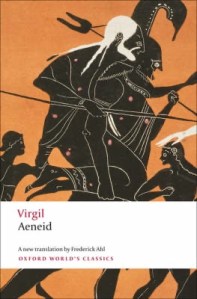
The Aeneid by Virgil (translated by by Frederick Ahl)(Review #3)

The Aeneid by Virgil (translated by by Frederick Ahl)

Blurb

After a century of civil strife in Rome and Italy, Virgil wrote the Aeneid to honour the emperor Augustus by praising his legendary ancestor Aeneas. As a patriotic epic imitating Homer, the Aeneid also set out to provide Rome with a literature equal to that of Greece. It tells of Aeneas, survivor of the sack of Troy, and of his seven-year journey: to Carthage, where he falls tragically in love with Queen Dido; then to the underworld,; and finally to Italy, where he founds Rome. It is a story of defeat and exile, of love and war, hailed by Tennyson as ‘the stateliest measure ever moulded by the lips of man’.

Review

I have finally finished this book! When I first started reading it I was in the middle of my Masters and this sadly had to fall by the way side. However, on the 1st January I decided to read one book a day of this book and yesterday (yes I know a day behind) I finally finished. 

The book begins in Carthage where Aeneas tells his journey to Queen Dido starting from  the fall of Troy where Aeneas and the survivors he manages to gather including his father and son flee Troy and begin their 7 year journey to find a new home. Their journey goes from Carthage, to the Underworld and finally Italy his final destination.  

My first thought about this book is what an amazing piece of propaganda. The amount of propaganda in this book really made me laugh but I think the pinnacle of it was in book 7. In book 7 Anchises shows Aeneas all the descendants that will come from his line and it is quite a list. Aeneas is basically the father of all the great leaders of Rome which seems highly improbable. 

My husband kindly treated me to see Purcell’s Dido and Aeneas opera for my birthday which I absolutely loved but I do think Purcell was rather kind to Aeneas. In truth I always found Aeneas to be a bit of an ass. Whilst he is fleeing Troy he accidentally loses his wife, he does go back and look for her but really he shouldn’t have lost her in the first place. Then what he does with Queen Dido is in my opinion absolutely awful. Yes, I know the gods had something to do with it but really the man did not show any remorse at all and was a complete b__.

The last 6 books of the book is where Aeneas and his men, and we presume some women and children as they are briefly mentioned, land in Italy and all hell breaks loose in war. I loved how all the gods get involved and even some nymphs as this really parallels with Homer’s depiction of the war of Troy. In fact Virgil is very clever with his direct links with Homer’s work. When studying my Masters it was always amazing how much the Romans wanted to be as good as the Ancient Greeks. The Romans copied their sculptures, their texts and much more but always keeping their Roman values. 

I really enjoyed this book and it was a great start to 2023 and my plan to read at least one Ancient Greek or Roman text a month. Virgil was a very talented writer who knew how to write an excellent piece of propaganda. I also loved Ahl’s translation but I knew it would be good as he is one of my favourite translators. I happily give this book 5 out of 5 Dragons. 

🐲🐲🐲🐲🐲

Purchase Links

Book Depository | Bookshop.org | Foyles | Waterstones | Wordery

(All purchases made using one of the above affiliate links gives a small percentage of money to myself with no extra cost to yourself. All proceeds go towards the upkeep of this blog. Thank you ever so much, your support is gratefully received.)

About the author

Publius Vergilius Maro (October 15, 70 BCE – September 21, 19 BCE), usually called Virgil or Vergil /ˈvɜrdʒəl/ in English, was an ancient Roman poet of the Augustan period. He is known for three major works of Latin literature, the Eclogues (or Bucolics), the Georgics, and the epic Aeneid. A number of minor poems, collected in the Appendix Vergiliana, are sometimes attributed to him.

Virgil is traditionally ranked as one of Rome’s greatest poets. His Aeneid has been considered the national epic of ancient Rome from the time of its composition to the present day. Modeled after Homer’s Iliad and Odyssey, the Aeneid follows the Trojan refugee Aeneas as he struggles to fulfill his destiny and arrive on the shores of Italy—in Roman mythology the founding act of Rome. Virgil’s work has had wide and deep influence on Western literature, most notably the Divine Comedy of Dante, in which Virgil appears as Dante’s guide through hell and purgatory.

Etsy

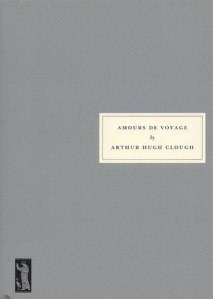
Amours de Voyage by Arthur Hugh Clough (Review #2)

Amours de Voyage by Arthur Hugh Clough

Blurb

Amours de Voyage is a novel in verse and is arranged in five cantos, or chapters, as a sequence of letters. It is about a group of English travellers in Italy: Claude, and the Trevellyn family, are caught up in the 1849 political turmoil. The poem mixes the political (‘Sweet it may be, and decorous, perhaps, for the country to die; but,/On the whole, we conclude the Romans won’t do it, and I sha’n’t’) and the personal (‘After all, do I know that I really cared so about her?/Do whatever I will, I cannot call up her image’). The political is important but the personal dilemmas are the crucial ones.

Claude, about to declare himself, retreats, regrets. It is this retreat, his scruples and fastidiousness, that, like a conventional novel, is the core of Amours de Voyage. The poem thus contributed something important to the modern sensibility; it is a portrait of an anti-hero; it is about love and marriage (the difficulties of); and it is about Italy.

Review

I had never heard of Arthur Hugh Clough before but I was really intrigued when I saw this book in Persephone books so I bought it. I have been reading some pretty hefty books recently so last weekend I thought I would read a shorter book as a quick read and this was the book I chose. 

The first thing I loved about this book was the preface by Julian Barnes. Barnes gave a wonderful description of Clough’s life and the background behind this book. It really set the scene well. 

This was quite a different read for me but one that I flew through. I really loved Claude’s thoughts on Rome as he really was very unimpressed with the whole affair and I found his reactions to it quite amusing. The book is a novel in verse and made up of letters. Claude writes to his long suffering friend Eustace and I say long suffering because I think the poor man has a lot of letters of Claude. The other letters are from the Trevellyn sisters to their friend. 

I will be honest the character Claude was not my favourite. He found Rome boring, he was self centred, looked down on people and only found Mary interesting when she had gone. Personally I think Mary was better off without Claude in her life. Mary thought a lot more about Claude than Claude did about Mary. 

Overall, I loved Clough’s writing and I would love to read more of his work but what let it down for me was simply his main character Claude. I just could not deal with Claude’s selfish behaviour sadly. Due to this I give the book 3 out of 5 Dragons. 

🐲🐲🐲

Purchase Links

Book Depository | Bookshop.org | Waterstones | Wordery

(All purchases made using one of the above affiliate links gives a small percentage of money to myself with no extra cost to yourself. All proceeds go towards the upkeep of this blog. Thank you ever so much, your support is gratefully received.)

About the author

Arthur Hugh Clough (1819-1861) was an English poet, an educationalist, and the devoted assistant to Florence Nightingale. 

Etsy

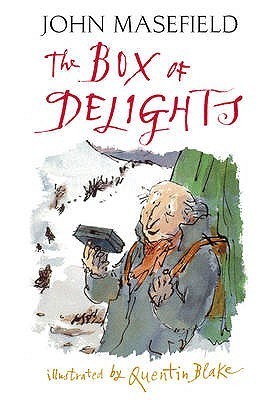
The Box of Delights by John Masefield (Review #1)

The Box of Delights by John Masefield

Blurb

When Kay Harker meets a mysterious Punch and Judy man on his way home for Christmas, he little realizes that he is about to be plunged into adventure. The old man entrusts Kay with a strange puzzle box – the Box of Delights – before suddenly disappearing. Kay soon discovers two things: the box can transport him through time and space, and there is a plot to steal it. He must battle heroically against terrifying forces of evil in order to win the day… 

Review

When I met my husband I was introduced to the BBC adaptation of The Box of Delights because it is their Christmas tradition to watch the series every Christmas. Since then I have really wanted to read the book and this Christmas I bought a copy and got reading. 

I will be honest I have read more children’s books as an adult than as a child and this has got to be one of my favourites. I loved this book so much and even though I read it after Christmas it kept me in the Christmas spirit. 

The slang in this book is absolutely adorable and I know it is appropriate for the time it was written but phrases like ‘scrobbled’ and ‘the purple pim’ just made me smile. The characters in this book are also fantastic and even Maria who I can’t stand in the TV adaptation is bearable in the book. 

This book is so beautifully written and every scene and character is so well described that I could easily visualise everything. Abner Brown is a particular favourite of mine, he was such a fantastic baddie. Herne the Hunter and the Lady of the Oak Tree were also wonderful characters and of course Cole Hawlings. 

The one thing I did find concerning was the lack of interest the police had in reports of kidnapping and missing people. Also certain characters went missing and their nearest and dearest did not seem that concerned.

This book is full of magic and wonder and it really had me enthralled and it had so many wonderful scenes in it that aren’t in the TV adaptation. My particular favourite is lunch with the field mouse in the tree. I loved Masefield’s writing and I have ordered the prequel to The Box of Delights, The Midnight Folk to read next because I am not quite ready to see the end of Kay just yet. I loved this book and it was a great first read of 2023. I give this book 5 out of 5 Dragons. 

🐲🐲🐲🐲🐲

Purchase Links

Book Depository | Bookshop.org | Foyles | Waterstones | Wordery

(All purchases made using one of the above affiliate links gives a small percentage of money to myself with no extra cost to yourself. All proceeds go towards the upkeep of this blog. Thank you ever so much, your support is gratefully received.)

About the author

John Masefield (1878-1967) was an English poet and writer, and Poet Laureate from 1930 until 1967. 

Etsy