Agnes Grey by Anne Brontë (Review)

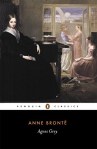
Agnes Grey by Anne Brontë
Blurb

Drawing heavily from personal experience, Anne Brontë wrote Agnes Grey in an effort to represent the many 19th Century women who worked as governesses and suffered daily abuse as a result of their position.

Having lost the family savings on risky investments, Richard Grey removes himself from family life and suffers a bout of depression. Feeling helpless and frustrated, his youngest daughter, Agnes, applies for a job as a governess to the children of a wealthy, upper-class, English family.

Ecstatic at the thought that she has finally gained control and freedom over her own life, Agnes arrives at the Bloomfield mansion armed with confidence and purpose. The cruelty with which the family treat her however, slowly but surely strips the heroine of all dignity and belief in humanity.

A tale of female bravery in the face of isolation and subjugation, Agnes Grey is a masterpiece claimed by Irish writer, George Moore, to be possessed of all the qualities and style of a Jane Austen title. Its simple prosaic style propels the narrative forward in a gentle yet rhythmic manner which continuously leaves the listener wanting to know more.

Review

This year I am determined to read more of my favourite books and I started this off by reading, for the third time, Agnes Grey which is by my favourite Brontë sister. I love all the Brontë sisters but Anne’s books are my all time favourites. 

Agnes Grey is based on Anne’s own experiences as a governess and Agnes’ loving home I imagine is also based on Anne’s home life. Agnes is the youngest child of Richard Grey and because she is the youngest she has always been treated as the baby of the family and like a child. When her family’s fortunes change Agnes wants to be able to work to help the finances but she has to persuade her family that she is an adult and capable of being a governess. 

The book focuses on Agnes’ adventures as a governess and she does face many challenges in her job. Her fist job is positively harrowing to watch and you can’t help but feel frustrated and sorry for Agnes. She has no support from the parents of her charges and no way of disciplining the children as the parents will not allow any form of reprimanding. The scene with the bird’s nest I always find the worst when reading this book and apparently it is exactly what happened when Anne Brontë was a governess. 

Agnes’ time as a governess for a new family is slightly better but her charges, although older, still cause Agnes problems and heart ache. However, her times with this family aren’t all bad and she does form some friendships. 

This book shows us what life could be like for the governess in the 1800’s. The rich families could treat their governesses how they liked. Agnes hoped for a kind family but instead she faced cruelty and humiliation which beat her down and stripped away her innocence. Governesses were always in a limbo; they weren’t servants so they rarely made friends with the servants and they weren’t family so their lives could be very lonely. This book is beautifully written and always makes me think. I will definitely read this book again and give it 5 out of 5 Dragons. 

🐲🐲🐲🐲🐲

Purchase Links

Bookshop.org | Harper Collins | Waterstones | WH Smith

(All purchases made using one of the above affiliate links gives a small percentage of money to myself with no extra cost to yourself. All proceeds go towards the upkeep of this blog. Thank you ever so much, your support is gratefully received.)

About the author

Anne Brontë was an English novelist and poet, the youngest member of the Brontë literary family. Anne’s two novels, written in a sharp and ironic style, are completely different from the romanticism followed by her sisters, Emily Brontë and Charlotte Brontë. She wrote in a realistic, rather than a romantic style. Mainly because the re-publication of The Tenant of Wildfell Hall was prevented by Charlotte Brontë after Anne’s death, she is less known than her sisters. However, her novels, like those of her sisters, have become classics of English literature.

Etsy

If you enjoy reading my blog and would like to make a donation I would be very grateful. Thank you

Friday Poetry: Emily Bronte

Happy Friday!

I hope everyone has had a good week so far and has some good plans for the weekend.

My chosen poem this week is by one of my favourite authors Emily Bronte (1818-1848).

Past, Present, Future

Tell me, tell me, smiling child,
What the past is like to thee?
'An Autumn evening soft and mild
With a wind that sighs mournfully.'

Tell me, what is the present hour?
'A green and flowery spray
Where a young bird sits gathering its power
To mount and fly away.'

And what is the future, happy one?
'A sea beneath a cloudless sun;
A mighty, glorious, dazzling sea
Stretching into infinity.'

Emily Bronte

Happy Reading

Etsy

If you enjoy reading my blog and would like to make a donation I would be very grateful. Thank you

Friday Poetry: Charlotte Bronte

Hello and Happy Friday!

I hope everyone is well and getting to read lots of good books.

My chosen poem this week is by one of my favourite authors Charlotte Bronte.

Life

Life, believe, is not a dream
So dark as sages say;
Oft a little morning rain
Foretells a pleasant day.
Sometimes there are clouds of gloom,
But these are transient all;
If the shower will make the roses bloom,
O why lament its fall?
Rapidly, merrily, 
Life's sunny hours flit by,
Gratefully, cheerily
Enjoy them as they fly!
What though Death at times steps in,
And calls our Best away?
What though sorrow seems to win,
O'er hope, a heavy sway?
Yet Hope again elastic springs,
Unconquered, though she fell;
Still buoyant are her golden wings,
Still strong to bear us well.
Manfully, fearlessly,
The day of trial bear,
For gloriously, victoriously,
Can courage quell despair!

Charlotte Bronte

Happy Reading

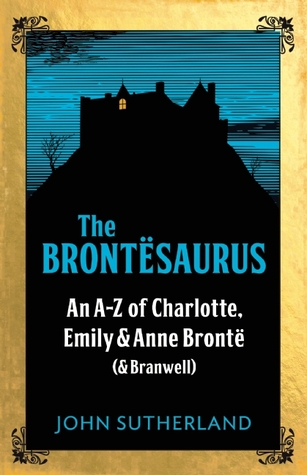
The Brontësaurus: An A-Z of Charlotte, Emily and Anne Brontë (and Bramwell) by John Sutherland (Review)

The Brontësaurus: An A-Z of Charlotte, Emily and Anne Brontë (and Bramwell) by John Sutherland

29363456

About the author

1451

John Sutherland is Lord Northcliffe Professor Emeritus at University College London and an eminent scholar in the field of Victorian fiction. He has published many books including a literary puzzle book called Who is Dracula’s Father?

Blurb

Did Charlotte Brontë take opium? Did the Reverend Brontë carry a loaded pistol? What, precisely, does ‘wuthering’ mean? 

Distinguished literary critic John Sutherland takes an idiosyncratic look at the world of the Brontës, from the bumps on Charlotte’s head to the nefarious origins of Mr Rochester’s fortune, by way of astral telephony, letter-writing dogs, an exploding peat bog, and much, much more. 

Also features ‘Jane Eyre abbreviated’ by John Crace, author of the Guardian’s ‘Digested Reads’ column – read Charlotte Brontë’s masterpiece in five minutes!

Review

I received this book as a Christmas present off my sister in law last Christmas and since then it has been on one of my many TBR piles around the house. When I was waiting for a student to arrive this week I picked up the book and started reading and to be honest I was hooked.

I loved reading this book as it was a fresh take on the Brontë history and not to be taken completely seriously. Most of it I knew as I have read a lot about the Brontës and have visited the Brontë museum twice in recent years. I did realise a lot of it was Sutherlands’s opinions and some of them to be honest were rather sexist but considering he was thinking in Victorian terms I will forgive him, just this once.

I really liked how the book was laid out and that it was short snippets of information which were easy to digest and engaging. The only issue that drove me slightly insane was the constant see this below or above. I could have easily done without that as I found it broke up the narrative.

Bramwell the somewhat forgotten Brontë is mentioned quite a bit in this book which I found interesting as I did not know that much about him. It also made me feel slightly sorry for the poor man as I think generally too much was asked from him and he could not cope.

Charlotte I believe was not portrayed in a good light and yes I know that she could have destroyed a lot of her sisters’ works etc but none of this is proven. I want to believe that she did all her actions for a good cause and wanted to protect her siblings’ reputations rather than promote her own.

The history of the Brontës always makes me feel rather sad as they had such hard and short lives. However, this book showed me the good elements, like their love of animals and the little things in life. It made me smile and happy to realise that although cut short they tried to live their lives to the best.

All in all I enjoyed this book immensely and could not put it down which is unusual for me as I usually struggle with nonfiction books and tend to steer clear of them. Due to these reasons I have rated the book 5 out of 5 Dragons. If you love all things Brontë I highly recommend it.

To Purchase

Waterstones Hardback

Waterstones Paperback

et4jc48lRDewGXf8idH1ZQ

Lady Book Dragon

Friday Poetry

Happy Friday Everyone!

I hope you all have a good weekend planned.

This weeks poem has been chosen because I am currently reading a book about the Brontë’s and I am thoroughly enjoying it. So I decided to choose a poem by Charlotte Brontë.


Life

Life, believe, is not a dream

So dark as sages say;

Oft a little morning rain

Foretells a pleasant day.

Sometimes there are clouds of gloom,

But these are transient all;

If the shower will make the roses bloom,

O why lament its fall?

Rapidly, merrily,

Life’s sunny hours flit by,

Gratefully, cheerily

Enjoy them as they fly!

What though Death at times steps in,

And calls our Best away?

What though sorrow seems to win,

O’er hope, a heavy sway?

Yet Hope again elastic springs,

Unconquered, though she fell;

Still buoyant are her golden wings,

Still strong to bear us well.

Manfully, fearlessly,

The day of trial bear,

For gloriously, victoriously,

Can courage quell despair!


Charlotte Brontë


Lady Book Dragon.

Friday Poetry

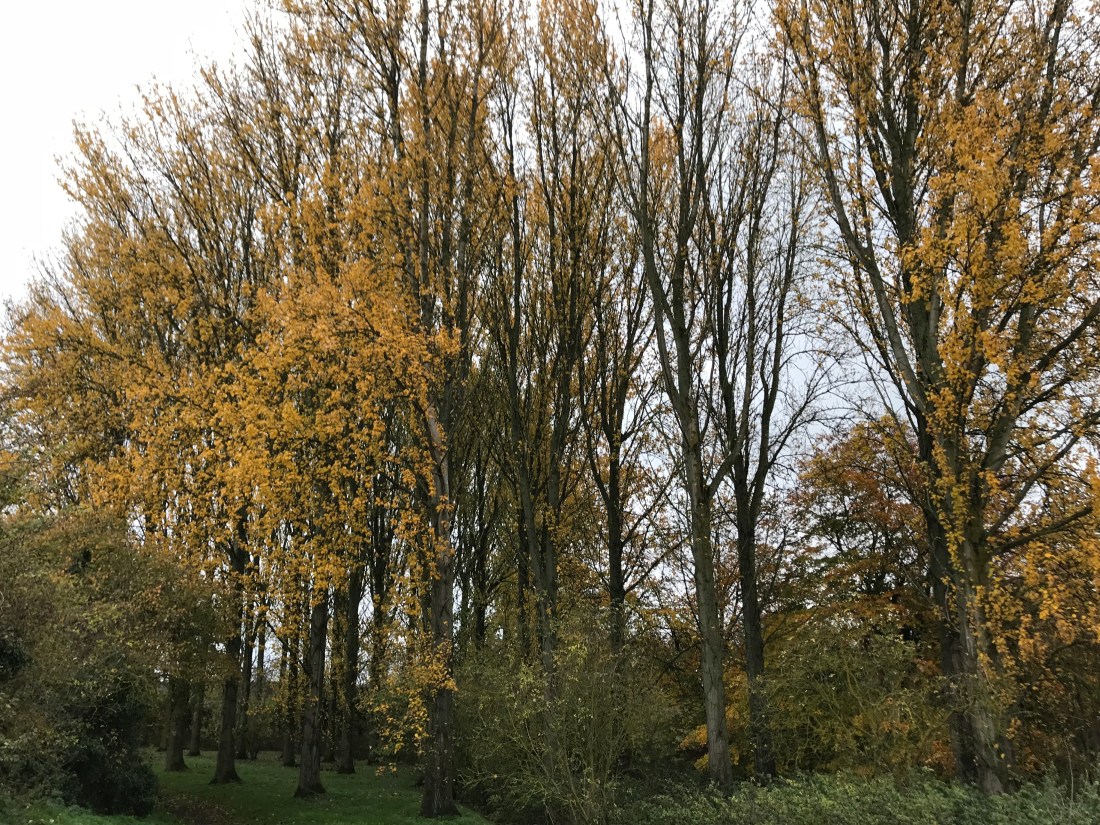
Happy Friday everyone! So the end of the week is here and I have chosen a poem to reflect how the weather has started to change with winter. It is also by one of my favourite authors Emily Bronte. The picture was taken on a recent walk.

Spellbound

The night is darkening round me,

The wild winds coldly blow;

But a tyrant spell has bound me

And I cannot, cannot go.


The giant trees are bending

Their bare boughs weighed with snow.

And the storm is fast descending,

And yet I cannot go.


Clouds beyond clouds above me,

Wastes beyond wastes below;

But nothing drear can move me;

I will not, cannot go.

Emily Bronte

Lady Book Dragon