The Shadow King by Harry Sidebottom (Review)

The Shadow King by Harry Sidebottom

Bookshop.org | Ebook | TG Jones | Waterstones

Blurb

334 BC. Alexander the Great is just twenty-one years old when he sets out with a small army to challenge Persia, the largest and most powerful empire in the world.

Together, his Macedonian army marches East into the unknown – winning battles against overwhelming odds, storming impregnable fortresses from the Aegean through to India.

But there is another Alexander. Prince of the Macedonian royal house of Lyncestis, he becomes Alexander the Great’s general and most trusted friend.

Alexander of Lyncestis is between this friendship and the duty to avenge his murdered brothers. And he is under threat, too. Others – Persians, Greeks, Macedonians – see him him as a rival for the throne. For six years of conspiracy and battle, his life hangs by a thread.

For Alexander of Lyncestis is the Shadow King.

Review

Harry Sidebottom is a new author for me but when I saw this book I thought it sounded like a book that was perfect for me and I was right. 

The first word I would use to describe this book is ‘immersive’. Once I started reading I was captured by the storyline and couldn’t put the book down. The writing is so descriptive that I could imagine I was there in all these incredible battle scenes. The characters are also all fantastically written. I also loved the maps at the beginning of the book which I could refer to and see how Alexander the Great’s campaign progressed. The other element I liked was the Historical Afterward which gave me more information. 

The book is about Alexander of Lyncestis, a man torn between many loyalties but he gave an oath to Alexander the Great and that oath can not be broken. He is also Alexander the Great’s friend and trusted general who has fought in many battles for Alexander the Great. However, he is also a threat towards Alexander the Great and as the book goes on we see just how threatened Alexander the Great begins to feel. 

The book is a brilliant retelling and I believe quite accurate account of the life and deeds of Alexander of Lycestis which has spurred me on to do my own research. Alexander the Great is a character from history that I don’t know much about but after reading this book I did some further research into him and plan on reading some nonfiction books to learn more. I give this book 5 out of 5 Dragons and will definitely be reading more by Harry Sidebottom in the near future. 

🐲🐲🐲🐲🐲

About the author

Harry Sidebottom is Lecturer in Ancient History at Merton College, Oxford, and part-time lecturer in Classics and Ancient History at the University of Warwick. He has written for and contributed to many publications, including Classical Review, Journal of Roman Studies, and War and Society in the Roman World. 

Etsy

If you enjoy reading my blog and would like to make a donation I would be very grateful. Thank you

Medusa by Jessie Burton (Review)

Medusa by Jessie Burton

Blurb

If I told you that I’d killed a man with a glance, would you wait to hear the rest? The why, the how, what happened next?

Monster. Man-hater. Murderess. Forget everything you’ve been told about Medusa.

Internationally bestselling author Jessie Burton flips the script in this astonishing retelling of Greek myth, illuminating the woman behind the legend at last.

Exiled to a far-flung island after being abused by powerful Gods, Medusa has little company other than the snakes that adorn her head instead of hair. Haunted by the memories of a life before everything was stolen from her, she has no choice but to make peace with her present: Medusa the Monster. But when the charmed and beautiful Perseus arrives on the island, her lonely existence is blown apart, unleashing desire, love… and betrayal.

Adapted from the hardback illustrated by Olivia Lomenech-Gill, this paperback edition is perfect for readers who loved Circe and Ariadne, as Medusa comes alive in a new version of the story that history set in stone long ago.

Review

Medusa has always been a favourite of mine and so I always jump at the chance to read a retelling of her story. My current favourite retelling is Stone Blind by Natalie Haynes and I remember I had just finished reading it when I bought this book. Medusa’s myth is legendary and although very sad and clearly written by men it also shows the strength a woman can have. In her earliest depictions Medusa along with her sisters Stheno and Euryale were all gorgons of monstrous form. Aeschylus described all three as winged and hair of snakes there was no mention of Medusa being a beautiful maiden first. It wasn’t until the Roman period the myth of Medusa that we all know so well really took form. 

This was a different take of the Medusa story and I will be honest I did struggle with the change. This is a feminist retelling and the story that we all know so well is completely flipped. I did however really enjoy hearing Medusa’s side of things and I would have loved the book to have been a bit longer so we could have more of that. I really liked how Burton had Medusa working through her trauma during the story. However, I would have also loved to have seen a bit more of Stheno and Euryale and their relationship with Medusa as we only see a little bit of that and the three sisters were such an integral part of each other. 

I did feel this book let Perseus off a little bit and made him look better than he is. To me Perseus has always been a spoilt immature boy who is selfish and arrogant (a typical Greek hero who has a god for a father) and who merely saw Medusa as a means to an end. In this book we see another side to him and I’m not sure he deserves it. In this book he is a scared boy who is worried about his mother who has a whole heap of emotions going on and actually shows some bravery in completing his task when in reality he was a coward who creeped up on Medusa while she was sleeping and cut off her head. He used trickery and treachery to get what he wanted through life and he just didn’t deserve to be so well portrayed.

I flew through this book and did enjoy it to a certain degree but I just couldn’t gel with the story flip or the portrayal of Perseus. I also felt like so much of the story was missing. There is so much material to use in Medusa’s story and this just focused too closely to one part. I give this book 3 out of 5 Dragons. 

🐲🐲🐲

Purchase Links

Bookshop.org | Waterstones | WH Smith

(All purchases made using one of the above affiliate links gives a small percentage of money to myself with no extra cost to yourself. All proceeds go towards the upkeep of this blog. Thank you ever so much, your support is gratefully received.)

About the author

Jessie Burton studied at Oxford University and the Central School of Speech and Drama, where she appeared in productions of The House of Bernarda Alba, Othello, Play and Macbeth. In April 2013 her first novel, The Miniaturist, was sold at an 11-publisher auction at the London Book Fair, and went on to sell in 29 other countries around the world. It was published by Picador in the UK and Holland in July 2014, and the USA in August 2014, with other translations to follow. Radio 4 commissioned it as their Book at Bedtime in July 2014. Her second book, The Muse, set in a dual time-frame, during the Spanish Civil War and 30 years later in 1960s London, was published in 2016. Jessie’s first novel for children, The Restless Girls, will be published in September 2018.

Etsy

If you enjoy reading my blog and would like to make a donation I would be very grateful. Thank you

House of Odysseus by Claire North (Review)

House of Odysseus by Claire North

Blurb

House of Odysseus is the follow up to award-winning author Claire North’s Ithaca “a powerful, fresh, and unflinching” reimagining (Jennifer Saint) that breathes life into ancient myth and gives voice to the women who stand defiant in a world ruled by ruthless men.

In the palace of Odysseus, a queen lies dreaming . . .

On the isle of Ithaca, queen Penelope maintains a delicate balance of power. Many years ago, her husband Odysseus sailed to war with Troy and never came home. In his absence, Penelope uses all her cunning to keep the peace—a peace that is shattered by the return of Orestes, King of Mycenae, and his sister Elektra.

Orestes’ hands are stained with his mother’s blood. Not so long ago, the son of Agamemnon took Queen Clytemnestra’s life on Ithaca’s sands. Now, wracked with guilt, he grows ever more unhinged. But a king cannot be seen to be weak, and Elektra has brought him to Ithaca to keep him safe from the ambitious men of Mycenae.

Penelope knows destruction will follow in his wake as surely as the furies circle him. His uncle Menelaus, the blood-soaked king of Sparta, hungers for Orestes’ throne—and if he can seize it, no one will be safe from his violent whims.

Trapped between two mad kings, Penelope must find a way to keep her home from being crushed by the machinations of a battle that stretches from Mycenae and Sparta to the summit of Mount Olympus itself. Her only allies are Elektra, desperate to protect her brother, and Helen of Troy, Menelaus’ wife. And watching over them all is the goddess Aphrodite, who has plans of her own.

Each woman has a secret, and their secrets will shape the world . . .

Review

I will be honest the previous book Ithaca I could have taken or left it but I decided to give this trilogy another go and I started to read this book. The first twenty or so pages of this book I almost did leave the series as the random ramblings of Aphrodite at the beginning were seriously annoying but I am glad I continued with the book because I soon got into the story. 

This book is not really rooted in the myth of Penelope and Odysseus, or should we say Odysseus because poor Penelope has never featured very heavily in Odysseus’ tale other than when he suddenly remembered he was married and perhaps should be getting home to his wife and out of the other woman’s bed. However, in the little we do know about Penelope we do know she is loyal, clever, cunning and brave and I think it is these qualities that North has used to inspire this book. I could easily see these events happening in the original myth because there is so much that we do not know about Penelope and how she lived those twenty years her husband was from home. 

The absolute star of this book is Laertes. Whenever Laertes appeared I was guaranteed a good laugh. Laertes is a clever old man who really can’t be bothered with being a king. He much prefers living quietly on his farm in his dirty robes and being as eccentric as he pleases. However, with Menelaus appearing on Ithaca and events unfolding he realises he must be there to help Penelope and so arrives at the palace to cause chaos. Laertes knows he has a clever daughter in law and I loved how he took his cues from her and knew precisely what chaos he needed to perform. 

Penelope playing detective was also a nice touch in this book and I honestly had no clue who had performed the crime until the culprit started to show their true colours. I also loved North’s interpretation of Helen. Helen was another character who made me laugh quite a lot. 

The only reason this book didn’t get the full five dragons from me was because I just couldn’t stand Aphrodite. I did love Athena and Artemis appearing and I really liked North’s interpretation of Artemis but Aphrodite really did waffle too much! I enjoyed this book a lot more than Ithaca and I can’t wait to read the final book of the trilogy. I give this book 4 out of 5 Dragons. 

🐲🐲🐲🐲

Purchase Links

Bookshop.org | Waterstones | WH Smith

(All purchases made using one of the above affiliate links gives a small percentage of money to myself with no extra cost to yourself. All proceeds go towards the upkeep of this blog. Thank you ever so much, your support is gratefully received.)

About the author

Claire North is actually Catherine Webb, a Carnegie Medal-nominated young-adult novel author whose first book, Mirror Dreams, was written when she was just 14 years old. She went on to write seven more successful YA novels. 

Etsy

If you enjoy reading my blog and would like to make a donation I would be very grateful. Thank you

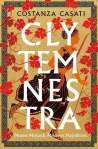
Clytemnestra by Costanza Casati (Review)

Clytemnestra by Costanza Casati

Blurb

As for queens, they are either hated or forgotten. She already knows which option suits her best . . .

Mother. Monarch. Murderer. Magnificent.

You are born to a king, but marry a tyrant. You stand helplessly as he sacrifices your child to placate the gods. You watch him wage war on a foreign shore and comfort yourself with violent thoughts of your own.

You play the part, fooling enemies who deny you justice. Slowly, you plot.

You are Clytemnestra.

But when the husband who owns you returns in triumph, what then?

Acceptance or vengeance – infamy follows both. So you bide your time and wait, until you might force the gods’ hands and take revenge. Until you rise. For you understood something that the others don’t. If power isn’t given to you, you have to take it for yourself.

Review

I haven’t found many Greek retellings of Clytemnestra so I was really pleased to find this book as I think she gets rather a rough deal. She was a strong woman who decided to get revenge and be a queen where only kings have ruled and she was hated for it. Plus let’s face it people always remember her sister Helen more than Clytemnestra. 

Clytemnestra was born a Spartan princess and she was brought up to be a fighter and to be the strongest she could be. She was brought up in a tough world where softness was frowned upon and she thrived. Her father listened to her when she spoke which he rarely did with his other children and he showed pride in her actions. 

I loved how this book also showed Clytemnestra as a soft caring person who loved her sister Helen and wanted nothing but to protect her. She loved her first husband and child with a passion and would do anything for them. However, when Agamemnon comes into her life it all goes wrong and that softness disappears. 

The thing I also loved about this book was how Casati brought in other well known characters from mythology. We see the intelligent and sensible Penelope, the cunning Odysseus, Castor and Pollux (although I would have liked to have seen more of Castor and Pollux) and we even see Timandra heavily featured. 

Considering this is a debut novel I thought it was a brilliantly written book with a very sophisticated and mature writing style and at well over 400 pages I found it a fast paced read that I flew through. I really enjoyed this book and I hope to read more books by Casati soon. I give this book 4 out of 5 Dragons. 

🐲🐲🐲🐲

Purchase Links

Bookshop.org | Waterstones | WH Smith

(All purchases made using one of the above affiliate links gives a small percentage of money to myself with no extra cost to yourself. All proceeds go towards the upkeep of this blog. Thank you ever so much, your support is gratefully received.)

About the author

Costanza Casati was born in Texas in 1995 and grew up in a village in Northern Italy, where she studied Ancient Greek, and Ancient Greek literature, under one of the country’s most rigorous academic programmes. She is a graduate of the prestigious Warwick Writing MA in the UK, and worked as a screenwriter and journalist. Clytemnestra is her debut novel. It has sold into 18 territories worldwide, is a Times bestseller, an Indie Next Pick, and was shortlisted for the HWA Debut Crown Award.

Etsy

If you enjoy reading my blog and would like to make a donation I would be very grateful. Thank you

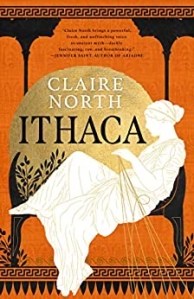
Ithaca by Claire North (Review)

Ithaca by Claire North

Blurb

‘The greatest power we woman can own, is that we take in secret . . . ‘

Seventeen years ago, king Odysseus sailed to war with Troy, taking with him every man of fighting age from the island of Ithaca. None of them have returned, and the women have been left behind to run the kingdom.

Penelope was barely into womanhood when she wed Odysseus. Whilst he lived, her position was secure. But now, years on, speculation is mounting that husband is dead, and suitors are starting to knock at her door . . .

But no one man is strong enough to claim Odysseus’ empty throne – not yet. Between Penelope’s many suitors, a cold war of dubious alliances and hidden knives reigns, as everyone waits for the balance of power to tip one way or another. If Penelope chooses one from amongst them, it will plunge Ithaca into bloody civil war. Only through cunning and her spy network of maids can she maintain the delicate balance of power needed for the kingdom to survive.

On Ithaca, everyone watches everyone else, and there is no corner of the palace where intrigue does not reign . . .

Review

I was really excited when I saw this book whilst book shopping in Bath as I love an Ancient Greek retelling. A book that focuses on Penelope rather than Odysseus was like a breath of fresh air, Odysseus has enough literature about him. 

The other element I really enjoyed was the fact that the gods were involved and we could see their interactions with each other and with the mortals. So many retellings tend to ignore the gods because I think people don’t see them as trendy enough anymore but they play a vital role in the myths and I believe they should still be included. 

Hera is the main god to feature in this book and it was really nice to see her involved as it is usually the male gods taking centre stage or the impressive female gods like Athena and Artemis. 

Penelope is the queen of Ithaca but as all queens of Greece she might appear beautiful and regal but she has very little power. Clytemnestra is a perfect example of what happens to a queen of Greece who tries to rule in a mans world and Penelope knows she must avoid this at all costs. So Penelope is the perfect example of a meek and mild woman who listens to her male advisors and appears to be the perfect queen. However, behind the scenes we see a very different queen. Penelope is a woman of two faces and we get to see both. 

I really got into this book and really enjoyed it to start with but towards the middle the story really started to drag for me and to be honest I got a little bored. This meant my reading slowed down which made the book worse because it felt like it was never-ending. Thankfully, I kept with the book because the ending was better. This book was really well written but I felt it was just too long and could have been shorter. Overall, I enjoyed the book but for me it did drag. However I will give the next book in the series a chance because I would like to see what happens next. I give this book 3 out of 5 Dragons. 

🐲🐲🐲

Purchase Links

Book Depository | Bookshop.org | Foyles | Waterstones | Wordery

(All purchases made using one of the above affiliate links gives a small percentage of money to myself with no extra cost to yourself. All proceeds go towards the upkeep of this blog. Thank you ever so much, your support is gratefully received.)

About the author

Claire North is actually Catherine Webb, a Carnegie Medal-nominated young-adult novel author whose first book, Mirror Dreams, was written when she was just 14 years old. She went on to write seven more successful YA novels. 

Etsy

Politically Correct Holiday Stories For an Enlightened Yuletide Season by James Finn Garner (Review)

Politically Correct Holiday Stories For an Enlightened Yuletide Season by James Finn Garner

Blurb

Holiday tales have long delighted and entertained us, but until now they’ve always been burdened with society’s skewed values and mores. Stories that reinforce the stifling class system (Dickens’s A Christmas Carol), legitimise the stereotype of a merry, over-weight patriarchal oppressor (Santa Claus in The Night Before Christmas), and justify the domestication and subjugation of wild animals (Rudolph the Red-Nosed Reindeer) abound in the literature and lore of this season. Now James Finn Garner has stepped in to revise and improve these familiar tales to free our social consciousness from the ghost of prejudice past. From the newly revised “Nutcracker” to “Frosty the Persun of Snow”, these stories rekindle the true holiday spirit and redefine the idea of “good will to all men” to include womyn, pre-adults, and companion animals as well.

Review

I picked this up from a National Trust second hand bookshop. When I saw the book I immediately picked it up because I thought it looked like quite a fun read. The book was clearly brand new as well which also added to the appeal. 

At only 99 pages I thought this would be quite a quick read for me but it turned out that it took me a while to read rather than flying through it like I normally would. This is probably because I didn’t really gel with this book and wasn’t so keen to pick it up and read it.

I can understand the appeal of this book because it is political correctness in overdrive and it kind of has a funny appeal to it but after a while it just started to get on my nerves. My favourite story was the retelling of A Christmas Carol. This was because of Scrooge’s fantastic reactions to the spirits that visit him especially the last spirit. In fact I was a little disappointed with the ending because I really wanted Scrooge to act on his new philosophy. 

Rudolph the Nasally Empowered Reindeer was probably my least favourite story as Rudolph was just too irritating. 

Overall, I did enjoy this book but it didn’t really hook me in and didn’t have me as gripped as I expected. This is definitely a book that I could take or leave and I give this book 3 out of 5 Dragons. 

🐲🐲🐲

About the author

James Finn Garner is an American writer and satirist based in Chicago. He is the author of Politically Correct Bedtime Stories, Tea Party Fairy Tales, and Honk Honk, My Darling.

Etsy

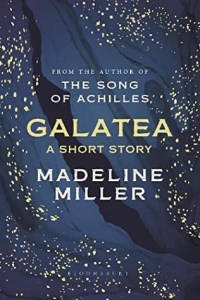
Galatea by Madeline Miller (Review)

Galatea by Madeline Miller

Blurb

In Ancient Greece, a skilled marble sculptor has been blessed by a goddess who has given his masterpiece – the most beautiful woman the town has ever seen – the gift of life. Now his wife, Galatea is expected to be obedience and humility personified, but it is not long before she learns to use her beauty as a form of manipulation. In a desperate bid by her obsessive husband to keep her under control, she is locked away under the constant supervision of doctors and nurses. But with a daughter to rescue, she is determined to break free, whatever the cost…

Review

I do love Madeline Miller so when I saw this short story I immediately preordered the book off Waterstones. I read this short story over a mug of tea one afternoon between teaching. 

I know the story of Pygmalion which was first told in the now lost Hellenistic work “De Cypro” by Philostephanus and then retold in Ovid’s Metamorphoses. In Ovid’s telling, Pygmalion is a king and sculptor who carves a statue of a woman out of ivory and falls in love with the statue. Aphrodite answers Pygmalion’s prayers and turns the statue to a real life woman who he marries. The woman never actually gets a name in the original texts and the name Galatea which means “she who is milk white” was not associated with Pygmalion’s statue until approximately the early 1700’s. 

In Miller’s retelling of this tale the focus is on Galatea rather than Pygmalion which makes a nice change from the usual male perspective. In this retelling Galatea says she was made out of stone rather than ivory but this fits better with Miller’s retelling than ivory would. 

I did enjoy this little story and it was nice to hear Galatea’s voice because she doesn’t get a voice in Ovid’s version. As a reader you can’t help but feel sorry for Galatea who never had any say on her life from the moment Pygmalion carved her and you can see how she suffers. I really wish this story had been longer as I think it would have made an excellent book, as a short story I just didn’t feel like it had enough in it to really get me absorbed into the book like I have been with Miller’s full length books. I give this book 3 out of 5 Dragons. 

🐲🐲🐲

Purchase Links

Book Depository | Foyles | Waterstones | Wordery

(All purchases made using one of the above affiliate links gives a small percentage of money to myself with no extra cost to yourself. All proceeds go towards the upkeep of this blog. Thank you ever so much, your support is gratefully received.)

About the author

Madeline Miller was born in Boston and grew up in New York City and Philadelphia. She attended Brown University, where she earned her BA and MA in Classics. For the last ten years she has been teaching and tutoring Latin, Greek and Shakespeare to high school students. She has also studied at the University of Chicago’s Committee on Social Thought, and in the Dramaturgy department at Yale School of Drama, where she focused on the adaptation of classical texts to modern forms. She currently lives in Cambridge, MA, where she teaches and writes. The Song of Achilles is her first novel.

If you enjoy reading my blog and would like to make a donation I would be very grateful. Thank you

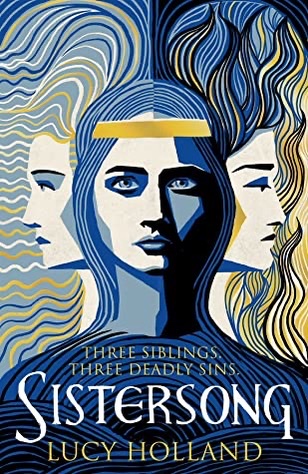
Sistersong by Lucy Holland (Review)

Sistersong by Lucy Holland

Blurb

535 AD. In the ancient kingdom of Dumnonia, King Cador’s children inherit a fragmented land abandoned by the Romans.

Riva, scarred in a terrible fire, fears she will never heal.

Keyne battles to be seen as the king’s son, when born a daughter.

And Sinne, the spoiled youngest girl, yearns for romance.

All three fear a life of confinement within the walls of the hold – a last bastion of strength against the invading Saxons. But change comes on the day ash falls from the sky, bringing Myrddhin, meddler and magician, and Tristan, a warrior whose secrets will tear the siblings apart. Riva, Keyne and Sinne must take fate into their own hands, or risk being tangled in a story they could never have imagined; one of treachery, love and ultimately, murder. It’s a story that will shape the destiny of Britain. 

Review

I will be honest I struggled with this book and at least twice I considered not finishing it. However, I am pleased that I did finish it because it did pick up and I really enjoyed the second half. I think my main problem was that I just found the beginning rather slow and to be honest annoying. 

The story is based around the lives of three sisters and two of these sisters at times drove me mad. Sinne was the worst culprit for driving me mad and it was simply because she was a spoiled brat who was very immature and rather heartless. Sinne spends her time dreaming of romance and adventures and not living in the real world and because of this she does not see what is happening around her or that people she loves are hurting. 

Riva is a troubled character, she was terribly burned in a fire when she was young and although she is now healed but left with scars she is clearly not healed mentally. At times I felt sorry for Riva but I also despaired at her naivety and just wanted to shake her at times. 

Keyne was my favourite character and the reason I carried on reading. Keyne was born a daughter but clearly wants to be a son but nobody sees this in her and everyone just thinks she is a silly girl who dresses in boys’ clothes. As the story goes on you see Keyne develop as a character and become what he was meant to be. Keyne can see in people their true worth and also is not so easy to trust people.

Osred was another favourite of mine, he is sworn to serve Tristan and can not speak but he silently watches and is a true friend to Sinne. Tristan however was not a favourite of mine and I did not trust him at all. 

The book is full of magic and wonder but it is also the tale of three sisters who are so different from each other that only love and their parents really holds them together. It is also an interesting telling of how Christianity was starting to be introduced into Britain. Overall, I give this book 3 out 5 Dragons.

🐲🐲🐲

Purchase Links

Book Depository | Foyles | Waterstones | Wordery

(All purchases made using one of the above affiliate links gives a small percentage of money to myself with no extra cost to yourself. All proceeds go towards the upkeep of this blog. Thank you ever so much, your support is gratefully received.)

About the author

Lucy Holland works for Waterstones and has a BA in English and Creative Writing from Royal Holloway. She went on to complete an MA in Creative Writing under Andrew Motion in 2010. Lucy lives in Devon and co-hosts Breaking the Glass Slipper, an award-winning feminist podcast. 

If you enjoy reading my blog and would like to make a donation I would be very grateful. Thank you

The Women of Troy by Pat Barker (Review)

The Women of Troy by Pat Barker

Blurb

Troy has fallen. The Greeks have won their bitter war. They can return home victors, loaded with their spoils: their stolen gold, stolen weapons, stolen women. All they need is a good wind to lift their sails.

But the wind does not come. The gods have been offended – the body of Priam lies desecrated, unburied – and so the victors remain in limbo, camped in the shadow of the city they destroyed, pacing at the edge of an unobliging sea. And, in these empty, restless days, the hierarchies that held them together begin to fray, old feuds resurface and new suspicions fester.

Largely unnoticed by her squabbling captors, Briseis remains in the Greek encampment. She forges alliances where she can – with young, dangerously naïve Amina, with defiant, aged Hecuba, with Calchus, the disgraced priest – and begins to see the path to a kind of revenge. Briseis has survived the Trojan War, but peacetime may turn out to be even more dangerous…

Review

When I saw this book I knew I had to read it, especially as I studied the women of Troy last year for an assignment. We sadly don’t know much about Briseis and we definitely don’t know for sure what happened to her once Achilles was killed. Some believe that Achilles gave her to one of his comrades in arms and this is the story line that Barker has gone with for this book.

We start the story with the sacking of Troy and the death of Priam. After the battle the story is mainly told by Briseis but is occasionally seen from Calchus the high priest and Pyrrhus’ point of view. 

Briseis is not a slave like the other women of Troy because she is now married to Alcimus, so she has more freedom around the camp. However, Briseis knows what it is to see her family killed and to be taken as a slave by the Greeks so she endeavours to help the women of Troy as much as she can. 

Briseis is a wonderful character in this book as she has troubles of her own but she really tries to help the women of Troy. However, at times I did find her rather naive and that did annoy me slightly. 

Hecuba was perfect in my opinion and as I always imagined her. Even though her kingdom has fallen and she is now a slave owned by Odysseus she still has her pride. The only thing that knocks her is her grief but she still keeps on going. Cassandra was a rather a surprise because sadly she is usually portrayed as insane but Barker was very kind about her. Pyrrhus was another mystery but really he is a lost little boy trying to fill his father’s shoes and always feeling lacking. 

I really found this take on the aftermath of the fall of Troy very refreshing and it was wonderful to have a story about one of the women of Troy that isn’t Helen. I really enjoyed this book but I was disappointed at the end because I really wanted to find out what happened with Briseis’ and Alcimus’ relationship, all it needed was a couple of extra pages. I give this book 4 out of 5 Dragons and I thank NetGalley and Penguin UK for giving me an ARC of this book.

🐲🐲🐲🐲

Purchase Links

(Due for publication on the 26th August 2021)

Book Depository | Foyles | Waterstones | Wordery

(All purchases made using one of the above affiliate links gives a small percentage of money to myself with no extra cost to yourself. All proceeds go towards the upkeep of this blog. Thank you ever so much, your support is gratefully received.)

About the author

Pat Barker was born in Thornaby-on-Tees in 1943. She was educated at the London School of Economics and has been a teacher of history and politics. 

Her books include the highly acclaimed Regeneration trilogy Regeneration; The Eye in the Door, winner of the Guardian Fiction Prize; and The Ghost Road, winner of the Booker Prize; as well as seven other novels. She’s married and lives in Durham, England.

If you enjoy reading my blog and would like to make a donation I would be very grateful. Thank you

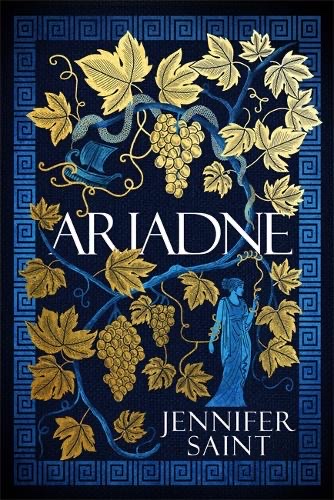
Ariadne by Jennifer Saint (Review)

Ariadne by Jennifer Saint

Blurb

As Princesses of Crete and daughters of the fearsome King Minos, Ariadne and her sister Phaedra grow up hearing the hoofbeats and bellows of the Minotaur echo from the Labyrinth beneath the palace. The Minotaur – Minos’s greatest shame and Ariadne’s brother – demands blood every year.

When Theseus, Prince of Athens, arrives in Crete as a sacrifice to the beast, Ariadne falls in love with him. But helping Theseus kill the monster means betraying her family and country, and Ariadne knows only too well that in a world ruled by mercurial gods – drawing their attention can cost you everything.

In a world where women are nothing more than the pawns of powerful men, will Ariadne’s decision to betray Crete for Theseus ensure her happy ending? Or will she find herself sacrificed for her lover’s ambition?

Ariadne gives a voice to the forgotten women of one of the most famous Greek myths, and speaks to their strength in the face of angry, petulant Gods. Beautifully written and completely immersive, this is an exceptional debut novel

Review

I do love a Greek myth retelling especially if it is fairly faithful to the actual myth. This Greek myth was a refreshing read because it was told from the viewpoint of the women instead of the usual male heroes. 

The main voice we hear in this story is Ariadne. Ariadne is the granddaughter of Helios but the only sign of this is her beautiful blonde hair. Ariadne’s life in Crete is not easy once her brother the Minotaur is born, her life is haunted by the sound of the Minotaur living beneath her feet. However, a way out of this existence presents itself and Ariadne grabs it with both hands. 

The other voice that we hear from is Phaedra who is Ariadne’s younger sister. Phaedra is the complete opposite to her sister, she is full of spirit and is not afraid of anything and has the ability to rule. 

This retelling really highlights what is always there in the original myths but always remains in the background. Men strut around being heroes, fighting the monsters and vanquishing enemies, they draw the attention to the gods and when they upset the gods the gods make them pay by making their wives and female relatives pay. I think that is the main vein of the story that runs through this book, women are always the ones who pay the price and poor Ariadne really does pay. 

I loved this retelling and although there were a few historical inaccuracies which I only picked out because I’m a classics student, the story was beautifully written and one that I couldn’t put down. I really felt every hurt and wrong that poor Ariadne and Phaedra suffered but at the same time I loved their strength and belief in standing up for themselves. I also loved how the male characters within this story took a backseat, Theseus, Perseus and Dionysus have had far too much attention over the years. I give this book 5 out of 5 Dragons.

🐲🐲🐲🐲🐲

Purchase Links

Book Depository | Foyles | Waterstones | Wordery

(All purchases made using one of the above affiliate links gives a small percentage of money to myself with no extra cost to yourself. All proceeds go towards the upkeep of this blog. Thank you ever so much, your support is gratefully received.)

About the author

Jennifer Saint grew up reading Greek mythology and was always drawn to the untold stories hidden within the myths. After thirteen years as a high school English teacher, she wrote ARIADNE which tells the legend of Theseus and the Minotaur from the perspective of Ariadne – the woman who made it happen. Jennifer Saint is now a full-time author, living in Yorkshire, England, with her husband and two children.

If you enjoy reading my blog and would like to make a donation I would be very grateful. Thank you