
Politically Correct Holiday Stories For an Enlightened Yuletide Season by James Finn Garner
Blurb
Holiday tales have long delighted and entertained us, but until now they’ve always been burdened with society’s skewed values and mores. Stories that reinforce the stifling class system (Dickens’s A Christmas Carol), legitimise the stereotype of a merry, over-weight patriarchal oppressor (Santa Claus in The Night Before Christmas), and justify the domestication and subjugation of wild animals (Rudolph the Red-Nosed Reindeer) abound in the literature and lore of this season. Now James Finn Garner has stepped in to revise and improve these familiar tales to free our social consciousness from the ghost of prejudice past. From the newly revised “Nutcracker” to “Frosty the Persun of Snow”, these stories rekindle the true holiday spirit and redefine the idea of “good will to all men” to include womyn, pre-adults, and companion animals as well.
Review
I picked this up from a National Trust second hand bookshop. When I saw the book I immediately picked it up because I thought it looked like quite a fun read. The book was clearly brand new as well which also added to the appeal.
At only 99 pages I thought this would be quite a quick read for me but it turned out that it took me a while to read rather than flying through it like I normally would. This is probably because I didn’t really gel with this book and wasn’t so keen to pick it up and read it.
I can understand the appeal of this book because it is political correctness in overdrive and it kind of has a funny appeal to it but after a while it just started to get on my nerves. My favourite story was the retelling of A Christmas Carol. This was because of Scrooge’s fantastic reactions to the spirits that visit him especially the last spirit. In fact I was a little disappointed with the ending because I really wanted Scrooge to act on his new philosophy.
Rudolph the Nasally Empowered Reindeer was probably my least favourite story as Rudolph was just too irritating.
Overall, I did enjoy this book but it didn’t really hook me in and didn’t have me as gripped as I expected. This is definitely a book that I could take or leave and I give this book 3 out of 5 Dragons.
🐲🐲🐲
About the author
James Finn Garner is an American writer and satirist based in Chicago. He is the author of Politically Correct Bedtime Stories, Tea Party Fairy Tales, and Honk Honk, My Darling.
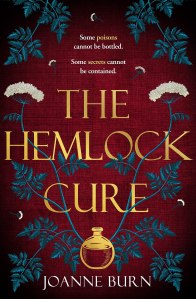
A glitteringly dark historical novel of love, persecution, and survival set against the backdrop of one of history’s most terrifying episodes: the Bubonic Plague.
It is 1665 and the women of Eyam village keep many secrets. Especially Isabel and Mae.
Isabel Frith, the village midwife, walks a dangerous line with her herbs and remedies. There are men in the village who speak of witchcraft, and Isabel has a past to hide. So she tells nobody her fears about the pious, reclusive apothecary, on whom she is keeping a watchful eye.
Mae, the apothecary’s youngest daughter, dreads her father’s rage if he discovers what she keeps from him: her feelings for Rafe, Isabel’s ward, or the fact that she studies from her father’s books at night.
But others have secrets too. Secrets darker than any of them could have imagined.
When Mae makes a horrifying discovery, Isabel is the only person she can turn to. But helping Mae will place them both in unimaginable peril. Meanwhile another danger is on its way from London. One that threatens to engulf them all. . .
Review
I found this book whilst browsing in Toppings and Company whilst in Bath a couple of months ago. I had never come across Joanne Burn before but seeing this book on display I was attracted by the title and the blurb and decided to give the book a read. I am so pleased I decided to read this book because I absolutely loved it.
This book is based on true events that happened during the plague in 1666. The village of Eyam quarantined itself in an attempt to stop the plague spreading. They sacrificed their own lives to try and save others. Certain characters within this book are also based on real characters from the village as well.
I must admit to begin with I was a little confused with who was telling the story but I soon worked out the different voices and thought it was really cleverly done. I won’t say any more about the different narrators because I don’t want to spoil it for people.
Mae is a confused young girl who lives in fear of her father but at the same time desperately wants to prove to her father that she is worthy of his pride and can be useful to him. To escape her rather tense life at home she visits her friend Isabel who is the village midwife and whose family welcomes Mae as one of their own. At Isabel’s she feels loved and welcome and of course there is also Rafe who is the ward of Isabel and her husband. Mae has feelings for Rafe but due to her age she is confused and can’t quite make sense of these feelings.
This book is full of secrets. Mae has secrets she keeps from her father, Isabel has secrets she keeps from public view and Wulfric has secrets he only tells his diary and God. The whole village is full of secrets and as the story progresses we begin to see glimpses of these secrets and what they mean for the characters.
The book is beautifully written and I will be honest I couldn’t put it down. The book kept me on tenterhooks all the way through and I loved every page. It is probably one of my favourite reads for 2022. I will be definitely reading Joanne Burn’s first novel and any further books. I give this book 5 out of 5 Dragons.
(All purchases made using one of the above affiliate links gives a small percentage of money to myself with no extra cost to yourself. All proceeds go towards the upkeep of this blog. Thank you ever so much, your support is gratefully received.)
About the author
Joanne Burn was born in Northampton in 1973, and now lives in the Peak District where she works as a writing coach. Her first novel, Petals and Stones, was published in 2018. The Hemlock Cure is her second novel.
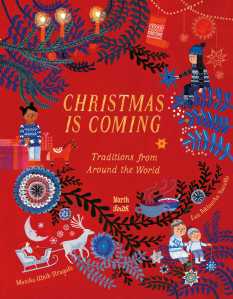
Christmas Is Coming: Traditions from Around the World by Monika Utnik-Strugala
Blurb
The perfect book for long wintery evenings—not just under the Christmas tree!
Why do we decorate Christmas trees? Do all children receive gifts on the same day?
Come find out as Monika Utnik-Strugala captures the smells, tastes, and unforgettable traditions about the most popular, exciting, contemplative, and unqiue Christmas customs and legends from around the world. Find out why celebrate Christmas on December 25th, who invented the first glass ornament, why people build nativity scenes, and more!
A truly international collection of legends and traditions are included in the volume such as – Glögg, Kutia, Lutefisk, Jansson’s Temptation, Julskinka, Bûche de Noël, Hallaca, Kourabiedes, Christmas Pudding, Panettone, Christmas carols, talking animals, and The Nutcracker!
With the atmospheric illustrations by Ewa Poklewska-Koziello, this is an ideal companion for the Christmas season.
Review
I bought this book December 2021 but I didn’t manage to read it before the end of December so I decided to save it for this year instead. I usually start my Christmas books on the 1st December but today I couldn’t resist starting my Christmas reading list. Turns out I also couldn’t put this book down and read it in one day!
The thing that attracted me to this book was the gorgeous illustrations by Ewa Poklewska-Koziello. Every page contains beautiful illustrations which really help make the book come alive.
The book starts at the start of Advent and ends with Epiphany on 6th January. The book explains the traditions that different countries follow on the run up to Christmas, during Christmas and after Christmas.
I will be honest but I found that certain countries had a lot more attention than others. Considering the book is meant to be from around the world a lot of the traditions mentioned are from Poland and Russia which I suppose is because of the author’s background.
I think this is a great book for children and adults but the occasional errors in the text did put me off and the repeated sentence was an error that really should have been picked up. In all honesty what made this book for me was the gorgeous illustrations and without the illustrations I would be giving this book a much lower rating. I give this book 4 out of 5 Dragons.
(All purchases made using one of the above affiliate links gives a small percentage of money to myself with no extra cost to yourself. All proceeds go towards the upkeep of this blog. Thank you ever so much, your support is gratefully received.)
About the author
Monika Utnik-Strugala studied romance studies at the University of Warsaw in Poland and is a lifestyle and design journalist. She made her debut with a children’s book about Italian culture. In Italy she likes to spend her free time in her beloved country house.
‘I want a change. To be in the midst of things – exciting things – even if I’m only the looker-on. You know, things don’t happen in St Mary Mead.’
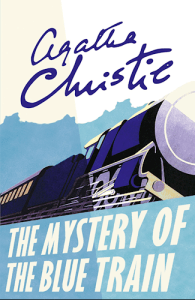
When the luxurious Blue Train arrives at Nice, a guard attempts to wake Ruth Kettering from her slumbers. But she will never wake again – for a heavy blow has killed her, disfiguring her features almost beyond recognition. What is more, her precious rubies are missing.
The prime suspect is Ruth’s estranged husband, Derek. Yet Poirot is not convinced, so he stages an eerie re-enactment of the journey, complete with the murderer on board…
Review
I read quite a lot of this book sat on a very fancy train and yes I chose to read this book because I knew I would be sat on said train.
I must be honest I remembered seeing this one on TV but the TV version is nowhere near as good as the book. The TV versions just never get Poirot right or should I say Papa Poirot!
Christie starts to set the scene with Van Aldin getting the renowned rubies and giving them to his daughter Ruth Kettering. Once Ruth gets on to the Blue train things soon take a sinister turn. Ruth is found dead in her cabin with her head so badly smashed in she is unrecognisable and the rubies are gone. Then Poirot appears on the scene to help the French police solve the crime because as he happily tells people he is possibly the greatest detective in the world.
As the story progresses there are a lot of red herrings that the reader and Poirot have to work through and with this story Poirot doesn’t have his usual Hastings to rely on and bounce ideas off. However, Poirot does find a new sidekick to help him solve the crime. Miss Grey has been a companion most of her adult life and now she has come into a fortune she is free and wants her life to start so she leaves the quiet little village of St Mary Mead and goes on the Blue Train to start her first adventure. Poirot befriends Miss Grey and they work together to get the answers they need.
I really enjoyed how this story developed and how Poirot worked through all the clues and also used some careful guesswork to get the answers he needed. All this builds up to the very dramatic ending which has you sitting at the edge of your seat. I would have liked to have seen a bit more of Miss Grey as I really liked her character but I really enjoyed how she and Poirot interacted. I thoroughly enjoyed this book and could not put it down so I give it the full 5 out of 5 Dragons.
(All purchases made using one of the above affiliate links gives a small percentage of money to myself with no extra cost to yourself. All proceeds go towards the upkeep of this blog. Thank you ever so much, your support is gratefully received.)
About the author
Agatha Christie (1890-1976) was an English writer known for her 66 detective novels and 14 short story collections. She also wrote the world’s longest running play, The Mousetrap. She also wrote 6 novels under the name Mary Westmacott.
Under the Greenwood Tree is Hardy’s most bright, confident and optimistic novel. This delightful portrayal of a picturesque rural society, tinged with gentle humour and quiet irony, established Hardy as a writer.
However, the novel is not merely a charming rural idyll. The double-plot, in which the love story of Dick Dewey and Fancy Day is inter-related with a tragic chapter in the history of Mellstock Choir, hints at the poignant disappearance of a long-lived and highly-valued traditional way of life.
Review
Thomas Hardy is one of my favourite authors and I am hoping to one day manage to read all of his novels. This book had been sat on my TBR pile for way too long so I decided it was high time to read this book.
To start with I absolutely loved this book and could not put it down. I think what drew me into this book so much was the church musicians. As a church organist and a musician myself I found the church musicians fascinating and I also found it sad as the church traditions were slowly being eroded away by a forward thinking vicar who is not quite so considerate of his congregation but is very happy to blame the church wardens for his decisions. Having recently read Scenes of Clerical Life by George Eliot I found quite a few parallels between the two books.
I also loved how the church band are very anti clarinets and clarinet players. As a reluctant clarinet player myself I found this hilarious! I also loved how they use Dumbledore as an insult, turns out Dumbledore doesn’t just mean bumblebee.
The other plot in this book is the love story of Dick and Fancy. Dick is a hard working lad who falls instantly head over heels for Fancy and in that moment decides to make himself worthy of her. In all honesty Fancy is not worthy of Dick, she is clearly very spoiled and quite frankly vain and shallow. Dick on the other hand will walk for miles in the rain to be a pallbearer for a friend’s funeral, Dick will go out of his way to help people and is honest and kind hearted.
I struggled after a while with this book. I disliked Fancy’s character which didn’t help because I really wanted people to see her true character. I also struggled with the local dialect. Having to constantly read the local dialect slowed things down for me and made reading a bit of a hard slog. Overall, I liked the plot line of the church musicians, although I did find it sad but the storyline of Dick and Fancy I could have happily done without. I give this book 3 out of 5 Dragons.
(All purchases made using one of the above affiliate links gives a small percentage of money to myself with no extra cost to yourself. All proceeds go towards the upkeep of this blog. Thank you ever so much, your support is gratefully received.)
About the author
Thomas Hardy (1840-1928) was an English novelist and poet. A Victorian realist in the tradition of George Eliot. He was highly critical of much in Victorian society, especially on the declining status of rural people in Britain.
A ruthless international cartel seeks world domination…
Framed in the doorway of Poirot’s bedroom stood an uninvited guest, coated from head to foot in dust. The man’s gaunt face stared for a moment, then he swayed and fell.
Who was he? Was he suffering from shock or just exhaustion? Above all, what was the significance of the figure 4, scribbled over and over again on a sheet of paper? Poirot finds himself plunged into a world of international intrigue, risking his life to uncover the truth about `Number Four’.
Review
I haven’t read many Agatha Christie novels this year which is bad because I am trying to read all of her novels in order of publication so this one has been on my TBR pile for a very long time.
My first impression of this book was wow what a lot of characters! Christie is a master of juggling many plot lines and lots of characters but this book is overflowing with characters. I know Christie liked to include a lot of characters because this was perfect for creating red herrings but it seemed like every chapter there were another new load of characters to get to grips with. To be honest I struggled at times to keep up with all the characters in this book but I think I managed it.
In this story Hastings has returned which I am very pleased about because he always makes me laugh. He is always convinced he knows more than Poirot but of course he has no idea at all. It is also very clear that Poirot has been missing his good friend Hastings.
The story begins with a strange man somehow turning up in Poirot’s bedroom and collapsing but not before giving Poirot a vital clue which will set the scene for the rest of the book. As the story continues Poirot finds just how far the Big Four are willing to go to take control of the world. The story sees Poirot travelling all over the place and encountering any number of characters from Professors to Government officials, from Criminals to Nobility.
The one thing I did find with this story was it didn’t flow like Christie’s usual books and it felt at times like it was pieced together. After some research I found out that this book was actually made up of 12 short stories that Christie had written and published in a magazine. This made a lot of sense for me because once I knew I realised that this was why I struggled with the pace of the book and sheer amount of characters.
Although I felt the amount of characters was overkill and struggled with the lack of fluency with the story I still thoroughly enjoyed it and couldn’t put it down. Poirot was on his usual fine form and Hastings was still his bumbling self and I loved every minute of it. I give this book 4 out of 5 Dragons.
(All purchases made using one of the above affiliate links gives a small percentage of money to myself with no extra cost to yourself. All proceeds go towards the upkeep of this blog. Thank you ever so much, your support is gratefully received.)
About the author
Agatha Christie (1890-1976) was an English writer known for her 66 detective novels and 14 short story collections. She also wrote the world’s longest running play, The Mousetrap. She also wrote 6 novels under the name Mary Westmacott.
Unable to forgive herself for the death of her two-year-old son Bobby in a car accident, Menley Nichols’ marriage to Adam starts to fall apart – until the birth of their daughter Hannah. Determined to rebuild a life together around their precious baby, Menley and Adam decide to rent a house on Cape Cod for a month, confidant that the tranquility of the place will be ideal for Menley and little Hannah. But the peace they crave is disturbed when strange things start to happen – incidents which make Menley relive the horror of the accident in which she lost Bobby… incidents which make her fear for Hannah. And step by step, Menley and Adam are drawn into a dark and sinister web of events which threatens their marriage, their child and ultimately Menley’s sanity.
Review
I read my first Mary Higgins Clark book about four years ago and at the time I didn’t realise it was also her first published novel but I really enjoyed it and she turned into an author I always keep an eye out for her books. Just recently at my church someone has obviously had a clear out of Mary Higgins Clark books, leaving them at the back with the other second hand books, so I have been snapping them up whenever I see one I haven’t read. This is where Remember Me came from.
This is definitely my favourite Mary Higgins Clark book so far. I couldn’t put it down and it had me hooked with no idea what was going on or what would happen next. Menley and Adam have rented out Remember House on Cape Cod for a month where they hope to get the much needed rest together and time to relax as a family together with their baby daughter Hannah.
Menley plans to work on her next book during this month away and so delves into research and work which is where she is happiest. It also gives her a chance to escape the past where Bobby her two year old son was killed in a car accident. However, this planned month of family bliss is not quite as quiet as they planned because Adam keeps being called away to work. This means Menley is left alone with the baby and strange things start to happen at night that start to make Menley question her sanity and fear for baby Hannah’s safety.
There are a lot of strange events that happen in this book and I never had a clue of what to expect next. However, there were certain aspects of the story that were clearly not right and alarm bells were going off in my head that circumstances were not quite right but I couldn’t work out how these things were happening or who was responsible. I had quite a shock when it was all revealed at the end. I also loved the very last paragraph of the book and thought it linked everything up with the Remember House and Menley’s research.
This book is very cleverly written by Clark because it keeps the reader hooked but doesn’t give much away. I also loved Clark’s descriptions especially of Remember House because I could easily picture the house in my mind. I could not put this book down and give this book 5 out of 5 Dragons.
(All purchases made using one of the above affiliate links gives a small percentage of money to myself with no extra cost to yourself. All proceeds go towards the upkeep of this blog. Thank you ever so much, your support is gratefully received.)
About the author
Mary Higgins Clark (1927-2020) was an American author of suspense novels. She published 51 books and each one was a United States best seller.
The Complete Book of the Flower Fairies by Cicely Mary Barker
Blurb
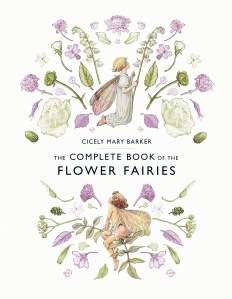
This complete collection of Cicely Mary Barker’s Flower Fairies features a brand-new enchanting cover.
Perfect for fans of all ages, this wonderful collection includes all the original Flower Fairy poems and illustrations by Cicely Mary Barker from the classic books.
Since the publication of Cicely Mary Barker’s first book in 1923, the Flower Fairies have been ethereal companions to generations of readers around the world. Her charming poetry and delicate illustrations have sparked the imaginations of children for over ninety years and continue to inspire a life-long love for fairies and all things magical.
Review
This beautiful book was my birthday present off my parents and a book that has been on my wishlist for ages. I was so excited I started reading it straight away.
This fantastic book is just stunning as the illustrations are beautiful. Each fairy is unique and all match the flower or plant that they are with perfectly matched with. Barker was clearly a very talented artist because the flowers and plants are so well drawn I could easily recognise all the plants (well the ones I am familiar with). I can imagine Barker studying each plant in detail to get the very best illustration.
Each fairy is accompanied by a beautifully written poem by Barker which is also associated with each plant and clearly shows that Barker really knew her plants. I also loved how certain poems had little facts attached to them about the plants, for example whether the plant was poisonous or known by another name. I really learned a lot from these attached facts and discovered that plants I know are also known by other names.
I had so many favourite illustrations and poems but my absolute favourite was the Christmas Tree fairy and I plan on rereading this poem when it is closer to Christmas. I would also love some prints of certain illustrations because they would look stunning on display rather than hidden in a book.
Barker in my opinion was an extremely talented artist and really knowledgable about plants. I loved this book and fully intend to dip into this book from time to time and remind myself of these beautiful illustrations and poems throughout the year. I give this book a massive 5 out of 5 Dragons.
(All purchases made using one of the above affiliate links gives a small percentage of money to myself with no extra cost to yourself. All proceeds go towards the upkeep of this blog. Thank you ever so much, your support is gratefully received.)
About the author
Cicely Mary Barker (1895-1973) was the illustrator who created the famous Flower Fairies; those ethereal smiling children with butterfly wings. As a child she was influenced by the works of the illustrator Kate Greenaway, whom she assiduously copied in her formative years. Her principal influence, however, was the artwork of the Pre-Raphaelites.
Tells the story of a young married woman who lies down on a chaise-longue and wakes to find herself imprisoned in the body of her alter ego ninety years before.
Review
A couple of days ago I went book shopping at one of my favourite bookshops Persephone Books in Bath and I came away with quite a few books. When I saw this book in the shop it really intrigued me so as soon as I got back to the hotel I started reading it and I was hooked.
Melanie is a young wife and recent mother in the 1950’s but sadly she is confined to her bed with TB. She has a rather patronising doctor and an equally patronising husband who both treat her like a small child. Her husband thinks she is silly and even tells her this and because she is petted and spoiled and told she is silly she acts like an over privileged spoiled brat.
Things soon turn rather sinister for Melanie after she dozes off on the chaise-longue. Melanie wakes up in a different room and the only constant is the chaise-longue, even her clothes and body are different but she is Melanie inside, on the outside however she is somebody else who is called Milly and Milly is from the Victorian period.
As the story develops it soon becomes clear that Milly is also a very sick woman but because of the lack of medical knowledge in the Victorian period Milly is not doing as well as Melanie was. It also becomes clear that Milly has a dark secret and something sinister happened in her past.
The trapped Melanie soon realises that this new world she finds herself in is the polar opposite to the one she comes from. Melanie is used to comforts, to being petted and spoiled and never hearing a harsh word. Milly is not used to comforts and is harshly treated and spoken to. Milly’s world is coarse to Melanie’s soft.
I loved the contrasts in this book and how Melanie tries to work out how to escape this body she finds herself in. The book explores themes of mental health, physical health and developments in medical treatments. It also looks at the roles of women in the 1950’s and 1860’s. As the reader I desperately wanted to know more about Milly’s past and find out her story because we get hints of it and some of those hints are rather worrying and scary.
This book is rather creepy and a perfect read for the month of October. I flew through the book and could have happily read it in one sitting if I wasn’t having so much fun on my holiday. I know the not knowing added to the atmosphere of the story but it did leave me frustrated and it is because of this I only give the book 4 out of 5 Dragons. I will definitely be reading more by Marghanita Laski though.
(All purchases made using one of the above affiliate links gives a small percentage of money to myself with no extra cost to yourself. All proceeds go towards the upkeep of this blog. Thank you ever so much, your support is gratefully received.)
About the author
Marghanita Laski (1915-1988) was an English journalist, radio panellist and novelist. She also wrote literary biography, plays and short stories, and contributed about 250,000 additions to the Oxford English Dictionary.
George Eliot’s first published work consisted of three short novellas: ‘The Sad Fortunes of the Reverend Amos Barton’, ‘Mr Gilfil’s Love-Story’, and ‘Janet’s Repentance’. Their depiction of the lives of ordinary men and women in a provincial Midlands town initiated a new era of nineteenth-century literary realism. The tales concern rural members of the clergy and the gossip and factions that a small town generates around them. Amos Barton only realizes how much he depends upon his wife’s selfless love when she dies prematurely; Mr Gilfil’s devotion to a girl who loves another is only fleetingly rewarded; and Janet Dempster suffers years of domestic abuse before the influence of an Evangelical minister turns her life around.
Review
One of my all time favourite books is Silas Marner so I hoped that Scenes of Clerical Life would be just as good and thankfully I was not disappointed. I truly loved reading this book and could not put it down.
The Sad Fortunes of the Reverend Amos Barton
One of the first things I noticed about this short story was how church hasn’t really changed from when Eliot wrote this story to the present day. As a church organist who has regularly attended church for many years I couldn’t believe how close the past and present are. The Rev Barton is almost in constant battle with his congregation because the congregation think they know better and there are always disagreements about the music.
The Rev Barton always tries to do his best and always tries to help those in need as much as possible even if this means his family suffers because of his generosity and the one who suffers the most is his poor wife. Mrs Barton never complains and spends all her time trying to provide for her ever growing family. Even when she goes to bed she continues with mending the children’s clothes. However, Mrs Barton’s efforts go mainly unnoticed by her husband but when Mrs Barton dies the poor Rev Barton realises just what a treasure he had in his wife.
I loved this little story and it is the shortest out of the three stories in the book. You can tell this is Eliot’s first story but you can see the promise of the amazing author she is going to become. I found the story funny, sad, frustrating and beautiful.
Mr Gilfil’s Love-Story
This is another sad tale from Eliot but a beautifully written one and one where you can see a more polished author. The story is a romance of unrequited love, of a room preserved through time and rarely opened, a room which holds painful memories for Mr Gilfil.
I love how this story shows how the parishioners all gossip around the village. How the ladies who were born and bred in the village look down their noses at the newcomers to the village especially if they are from town and not country people. We soon see all the different characters of the parish who Mr Gilfil, the vicar, watches over and they over him.
In this story we meet Mr Gilfil as an old man living in the vicarage and we learn his sad past by being transported back in time to when Mr Gilfil was a young man with his whole future ahead of him.
This was another story I couldn’t put down and one I thoroughly enjoyed.
Janet’s Repentance
This is the longest story in the book and I must admit I did find that it dragged at times but I still really enjoyed the story.
Janet starts off as a sad character who has a horrible home life but to everyone in the village she is nothing but sweetness and kindness. Janet helps out where she can and always has a smile for people but at home she is a the victim of domestic abuse. Her husband is positively cruel to poor Janet and she lives in fear of him. Her mother in law who lives with them refuses to see any fault with her son and blames everything on poor Janet because she sees her as a bad wife. The only person Janet can confide in is her own mother.
Eventually it all comes to a head and Janet seeks help and she finds it in the form of a dear friend and the Methodist Minister Mr Tryan. Mr Tryan is making waves in the village and because of this there is a divide between the people who follow Mr Tryan and the people who go to the village church. The main supporter of the anti Mr Tryan club is Janet’s husband.
This story shows the love and support people can show to those in need and how people can rally around to help. However, the story also shows the darker side of humanity where people turn a blind eye to what they can clearly see. Janet has lived as the victim of domestic abuse for many years and people have chosen to not see this fact.
I really enjoyed this book and found it beautifully written. I also found many similarities with the modern world in it because people have really not changed much. Overall, I give this book 5 out of 5 Dragons.
(All purchases made using one of the above affiliate links gives a small percentage of money to myself with no extra cost to yourself. All proceeds go towards the upkeep of this blog. Thank you ever so much, your support is gratefully received.)
About the author
Mary Ann Evans, known by her pen name George Eliot, was an English novelist, poet, journalist, translator and one of the leading writers of the Victorian era. She was born in 1819 at a farmstead in Nuneaton, Warwickshire, England, where her father was estate manager. Mary Ann, the youngest child and a favourite of her father’s, received a good education for a young woman of her day. Influenced by a favourite governess, she became a religious evangelical as an adolescent.