Jane Austen’s Bookshelf by Rebecca Romney (Review)

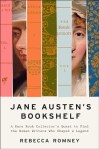
Jane Austen’s Bookshelf: A Rare Book Collector’s Quest to Find the Women Writers Who Shaped a Legend by Rebecca Romney
Bookshop.org | Ebook | TG Jones | Waterstones | World of Books

Blurb

Long before she was a rare book dealer, Rebecca Romney was a devoted reader of Jane Austen. She loved that Austen’s books took the lives of women seriously, explored relationships with wit and confidence, and always, allowed for the possibility of a happy ending. She read and reread them, often wishing Austen wrote just one more.

But Austen wasn’t a lone genius. She wrote at a time of great experimentation for women writers—and clues about those women, and the exceptional books they wrote, are sprinkled like breadcrumbs throughout Austen’s work. Every character in Northanger Abbey who isn’t a boor sings the praises of Ann Radcliffe. The play that causes such a stir in Mansfield Park is a real one by the playwright Elizabeth Inchbald. In fact, the phrase “pride and prejudice” came from Frances Burney’s second novel Cecilia. The women that populated Jane Austen’s bookshelf profoundly influenced her work; Austen looked up to them, passionately discussed their books with her friends, and used an appreciation of their books as a litmus test for whether someone had good taste. So where had these women gone? Why hadn’t Romney—despite her training—ever read them? Or, in some cases, even heard of them? And why were they no longer embraced as part of the wider literary canon?

Jane Austen’s Bookshelf investigates the disappearance of Austen’s heroes—women writers who were erased from the Western canon—to reveal who they were, what they meant to Austen, and how they were forgotten. Each chapter profiles a different writer including Frances Burney, Ann Radcliffe, Charlotte Lennox, Charlotte Smith, Hannah More, Elizabeth Inchbald, Hester Lynch Thrale Piozzi, and Maria Edgeworth—and recounts Romney’s experience reading them, finding rare copies of their works, and drawing on connections between their words and Austen’s. Romney collects the once-famed works of these forgotten writers, physically recreating Austen’s bookshelf and making a convincing case for why these books should be placed back on the to-be-read pile of all book lovers today. Jane Austen’s Bookshelf will encourage you to look beyond assigned reading lists, question who decides what belongs there, and build your very own collection of favourite novels.

Review

As soon as I saw this book I put it on my birthday list and my wonderful husband bought it for me. It was on my TBR pile for just over a week before I started reading it as I couldn’t resist. 

I absolutely loved this book and could not put it down. The first thing I liked was the layout of the book as each chapter focuses on one of the authors that Jane Austen was known to have read. We get a good history of each author and what books, plays or collections of poems they wrote. We also learn about Jane Austen and how her life linked with these authors. I also really enjoyed learning about the reasons these women chose to write. 

The other element I enjoyed was learning a bit about the rare book trade and how rare book dealers work. I enjoyed learning about the different editions that Romney collected, how she hunted them down, purchased them and appreciated them. I loved learning about rare editions of Austen novels and first editions of the authors focused on in the book. I also loved learning about how books were published in Austen’s time, how the print runs ran and what the paper and binding was made out of. 

The only problem I had with this book was that as soon as I started reading this book I started a list of all the books these authors had written with the plan of reading them myself one day. This means my wish list of books has grown hugely. I have actually read a few off the list because I had an amazing English teacher who introduced me to the work of Ann Radcliffe and I became a fan of Frances Burney earlier this year. However, there are still plenty of books left for me to collect and read. I give this book 5 out of 5 Dragons and it is definitely one of my top reads of 2025. 

🐲🐲🐲🐲🐲

About the author

Rebecca Romney is a rare book dealer and the cofounder of Type Punch Matrix, a rare book company based in Washington, DC. She is the rare books specialist on the HISTORY Channel’s show Pawn Stars, and the cofounder of the Honey & Wax Book Collecting Prize. She is a generalist rare book dealer, handling works in all fields, from first editions of Jane Austen to science fiction paperbacks. Her work as a bookseller or writer has been featured in The New York Times, The Atlantic, Forbes, Variety, The Paris Review, and more. In 2019, she was featured in the documentary on the rare book trade, The Booksellers. She is on the Board of the Antiquarian Booksellers’ Association of America (ABAA) and the faculty of the Antiquarian Book Seminar (CABS-Minnesota).

Etsy

If you enjoy reading my blog and would like to make a donation I would be very grateful. Thank you

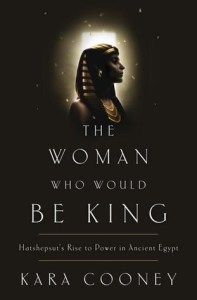
The Woman Who Would Be King: Hatshepsut’s Rise to Power in Ancient Egypt by Kara Cooney (Review #8)

The Woman Who Would Be King: Hatshepsut’s Rise to Power in Ancient Egypt by Kara Cooney 

Blurb

An engrossing biography of the longest-reigning female pharaoh in Ancient Egypt and the story of her audacious rise to power in a man’s world.

Hatshepsut, the daughter of a general who took Egypt’s throne without status as a king’s son and a mother with ties to the previous dynasty, was born into a privileged position of the royal household. Married to her brother, she was expected to bear the sons who would legitimize the reign of her father’s family. Her failure to produce a male heir was ultimately the twist of fate that paved the way for her inconceivable rule as a cross-dressing king. At just twenty, Hatshepsut ascended to the rank of king in an elaborate coronation ceremony that set the tone for her spectacular twenty-two year reign as co-regent with Thutmose III, the infant king whose mother Hatshepsut out-maneuvered for a seat on the throne. Hatshepsut was a master strategist, cloaking her political power plays with the veil of piety and sexual expression. Just as women today face obstacles from a society that equates authority with masculinity, Hatshepsut had to shrewdly operate the levers of a patriarchal system to emerge as Egypt’s second female pharaoh.

Hatshepsut had successfully negotiated a path from the royal nursery to the very pinnacle of authority, and her reign saw one of Ancient Egypt’s most prolific building periods. Scholars have long speculated as to why her images were destroyed within a few decades of her death, all but erasing evidence of her rule. Constructing a rich narrative history using the artifacts that remain, noted Egyptologist Kara Cooney offers a remarkable interpretation of how Hatshepsut rapidly but methodically consolidated power—and why she fell from public favor just as quickly. The Woman Who Would Be King traces the unconventional life of an almost-forgotten pharaoh and explores our complicated reactions to women in power.

Review

I have been wanting to read this book for ages as I have always been fascinated by Ancient Egypt and have always been interested in Hatshepsut. My wonderful husband bought me the book for Christmas so I decided it would be my nonfiction read of February. 

Hatshepsut was an amazing woman and one who was unrivalled for hundreds of years but as usual she was also a woman who was driven out of history. Due to the destruction of her statues, monuments and building projects a lot of her history is lost so Cooney has had to do some educated guesswork about certain aspects of Hatshepsut’s life. Cooney explains her reasoning for the guesswork and it is clear that it is all backed by what she knows about the period in history and also by the evidence of Hatshepsut’s life that does thankfully still survive. 

Cooney’s writing is packed full of information but it is still an easy read that doesn’t make you feel bogged down with information. It almost reads in places like historical fiction but it isn’t. The only criticism that I do have and it did start to drive me a little crazy was the repetition. Cooney would tell you a fact then repeat it either on the next page or a few pages along and it really wasn’t necessary. I started to find myself sighing and thinking why are you telling me this again when you have literally just told me, I don’t need to be told again but with slightly different wording. I will definitely read more books by Cooney and I give this book 4 out of 5 Dragons. 

🐲🐲🐲🐲

Purchase Links

Book Depository | Bookshop.org | Foyles | Waterstones | Wordery

(All purchases made using one of the above affiliate links gives a small percentage of money to myself with no extra cost to yourself. All proceeds go towards the upkeep of this blog. Thank you ever so much, your support is gratefully received.)

About the author

Dr. Kathlyn M. Cooney aka Dr. Kara Cooney is an Egyptologist and Assistant Professor of Egyptian Art and Architecture at UCLA. She was awarded a PhD in 2002 by Johns Hopkins University for Near Eastern Studies. She was part of an archaeological team excavating at the artisans’ village of Deir el Medina in Egypt, as well as Dahshur and various tombs at Thebes.

In 2002 she was Kress Fellow at the National Gallery of Art and worked on the preparation of the Cairo Museum exhibition Quest for Immortality: Treasures of Ancient Egypt. She was a member of the teaching staff at Stanford and Howard University. In 2005, she acted as fellow curator for Tutankhamun and the Golden Age of the Pharaohs at the Los Angeles County Museum of Art. Raised in Houston, she obtained her B.A. from the University of Texas.

She worked on two Discovery Channel documentary series: Out of Egypt, first aired in August 2009, and Egypt’s Lost Queen, which also featured Dr. Zahi Hawass.

Etsy

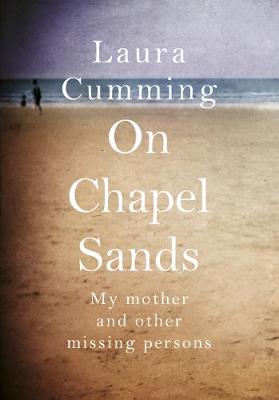
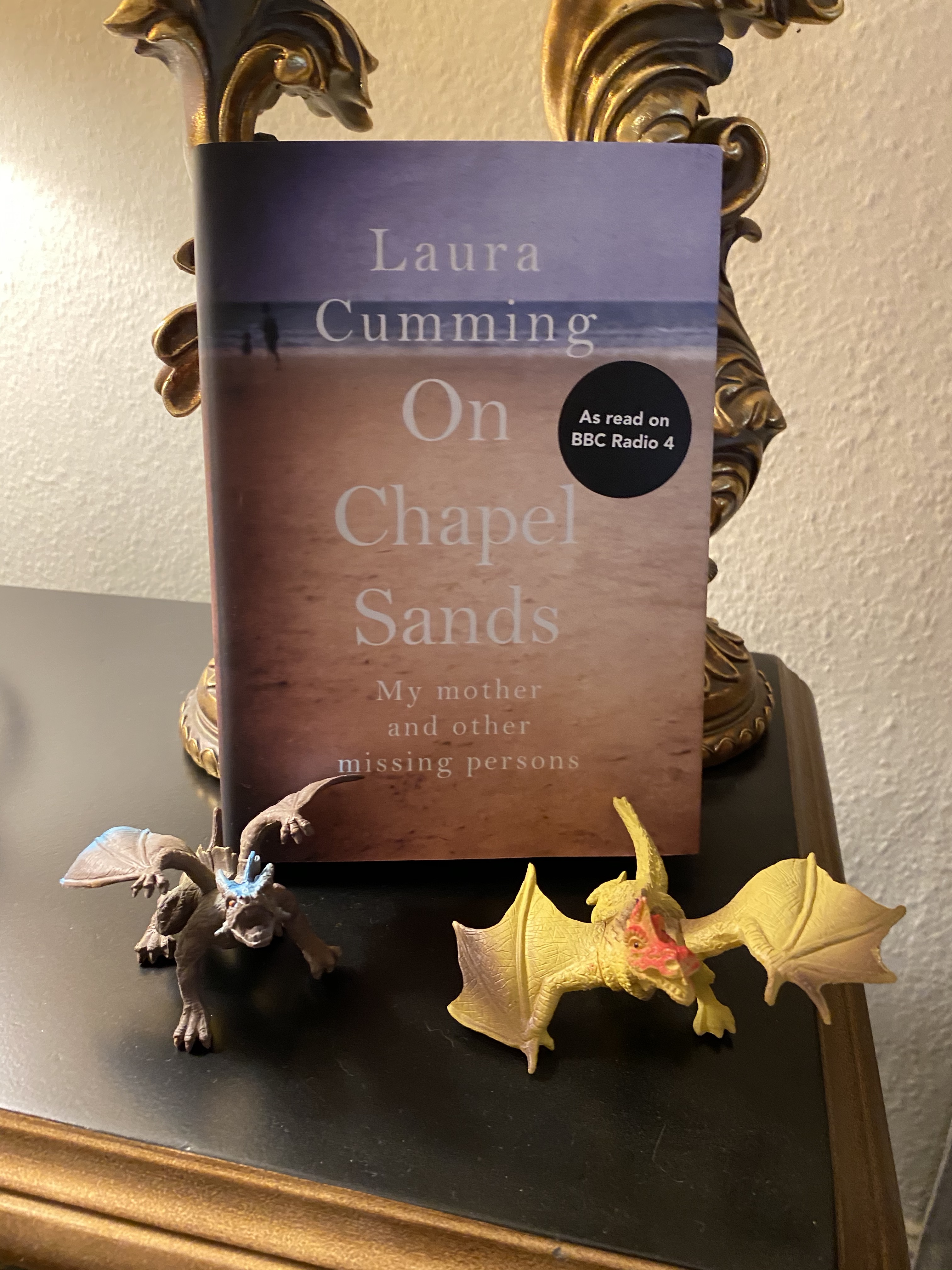
On Chapel Sands: My Mother and Other Missing Persons by Laura Cumming (Review)

On Chapel Sands: My Mother and Other Missing Persons by Laura Cumming


About the author

1058663

Laura Cumming (born July 1961) the art critic for The Observer. In addition to her career in journalism, Cumming has written well-received books on self-portraits in art and the discovery of a lost portrait by Diego Velázquez in 1845.

Blurb

In the autumn of 1929, a small child was kidnapped from a Lincolnshire beach. Five agonising days went by before she was found in a nearby village. The child remembered nothing of these events and nobody ever spoke of them at home. It was another fifty years before she even learned of the kidnap.

The girl became an artist and had a daughter, art writer Laura Cumming. Cumming grew up enthralled by her mother’s strange tales of life in a seaside hamlet of the 1930s, and of the secrets and lies perpetuated by a whole community. So many puzzles remained to be solved. Cumming began with a few criss-crossing lives in this fraction of English coast – the postman, the grocer, the elusive baker – but soon her search spread right out across the globe as she discovered just how many lives were affected by what happened that day on the beach – including her own.

Review

I had such high hopes for this book and I was so excited when I bought it because I loved the sound of the book and thought it sounded like a fantastic read. Sadly, I was very disappointed, although I know that this is probably a controversial opinion looking at other reviews on Goodreads and on book blogs. I do however think the hype and advertising for this book has been very misleading in just how gripping the story is.

I enjoyed the beginning of this book but quickly guessed the outcome as it was just an age old story that has happened many times in history.

This to me was a book of meandering thoughts and it drove me mad, Cumming clearly knows her stuff about art and history but this book really needed to be more to the point. Cumming just kept going off course and it was infuriating, this also meant that there was far too much book for the main thread of the story. It really could have been half the length and for me would have been a lot more enjoyable if it had been shorter and more to the point. It was like Cumming was worried it was going to be too short so she padded it out with other random thoughts.

I can see that this story is written for the love of her mother and I can imagine that Cumming’s mother must be very touched by her daughter’s book but to the casual reader it is too much. It is also very repetitive at times. I was grinding my teeth in frustration. It really could have done with someone just gently removing the repetition from the book for Cumming.

Overall I’m amazed I stuck this book out because some days I could have quite easily chucked it through the window but I did finish it in the end just to see the outcome. I give this book 2 out of 5 Dragons because only books that I do not finish get 1 Dragon.

Purchase Links

 Book Depository  •  Waterstones


lady book dragon signature 250w

+YQfr6qAT0eJZtlMwvTlDw.jpg

The Brontësaurus: An A-Z of Charlotte, Emily and Anne Brontë (and Bramwell) by John Sutherland (Review)

The Brontësaurus: An A-Z of Charlotte, Emily and Anne Brontë (and Bramwell) by John Sutherland

29363456

About the author

1451

John Sutherland is Lord Northcliffe Professor Emeritus at University College London and an eminent scholar in the field of Victorian fiction. He has published many books including a literary puzzle book called Who is Dracula’s Father?

Blurb

Did Charlotte Brontë take opium? Did the Reverend Brontë carry a loaded pistol? What, precisely, does ‘wuthering’ mean? 

Distinguished literary critic John Sutherland takes an idiosyncratic look at the world of the Brontës, from the bumps on Charlotte’s head to the nefarious origins of Mr Rochester’s fortune, by way of astral telephony, letter-writing dogs, an exploding peat bog, and much, much more. 

Also features ‘Jane Eyre abbreviated’ by John Crace, author of the Guardian’s ‘Digested Reads’ column – read Charlotte Brontë’s masterpiece in five minutes!

Review

I received this book as a Christmas present off my sister in law last Christmas and since then it has been on one of my many TBR piles around the house. When I was waiting for a student to arrive this week I picked up the book and started reading and to be honest I was hooked.

I loved reading this book as it was a fresh take on the Brontë history and not to be taken completely seriously. Most of it I knew as I have read a lot about the Brontës and have visited the Brontë museum twice in recent years. I did realise a lot of it was Sutherlands’s opinions and some of them to be honest were rather sexist but considering he was thinking in Victorian terms I will forgive him, just this once.

I really liked how the book was laid out and that it was short snippets of information which were easy to digest and engaging. The only issue that drove me slightly insane was the constant see this below or above. I could have easily done without that as I found it broke up the narrative.

Bramwell the somewhat forgotten Brontë is mentioned quite a bit in this book which I found interesting as I did not know that much about him. It also made me feel slightly sorry for the poor man as I think generally too much was asked from him and he could not cope.

Charlotte I believe was not portrayed in a good light and yes I know that she could have destroyed a lot of her sisters’ works etc but none of this is proven. I want to believe that she did all her actions for a good cause and wanted to protect her siblings’ reputations rather than promote her own.

The history of the Brontës always makes me feel rather sad as they had such hard and short lives. However, this book showed me the good elements, like their love of animals and the little things in life. It made me smile and happy to realise that although cut short they tried to live their lives to the best.

All in all I enjoyed this book immensely and could not put it down which is unusual for me as I usually struggle with nonfiction books and tend to steer clear of them. Due to these reasons I have rated the book 5 out of 5 Dragons. If you love all things Brontë I highly recommend it.

To Purchase

Waterstones Hardback

Waterstones Paperback

et4jc48lRDewGXf8idH1ZQ

Lady Book Dragon

The Real Jane Austen: A Life in Small Things by Paula Byrne

The Real Jane Austen: A Life in Small Things by Paula Byrne

21066856

About the author

fullsizeoutput_cb2

Paula Byrne is a British author and biographer with a PHD from the University of Liverpool. Byrne is married to the Shakespeare scholar Sir Jonathan Bate.

Blurb

Who was the real Jane Austen? A retiring spinster content with quiet village life? Or a strong-minded woman who chose to remain unmarried and to fashion herself as a professional writer?

Bestselling biographer Paula Byrne uses objects that conjure up a key moment in Austen’s life and work – a vellum notebook, a topaz cross, a writing box and a bathing machine – to unlock the biography of this most beloved author. The woman who emerges is far tougher, more socially and politically aware, and altogether more modern than the conventional picture of ‘dear aunt Jane’ allows. Byrne’s lively book explores the many forces that shaped Austen’s life and her long struggle to become a published author, and brings Miss Austen dazzlingly into the twenty-first century.

Review

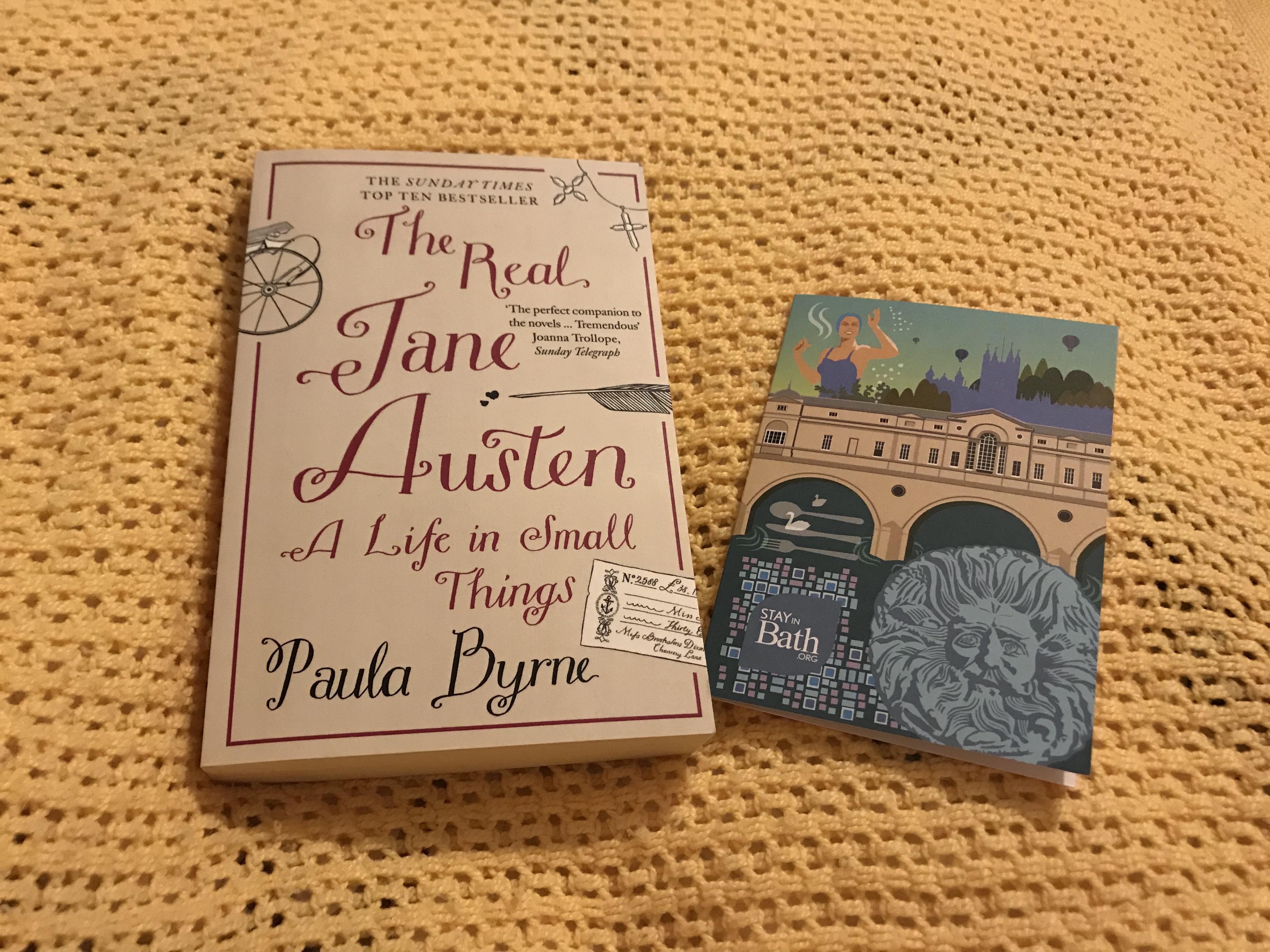
As I think I have mentioned before I discovered this book in the hotel room where I was staying in Bath over New Year and I began reading it there and bought a copy of my own from the Waterstones in Bath. I must confess that I am not the best at reading non-fiction but this book read really easily and did not seem like a biography. Whilst reading it, I have been using the lovely card we had on New Year from the hotel as a book mark as shown in the picture below.

w8ikh3gkswmk3w7atqbqxw

From the first chapter of this book I was hooked, I loved the the way it was laid out, each chapter focusing on an object owned by Jane Austen. I enjoyed how Byrne linked everything together with Austen’s life, her letters, her adventures, and her novels. Byrne has quite clearly spent a great deal of time researching Jane Austen and reading all of Jane Austen’s novels.

I found this biography to be quite an easy read that did not require too much brain power to get through. I find some biographies of famous authors quite in-depth and difficult to read and I have to dip in and out of the book. This book flowed easily and I read it fairly quickly. The only thing I disliked was how Byrne put across Austen’s opinions, when really nobody knows for sure what her opinions were and Byrne is clearly making educated guesses. I would much rather she had kept to the cold hard facts and opinions that Austen expressed in her letters.

I did find Byrne was rather obsessed with Mansfield Park but I did not mind this too much as it has encouraged me to read it again, as it has been some time since I have read it. I would also like to read Lady Susan as I have never got round to reading it but own two copies of it.

My favourite chapters were actually the last two chapters The Royalty Cheque and The Bathing Machine. The Royalty Cheque I enjoyed because it showed Austen making a living from her novels and enjoying some of her own success. I also did not realise that the Prince Regent was such a fan of Austen’s novels and that Emma was dedicated to him and Austen paid for and had a special three volume set of Emma given to the Prince Regent which is still today in the Royal Collection. It is the little facts like this in the biography which makes the book such a joy to read. The Bathing Machine made me giggle quite a bit I must confess, the idea of ladies being fully covered in clothes and going for a swim or a paddle around if they could not swim to be quite funny but also dangerous. I do not think the freezing temperatures would have done the bathers any good at all.

I truly enjoyed this book and would highly recommend it to any Jane Austen fan, I have already recommended it to my sister, who introduced me to the works of Jane Austen when I was little. It is an excellently put together biography which links together beautifully and the illustrations and photos are excellent. I have given this book 4 out of 5 Dragons.

Lady Book Dragon


gv16k7seqm+uptptypaiea