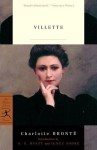
Villette by Charlotte Bronte (Review)

Villette by Charlotte Bronte
Bookshop.org | Harper Collins | TG Jones | Waterstones

Blurb

Left by harrowing circumstances to fend for herself in the great capital of a foreign country, Lucy Snowe, the narrator and heroine of Villette, achieves by degrees an authentic independence from both outer necessity and inward grief. Charlotte Brontë’s last novel, published in 1853, has a dramatic force comparable to that of her other masterpiece, Jane Eyre, as well as strikingly modern psychological insight and a revolutionary understanding of human loneliness. 

Review

I tried to read Villette a few years ago and gave up just before I got to the half way point. I had clearly forgotten why I had given up and decided to try and finish the book this time. Thankfully I did manage to finish it this time but it seemed a very hard slog. I also really struggled with all the French in the book and found it broke up the dialogue when it kept switching between French and English. 

I love Jane Eyre and have read it many times but I just did not gel with Lucy Snowe in this book. She’s writing her story for the reader to read and so many times I was almost screaming at the book to get to the point. I understand that Lucy had a difficult childhood and had to fend for herself as an adolescent but she seemed to make some very random and risky decisions. I still can’t understand how she made the decision to spend most of her money and go to Villette when she had no friends there or even contacts there and didn’t even know the language. I never had a problem liking Jane as a character but I just could not bring myself to like Lucy. 

Lucy gets walked all over by the people around her. Even her own godmother drops her when someone more interesting arrives and then remembers her again after weeks and weeks of no contact. She gets put upon by her employer and she just takes it. However, the most frustrating part is that she lets a certain professor treat her like absolute dirt. He criticises her dress when she dares to wear a pink dress, he criticises her lack of intellect, her religion, in fact he pretty much criticises everything and then she spends the last few hundred pages of the novel crying about him when she is told he will be disappearing on a voyage. 

Villette is Charlotte Bronte’s last work and I will be honest it surprised me. I really expected a stronger main character with an overall maturity to the storyline but I just found it lacked the finesse that Jane Eyre had and also Jane Eyre was a much stronger character who didn’t take everything lying down. I found this book such a hard slog to read but I am glad I managed to read it. I give this book 3 out of 5 Dragons. 

🐲🐲🐲

About the author

Charlotte Bronte (1816-1855) was an English novelist and poet, and was the elder sister of Emily, Anne and Branwell Bronte.

Etsy

If you enjoy reading my blog and would like to make a donation I would be very grateful. Thank you

Evelina by Frances Burney (Review)

Evelina by Frances Burney

Blurb

Frances Burney’s first and most enduringly popular novel is a vivid, satirical, and seductive account of the pleasures and dangers of fashionable life in late eighteenth-century London. 

As she describes her heroine’s entry into society, womanhood and, inevitably, love, Burney exposes the vulnerability of female innocence in an image-conscious and often cruel world where social snobbery and sexual aggression are played out in the public arenas of pleasure-gardens, theatre visits, and balls. But Evelina’s innocence also makes her a shrewd commentator on the excesses and absurdities of manners and social ambitions—as well as attracting the attention of the eminently eligible Lord Orville. 

Evelina, comic and shrewd, is at once a guide to fashionable London, a satirical attack on the new consumerism, an investigation of women’s position in the late eighteenth century, and a love story. The new introduction and full notes to this edition help make this richness all the more readily available to a modern reader.

Review

This book has been on my TBR pile for years as I have always wanted to read a book by Burney who was one of Jane Austen’s favourite authors. 

It took me a while to get into this book as I haven’t read many books written in the form of letters but once I did I absolutely loved it. The first thing that really struck me was how funny this book was. The character of the Captain was hilarious and also a bit unbelievable at times. The scene with the monkey seemed very fake but was still highly amusing. The Captain definitely belonged on the deck of a ship rather than in polite society but he really added to the storyline. 

Another favourite of mine was the dashing Lord Orville who was a true gentleman. Orville wasn’t a poser like the other men in this book who insisted on being fashionable at all times and who would rather go to events to be seen rather than enjoy the theatre or opera. Orville was quiet, caring and a man of substance rather than frills. 

Evelina was an endearing character who you couldn’t help but love. Her upbringing had left her rather sheltered and people sought to take advantage of this but she did have an inner strength and fought against those who tried to make her do things she didn’t want to. She also had some very good friends who looked after her. 

Evelina is a beautifully written book which just like Austen highlights the absurdity of high society in Georgian England. It also highlights what limitations women in the Georgian period had to go through and fight against. 

However, above everything this book is a love story and a beautiful love story at that. I couldn’t put this book down and I can really see why Austen liked Burney’s books so much and I can also see Burney’s influence in Austen’s books. I give this book a big 5 out of 5 Dragons and I fully plan on reading Burney’s other books soon. 

🐲🐲🐲🐲🐲

Purchase Links

Bookshop.org | Waterstones | WH Smith

(All purchases made using one of the above affiliate links gives a small percentage of money to myself with no extra cost to yourself. All proceeds go towards the upkeep of this blog. Thank you ever so much, your support is gratefully received.)

About the author

Also known as Fanny Burney and, after her marriage, as Madame d’Arblay. Frances Burney was a novelist, diarist and playwright. In total, she wrote four novels, eight plays, one biography and twenty volumes of journals and letters.

Etsy

If you enjoy reading my blog and would like to make a donation I would be very grateful. Thank you

Top Ten Tuesday: Oldest (aka Earliest Published) Books On My TBR

Top Ten Tuesday is a weekly meme created by The Broke and the Bookish and now hosted by Jana at That Artsy Reader Girl. For more info please check out Jana’s blog.

Hello!

I was going to do a book review today but when I saw the prompt for today for Top Ten Tuesday I thought it was perfect. I love reading the classics and although I haven’t read many recently it is my plan to get back into reading more next year.

Here is my list:

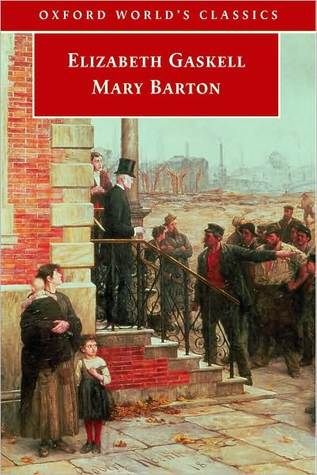
  1. Mary Barton by Elizabeth Gaskell
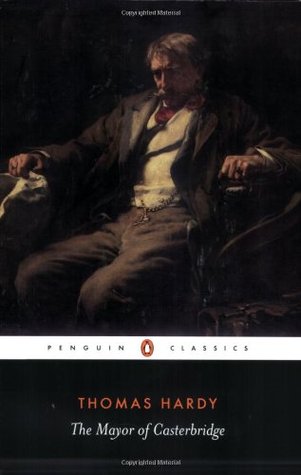
  2. The Mayor of Casterbridge by Thomas Hardy
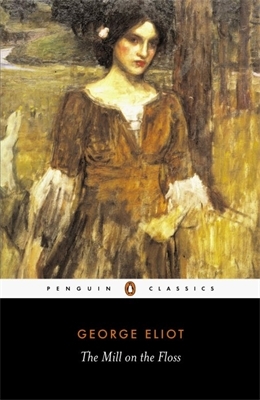
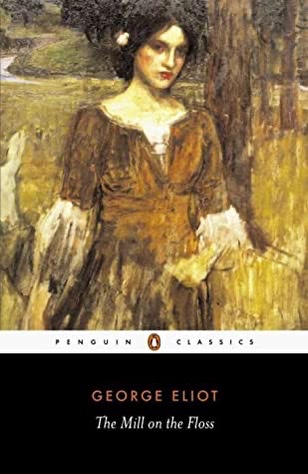
  3. The Mill on the Floss by George Eliot
  4. Sylvia’s Lovers by Elizabeth Gaskell
  5. Little Dorrit by Charles Dickens
  6. The Woodlanders by Thomas Hardy
  7. Shirley by Charlotte Bronte
  8. Vanity Fair by William Makepeace Thackeray
  9. Cranford by Elizabeth Gaskell
  10. Crime and Punishment by Fyodor Dostoyevsky

Quite a few Gaskell and Hardy but I’ve always hoped to read all of Hardy’s full length novels. I’ve also hoped to read all of Dickens’ books so Little Dorrit would be quite a substantial book to tick off the list.

What old books do you have one your TBR?

Happy Reading

Etsy

If you enjoy reading my blog and would like to make a donation I would be very grateful. Thank you

The Classics Club: Spin #36

Hello!

It is time for another Classics Club Spin event! I’m really hoping to make a dent in my Classics Club list this year as I haven’t done very well so far.

I’m looking forward to seeing what my next read will be. The end of the spin period is the 3rd March so that is my deadline to get the chosen book read by.

Here is my list:

  1. Mansfield Park by Jane Austen
  2. Persuasion by Jane Austen
  3. Agnes Grey by Anne Bronte
  4. Villette by Charlotte Bronte
  5. Shirley by Charlotte Bronte
  6. The Mill on the Floss by George Eliot
  7. Northanger Abbey by Jane Austen
  8. Middlemarch by George Eliot
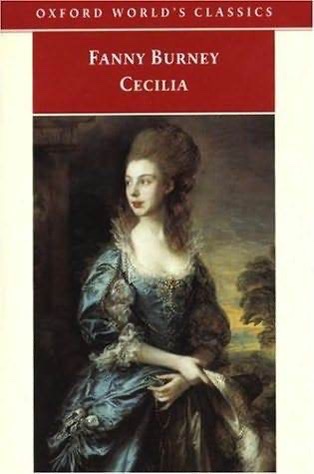
  9. Cecilia by Frances Burney
  10. Evelina by Frances Burney
  11. North and South by Elizabeth Gaskell
  12. The Moonstone by Wilkie Collins
  13. Love in Excess by Eliza Haywood
  14. The Runaway by Elizabeth Anna Hart
  15. Treasure Island by Robert Louis Stevenson
  16. Robinson Crusoe by Daniel Defoe
  17. Candide by Volatire
  18. The Way We Live Now by Anthony Trollope
  19. A Tale of Two Cities by Charles Dickens
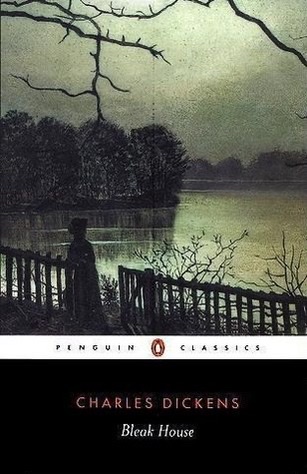
  20. Bleak House by Charles Dickens

Have you read any of the books off my list? I will be honest some of mine are rereads but you can never read Jane Austen too many times!

Happy Reading

Etsy

If you enjoy reading my blog and would like to make a donation I would be very grateful. Thank you

The Classics Club: Spin #35

Hello!

I haven’t taken part in a Classics Club Spin event in ages so I thought it was high time to take part again. My classics reading hasn’t been great so far this year and I know if I am going to manage the full 50 books I need to increase my reading.

Anyway, here are my selected 20 for the spin on the 15th October. I will then read the chosen book before 3rd December.

  1. Mansfield Park by Jane Austen
  2. Persuasion by Jane Austen
  3. Agnes Grey by Anne Bronte
  4. Villette by Charlotte Bronte
  5. Shirley by Charlotte Bronte
  6. The Mill on the Floss by George Eliot
  7. Northanger Abbey by Jane Austen
  8. Middlemarch by George Eliot
  9. Cecilia by Frances Burney
  10. Evelina by Frances Burney
  11. North and South by Elizabeth Gaskell
  12. The Moonstone by Wilkie Collins
  13. Love in Excess by Eliza Haywood
  14. The Runaway by Elizabeth Anna Hart
  15. Treasure Island by Robert Louis Stevenson
  16. Robinson Crusoe by Daniel Defoe
  17. Candide by Volatire
  18. The Way We Live Now by Anthony Trollope
  19. A Tale of Two Cities by Charles Dickens
  20. Bleak House by Charles Dickens

I’ve listed all the female authors from my list and then made up the rest with some of the male authors. Hopefully, a female author book is chosen as I really fancy a classic by a female author.

Happy Reading

Etsy

If you enjoy reading my blog and would like to make a donation I would be very grateful. Thank you

The Pilgrim’s Progress by John Bunyan (Review #11)

The Pilgrim’s Progress by John Bunyan

Blurb

This famous story of man’s progress through life in search of salvation remains one of the most entertaining allegories of faith ever written. Set against realistic backdrops of town and country, the powerful drama of the pilgrim’s trials and temptations follows him in his harrowing journey to the Celestial City.

Along a road filled with monsters and spiritual terrors, Christian confronts such emblematic characters as Worldly Wiseman, Giant Despair, Talkative, Ignorance, and the demons of the Valley of the Shadow of Death. But he is also joined by Hopeful and Faithful.

An enormously influential 17th-century classic, universally known for its simplicity, vigor, and beauty of language, The Pilgrim’s Progress remains one of the most widely read books in the English language.

Review

I read this book a long time ago and I must admit I struggled with it then but I thought I would give it another chance and so I put it on my Classics Club list. In hindsight I probably should not have bothered as the book had still not improved for me. 

The storyline for this book is good and I can see what Bunyan was trying to get across but I just can’t stand the main character Christian. The storyline is based on a dream and the dream is based around the character Christian. In all honesty as a Christian myself I really don’t think the character Christian shows us to our best advantage. The character Christian is in my opinion a pompous ass who thinks himself above everyone else. He is self righteous and really annoying. He also abandons his family and basically condemns them to their fate. 

The story follows the many adventures of Christian and the many other characters he encounters. The other characters he encounters are all basically people who start out on the journey to faith but inevitably fail. 

I really do not get along with this book and it is mainly because of the character Christian. I won’t be making the mistake of reading this book again and I only give this book 2 out of 5 Dragons. 

🐲🐲

Purchase Links

Book Depository | Bookshop.org | Foyles | Waterstones | Wordery

(All purchases made using one of the above affiliate links gives a small percentage of money to myself with no extra cost to yourself. All proceeds go towards the upkeep of this blog. Thank you ever so much, your support is gratefully received.)

About the author

John Bunyan (1628-1688), a Christian writer and preacher, was born at Harrowden (one mile south-east of Bedford), in the Parish of Elstow, England. He wrote The Pilgrim’s Progress, arguably the most famous published Christian allegory. In the Church of England he is remembered with a Lesser Festival on 30 August.

Etsy

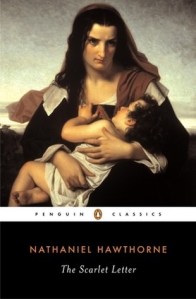
The Scarlet Letter by Nathaniel Hawthorne (Review #7)

The Scarlet Letter by Nathaniel Hawthorne

Blurb

Set in 17th-century Puritan Boston, Massachusetts, during the years 1642 to 1649, it tells the story of Hester Prynne, who conceives a daughter through an affair and will not reveal her lover’s identity. The scarlet letter A (for adultery) she has to wear on her clothes, along with her public shaming, is her punishment for her sin and her secrecy. She struggles to create a new life of repentance and dignity. Throughout the book, Hawthorne explores themes of legalism, sin, and guilt.

Review

I have wanted to read this book since it was mentioned in an episode of Downton Abbey and the Dowager thought the book sounded most unsuitable. It is also one of the books on my Classics Club list. 

I will be honest I almost lost the will to live with this book. The introductory chapter of this book is a lengthy chapter about the author and his life in the Customs office and I must admit I found it extremely dull. I was determined to carry on because the main story had not started yet but I will be honest I almost gave up with the book there and then. 

The storyline of this book is great but sadly Hawthorne could not have written it in a more boring and long winded way. I found that Hawthorne is quite similar to Washington Irving in his writing style and I will be honest I also struggle with Irving. Basically something that could be said in 500 words they insist on using 5000 and I just find myself shouting at the author ‘why? Get to the point!’. 

Hester Prynne is a wonderful character who is thoroughly wronged but because of the time and the place she lives in she is the one who is held up to blame and judged. After Hester’s disgrace she forms a life for herself living in repentance and trying to be the best Christian she can be and because of this people start to accept her again. 

I had to really think about my rating of this book because I just could not get on with Hawthorne’s writing style. I almost gave it a lot lower rating but I reconsidered because I really enjoyed the storyline and the character Hester. Overall, I give this book 3 out of 5 Dragons but I will definitely say it won’t be a book that I read again.

🐲🐲🐲

Purchase Links

Book Depository | Bookshop.org | Foyles | Waterstones | Wordery

(All purchases made using one of the above affiliate links gives a small percentage of money to myself with no extra cost to yourself. All proceeds go towards the upkeep of this blog. Thank you ever so much, your support is gratefully received.)

About the author

Nathaniel Hawthorne was a 19th century American novelist and short story writer. He is seen as a key figure in the development of American literature for his tales of the nation’s colonial history.

Shortly after graduating from Bowdoin College, Hathorne changed his name to Hawthorne. Hawthorne anonymously published his first work, a novel titled Fanshawe, in 1828. In 1837, he published Twice-Told Tales and became engaged to painter and illustrator Sophia Peabody the next year. He worked at a Custom House and joined a Transcendentalist Utopian community, before marrying Peabody in 1842. The couple moved to The Old Manse in Concord, Massachusetts, later moving to Salem, the Berkshires, then to The Wayside in Concord. The Scarlet Letter was published in 1850, followed by a succession of other novels. A political appointment took Hawthorne and family to Europe before returning to The Wayside in 1860. Hawthorne died on May 19, 1864, leaving behind his wife and their three children.

Much of Hawthorne’s writing centers around New England and many feature moral allegories with a Puritan inspiration. His work is considered part of the Romantic movement and includes novels, short stories, and a biography of his friend, the United States President Franklin Pierce.

Etsy

Top 5 Tuesday: Classics I Plan to Read in 2023

Top 5 Tuesday was created by Shanah at Bionic Book Worm, and now being hosted by Meeghan reads.

Hello!

The topic today is a freebie which is very exciting as I have never taken part in a Top 5 Tuesday on a freebie day. I decided to choose classics that I plan to read this year because I am trying to read a Classic book off my Classics Club List ever month.

So here are the books I plan to read in 2023.

Some of these are quite hefty books but I really hope I get to read them this year. I am really looking forward to reading Cecilia by Fanny Burney after seeing a documentary by Lucy Worsley where she talked about this book in detail. I suspect Bleak House will take me quite a while to read though.

Happy Reading

Etsy

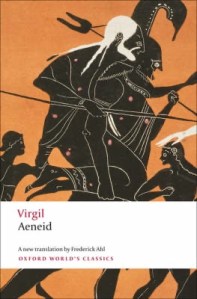
The Aeneid by Virgil (translated by by Frederick Ahl)(Review #3)

The Aeneid by Virgil (translated by by Frederick Ahl)

Blurb

After a century of civil strife in Rome and Italy, Virgil wrote the Aeneid to honour the emperor Augustus by praising his legendary ancestor Aeneas. As a patriotic epic imitating Homer, the Aeneid also set out to provide Rome with a literature equal to that of Greece. It tells of Aeneas, survivor of the sack of Troy, and of his seven-year journey: to Carthage, where he falls tragically in love with Queen Dido; then to the underworld,; and finally to Italy, where he founds Rome. It is a story of defeat and exile, of love and war, hailed by Tennyson as ‘the stateliest measure ever moulded by the lips of man’.

Review

I have finally finished this book! When I first started reading it I was in the middle of my Masters and this sadly had to fall by the way side. However, on the 1st January I decided to read one book a day of this book and yesterday (yes I know a day behind) I finally finished. 

The book begins in Carthage where Aeneas tells his journey to Queen Dido starting from  the fall of Troy where Aeneas and the survivors he manages to gather including his father and son flee Troy and begin their 7 year journey to find a new home. Their journey goes from Carthage, to the Underworld and finally Italy his final destination.  

My first thought about this book is what an amazing piece of propaganda. The amount of propaganda in this book really made me laugh but I think the pinnacle of it was in book 7. In book 7 Anchises shows Aeneas all the descendants that will come from his line and it is quite a list. Aeneas is basically the father of all the great leaders of Rome which seems highly improbable. 

My husband kindly treated me to see Purcell’s Dido and Aeneas opera for my birthday which I absolutely loved but I do think Purcell was rather kind to Aeneas. In truth I always found Aeneas to be a bit of an ass. Whilst he is fleeing Troy he accidentally loses his wife, he does go back and look for her but really he shouldn’t have lost her in the first place. Then what he does with Queen Dido is in my opinion absolutely awful. Yes, I know the gods had something to do with it but really the man did not show any remorse at all and was a complete b__.

The last 6 books of the book is where Aeneas and his men, and we presume some women and children as they are briefly mentioned, land in Italy and all hell breaks loose in war. I loved how all the gods get involved and even some nymphs as this really parallels with Homer’s depiction of the war of Troy. In fact Virgil is very clever with his direct links with Homer’s work. When studying my Masters it was always amazing how much the Romans wanted to be as good as the Ancient Greeks. The Romans copied their sculptures, their texts and much more but always keeping their Roman values. 

I really enjoyed this book and it was a great start to 2023 and my plan to read at least one Ancient Greek or Roman text a month. Virgil was a very talented writer who knew how to write an excellent piece of propaganda. I also loved Ahl’s translation but I knew it would be good as he is one of my favourite translators. I happily give this book 5 out of 5 Dragons. 

🐲🐲🐲🐲🐲

Purchase Links

Book Depository | Bookshop.org | Foyles | Waterstones | Wordery

(All purchases made using one of the above affiliate links gives a small percentage of money to myself with no extra cost to yourself. All proceeds go towards the upkeep of this blog. Thank you ever so much, your support is gratefully received.)

About the author

Publius Vergilius Maro (October 15, 70 BCE – September 21, 19 BCE), usually called Virgil or Vergil /ˈvɜrdʒəl/ in English, was an ancient Roman poet of the Augustan period. He is known for three major works of Latin literature, the Eclogues (or Bucolics), the Georgics, and the epic Aeneid. A number of minor poems, collected in the Appendix Vergiliana, are sometimes attributed to him.

Virgil is traditionally ranked as one of Rome’s greatest poets. His Aeneid has been considered the national epic of ancient Rome from the time of its composition to the present day. Modeled after Homer’s Iliad and Odyssey, the Aeneid follows the Trojan refugee Aeneas as he struggles to fulfill his destiny and arrive on the shores of Italy—in Roman mythology the founding act of Rome. Virgil’s work has had wide and deep influence on Western literature, most notably the Divine Comedy of Dante, in which Virgil appears as Dante’s guide through hell and purgatory.

Etsy

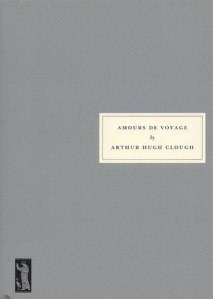
Amours de Voyage by Arthur Hugh Clough (Review #2)

Amours de Voyage by Arthur Hugh Clough

Blurb

Amours de Voyage is a novel in verse and is arranged in five cantos, or chapters, as a sequence of letters. It is about a group of English travellers in Italy: Claude, and the Trevellyn family, are caught up in the 1849 political turmoil. The poem mixes the political (‘Sweet it may be, and decorous, perhaps, for the country to die; but,/On the whole, we conclude the Romans won’t do it, and I sha’n’t’) and the personal (‘After all, do I know that I really cared so about her?/Do whatever I will, I cannot call up her image’). The political is important but the personal dilemmas are the crucial ones.

Claude, about to declare himself, retreats, regrets. It is this retreat, his scruples and fastidiousness, that, like a conventional novel, is the core of Amours de Voyage. The poem thus contributed something important to the modern sensibility; it is a portrait of an anti-hero; it is about love and marriage (the difficulties of); and it is about Italy.

Review

I had never heard of Arthur Hugh Clough before but I was really intrigued when I saw this book in Persephone books so I bought it. I have been reading some pretty hefty books recently so last weekend I thought I would read a shorter book as a quick read and this was the book I chose. 

The first thing I loved about this book was the preface by Julian Barnes. Barnes gave a wonderful description of Clough’s life and the background behind this book. It really set the scene well. 

This was quite a different read for me but one that I flew through. I really loved Claude’s thoughts on Rome as he really was very unimpressed with the whole affair and I found his reactions to it quite amusing. The book is a novel in verse and made up of letters. Claude writes to his long suffering friend Eustace and I say long suffering because I think the poor man has a lot of letters of Claude. The other letters are from the Trevellyn sisters to their friend. 

I will be honest the character Claude was not my favourite. He found Rome boring, he was self centred, looked down on people and only found Mary interesting when she had gone. Personally I think Mary was better off without Claude in her life. Mary thought a lot more about Claude than Claude did about Mary. 

Overall, I loved Clough’s writing and I would love to read more of his work but what let it down for me was simply his main character Claude. I just could not deal with Claude’s selfish behaviour sadly. Due to this I give the book 3 out of 5 Dragons. 

🐲🐲🐲

Purchase Links

Book Depository | Bookshop.org | Waterstones | Wordery

(All purchases made using one of the above affiliate links gives a small percentage of money to myself with no extra cost to yourself. All proceeds go towards the upkeep of this blog. Thank you ever so much, your support is gratefully received.)

About the author

Arthur Hugh Clough (1819-1861) was an English poet, an educationalist, and the devoted assistant to Florence Nightingale. 

Etsy