A naive couple, full of indignation at the state of Britain before the First World War, honeymoon in France and get overtaken by the onset of the war. It’s a rude awakening. The author served in France during the war, and wrote this whilst the war raged around her.
Review
I love Persephone Books and I have a dream that one day I will manage to read the entire collection! I suspect I won’t manage it but I live in hope.
I really enjoyed this book and I would have happily read it in just two or three sittings but it took me slightly longer because I read it during my daughters morning naps.
William is a social activist but he didn’t find this path by himself and sadly he only parrots the opinions of others and never comes up with anything like his own opinions. During his work he meets Griselda who is also a social activist and who has done several spells in prison fighting for women’s rights. However, Griselda is also like William and only parrots the options of others and never forms her own opinion. They believe themselves heroic and fighting for the good of many but they never sacrifice anything and only rant and rave in front of people who agree with them. Unexpectedly they find themselves in the middle of WWI and their worlds are turned upside down.
Hamilton gently makes fun of William and Griselda. She mocks their activism and their idealism in the beginning of the novel. However, as the book progresses you start to only feel sympathy for Griselda and William. They are victims of war and Hamilton shows anger towards the people who started it.
I enjoyed this book because it was a wonderful eye opener into what life was like during WWI but it was also a harrowing read and I was brought to tears quite a few times while reading it. I really enjoyed Hamilton’s writing style and I hope to read more of her work soon. I give this book 4 out of 5 Dragons.
🐲🐲🐲🐲
About the author
Cicely Mary Hamilton (born Hammill), was an English author and co-founder of the Women Writers’ Suffrage League.
She is best remembered for her plays which often included feminist themes. Hamilton’s World War I novel “William – An Englishman” was reprinted by Persephone Books in 1999.
She was a friend of EM Delafield and was portrayed as Emma Hay in “A Provincial Lady Goes Further.”
Cecilia is an heiress, but she can only keep her fortune if her husband will consent to take her surname. Fanny Burney’s unusual love story and deft social satire was much admired on its first publication in 1782 for its subtle interweaving of comedy, humanity and social analysis.
Review
I fell in love with Burney’s writing when I first read Evelina so I was determined to read Burney’s other novels. However, I must admit I was not expecting such a hefty tome when Cecilia arrived. There is quite a size difference between Evelina and Cecilia. Clearly Burney wanted the money as the more volumes in a book the more money the author made in the past. Thankfully, the writing was just as good so I didn’t mind the length of the book.
This book really prompted me to do more research into the Georgian period and heiress’ as I was intrigued by the storyline of Cecilia only being allowed to keep her inheritance if she married a man who would take her name. Apparently this was quite a common thing at the time and a way for the family name not to die out if there was no male heir.
As with Evelina the main characters of Cecilia are endearing enough but the main stars of the book are the supporting cast. You have the flighty socialites, the gossip girls, slimy men, haughty toffs who are so ridiculous you just have to laugh. Miss Larolles was an absolute hoot!
The thing I loved most about this book though was the snapshot it gives you of the everyday life of Georgian society. You have members of the Ton right down to the poorest of the poor. You learn about what the etiquette was for females and males socialising, who handed who into a carriage, how you called upon acquaintances, how you made travel arrangements etc.
Cecilia is a caring and very sensitive young lady who has clearly been brought up very sheltered of the outside world. She has a desire to help all who are less fortunate than herself and can not bear to see anyone suffering. Sadly this leaves her open for exploitation. At times Cecilia really needed a friend who would offer her good advice but sadly she had wolves in sheep’s clothing.
I don’t want to say too much as I don’t want to give the story away but I will say that I can see why Jane Austen was such a fan of Burney’s work as I could not put this book down. I will be selecting another of Burney’s books to read very soon I hope. I give this book 5 out of 5 Dragons.
🐲🐲🐲🐲🐲
About the author
Also known as Fanny Burney and, after her marriage, as Madame d’Arblay. Frances Burney was a novelist, diarist and playwright. In total, she wrote four novels, eight plays, one biography and twenty volumes of journals and letters.
FROM THE BESTSELLING AUTHOR OF EMPEROR OF ROME AND SPQR ‘The rock star scholar of Ancient Rome’ FINANCIAL TIMES
‘The reigning Queen of Classics’ SPECTATOR What’s exciting about a piece of bread 4,000 years old? Or some pots of paint abandoned in the eruption at Pompeii? Why should we be bothered with the distant past anyway? What’s the point? The life, art and literature of ancient Greece and Rome have something to offer everyone. They are not the property of wealthy white men only. They make us wonder how to make sense of people who lived long ago (from angry landlords to giggling senators) – and to think harder about our own world, to look at it differently. In Talking Classics, Mary Beard points to the surprising connections between antiquity and the present. From revolutionaries to dictators, Bob Dylan to Beyoncé, she joins forces with the varied modern characters who have been transfixed by the ancient world. It’s not compulsory, she argues, to be excited by antiquity, but it’s a shame not to be. After half a century teaching and studying classics, she fills the book with lively stories, curious facts and some good gossip. Talking Classics explains why the deep past does really affect us all.
Review
Time for another book review! My reading has definitely slowed down since having my Baby Book Dragon but that is ok because I’m also struggling to find the time to review the books I read!
Anyone who has followed my blog for any length of time knows how much I love my Ancient Greek and Roman history and that I also completed a Masters in Classics during Covid. One of my favourite classicists is Mary Beard and I had this book preordered for many months before it arrived. Strangely for me I also started reading this book as soon as it arrived! It was the perfect book for reading while I was nap trapped and I absolutely loved it.
This isn’t a traditional history book but more like sitting down and listening to Mary Beard think aloud about why the ancient world still matters and is just as relevant today as it was in the past. This for me is what gives this book it’s charm and what made it such an addictive read.
Beard wants classics to shock, to provoke, to appear strange. Beard explores how later generations use Ancient Greece and Rome to their advantage, in politics, art, literature and more. She shows examples of how the classical past has been romanticised.
Beard also gives examples of how the ancient past attracted famous people from the past. I particularly liked reading about Hitler and Mussolini being taken around Rome by the archaeologist Bandinelli. I think I will have to track down a copy of Bandinelli’s memoir of this event as Beard makes it sound like a fascinating read.
However, my favourite part of this book was learning about Beard’s love of classics and how it all started and developed. Beard doesn’t make this book stuffy and academic, it is energetic, funny and knowledgeable. Beard doesn’t place classics on a pedestal but asks us to use them, argue with them, learn from them. I thoroughly enjoyed this book and give it 5 out of 5 Dragons.
About the author
Winifred Mary Beard (born 1 January 1955) is Professor of Classics at the University of Cambridge and is a fellow of Newnham College. She is the Classics editor of the Times Literary Supplement, and author of the blog “A Don’s Life”, which appears on The Times as a regular column. Her frequent media appearances and sometimes controversial public statements have led to her being described as “Britain’s best-known classicist”.
Mary Beard, an only child, was born on 1 January 1955 in Much Wenlock, Shropshire. Her father, Roy Whitbread Beard, worked as an architect in Shrewsbury. She recalled him as “a raffish public-schoolboy type and a complete wastrel, but very engaging”. Her mother Joyce Emily Beard was a headmistress and an enthusiastic reader.
Mary Beard attended an all-female direct grant school. During the summer she participated in archaeological excavations; this was initially to earn money for recreational spending, but she began to find the study of antiquity unexpectedly interesting.
At the age of 18 she was interviewed for a place at Newnham College, Cambridge and sat the then compulsory entrance exam. She had thought of going to King’s, but rejected it when she discovered the college did not offer scholarships to women. Although studying at a single-sex college, she found in her first year that some men in the University held dismissive attitudes towards women’s academic potential, and this strengthened her determination to succeed. She also developed feminist views that remained “hugely important” in her later life, although she later described “modern orthodox feminism” as partly “cant”. Beard received an MA at Newnham and remained in Cambridge for her PhD.
From 1979 to 1983 she lectured in Classics at King’s College London. She returned to Cambridge in 1984 as a fellow of Newnham College and the only female lecturer in the Classics faculty. Rome in the Late Republic, which she co-wrote with the Cambridge ancient historian Michael Crawford, was published the same year. In 1985 Beard married Robin Sinclair Cormack. She had a daughter in 1985 and a son in 1987. Beard became Classics editor of the Times Literary Supplement in 1992.
In 2004, Beard became the Professor of Classics at Cambridge. She is also the Visiting Sather Professor of Classical Literature for 2008–2009 at the University of California, Berkeley, where she has delivered a series of lectures on “Roman Laughter”.
If you enjoy reading my blog and would like to make a donation I would be very grateful. Thank you
Left by harrowing circumstances to fend for herself in the great capital of a foreign country, Lucy Snowe, the narrator and heroine of Villette, achieves by degrees an authentic independence from both outer necessity and inward grief. Charlotte Brontë’s last novel, published in 1853, has a dramatic force comparable to that of her other masterpiece, Jane Eyre, as well as strikingly modern psychological insight and a revolutionary understanding of human loneliness.
Review
I tried to read Villette a few years ago and gave up just before I got to the half way point. I had clearly forgotten why I had given up and decided to try and finish the book this time. Thankfully I did manage to finish it this time but it seemed a very hard slog. I also really struggled with all the French in the book and found it broke up the dialogue when it kept switching between French and English.
I love Jane Eyre and have read it many times but I just did not gel with Lucy Snowe in this book. She’s writing her story for the reader to read and so many times I was almost screaming at the book to get to the point. I understand that Lucy had a difficult childhood and had to fend for herself as an adolescent but she seemed to make some very random and risky decisions. I still can’t understand how she made the decision to spend most of her money and go to Villette when she had no friends there or even contacts there and didn’t even know the language. I never had a problem liking Jane as a character but I just could not bring myself to like Lucy.
Lucy gets walked all over by the people around her. Even her own godmother drops her when someone more interesting arrives and then remembers her again after weeks and weeks of no contact. She gets put upon by her employer and she just takes it. However, the most frustrating part is that she lets a certain professor treat her like absolute dirt. He criticises her dress when she dares to wear a pink dress, he criticises her lack of intellect, her religion, in fact he pretty much criticises everything and then she spends the last few hundred pages of the novel crying about him when she is told he will be disappearing on a voyage.
Villette is Charlotte Bronte’s last work and I will be honest it surprised me. I really expected a stronger main character with an overall maturity to the storyline but I just found it lacked the finesse that Jane Eyre had and also Jane Eyre was a much stronger character who didn’t take everything lying down. I found this book such a hard slog to read but I am glad I managed to read it. I give this book 3 out of 5 Dragons.
🐲🐲🐲
About the author
Charlotte Bronte (1816-1855) was an English novelist and poet, and was the elder sister of Emily, Anne and Branwell Bronte.
Frances Burney’s first and most enduringly popular novel is a vivid, satirical, and seductive account of the pleasures and dangers of fashionable life in late eighteenth-century London.
As she describes her heroine’s entry into society, womanhood and, inevitably, love, Burney exposes the vulnerability of female innocence in an image-conscious and often cruel world where social snobbery and sexual aggression are played out in the public arenas of pleasure-gardens, theatre visits, and balls. But Evelina’s innocence also makes her a shrewd commentator on the excesses and absurdities of manners and social ambitions—as well as attracting the attention of the eminently eligible Lord Orville.
Evelina, comic and shrewd, is at once a guide to fashionable London, a satirical attack on the new consumerism, an investigation of women’s position in the late eighteenth century, and a love story. The new introduction and full notes to this edition help make this richness all the more readily available to a modern reader.
Review
This book has been on my TBR pile for years as I have always wanted to read a book by Burney who was one of Jane Austen’s favourite authors.
It took me a while to get into this book as I haven’t read many books written in the form of letters but once I did I absolutely loved it. The first thing that really struck me was how funny this book was. The character of the Captain was hilarious and also a bit unbelievable at times. The scene with the monkey seemed very fake but was still highly amusing. The Captain definitely belonged on the deck of a ship rather than in polite society but he really added to the storyline.
Another favourite of mine was the dashing Lord Orville who was a true gentleman. Orville wasn’t a poser like the other men in this book who insisted on being fashionable at all times and who would rather go to events to be seen rather than enjoy the theatre or opera. Orville was quiet, caring and a man of substance rather than frills.
Evelina was an endearing character who you couldn’t help but love. Her upbringing had left her rather sheltered and people sought to take advantage of this but she did have an inner strength and fought against those who tried to make her do things she didn’t want to. She also had some very good friends who looked after her.
Evelina is a beautifully written book which just like Austen highlights the absurdity of high society in Georgian England. It also highlights what limitations women in the Georgian period had to go through and fight against.
However, above everything this book is a love story and a beautiful love story at that. I couldn’t put this book down and I can really see why Austen liked Burney’s books so much and I can also see Burney’s influence in Austen’s books. I give this book a big 5 out of 5 Dragons and I fully plan on reading Burney’s other books soon.
(All purchases made using one of the above affiliate links gives a small percentage of money to myself with no extra cost to yourself. All proceeds go towards the upkeep of this blog. Thank you ever so much, your support is gratefully received.)
About the author
Also known as Fanny Burney and, after her marriage, as Madame d’Arblay. Frances Burney was a novelist, diarist and playwright. In total, she wrote four novels, eight plays, one biography and twenty volumes of journals and letters.
Top Ten Tuesday is a weekly meme created by The Broke and the Bookish and now hosted by Jana at That Artsy Reader Girl. For more info please check out Jana’s blog.
Hello!
I was going to do a book review today but when I saw the prompt for today for Top Ten Tuesday I thought it was perfect. I love reading the classics and although I haven’t read many recently it is my plan to get back into reading more next year.
Here is my list:
Mary Barton by Elizabeth Gaskell
The Mayor of Casterbridge by Thomas Hardy
The Mill on the Floss by George Eliot
Sylvia’s Lovers by Elizabeth Gaskell
Little Dorrit by Charles Dickens
The Woodlanders by Thomas Hardy
Shirley by Charlotte Bronte
Vanity Fair by William Makepeace Thackeray
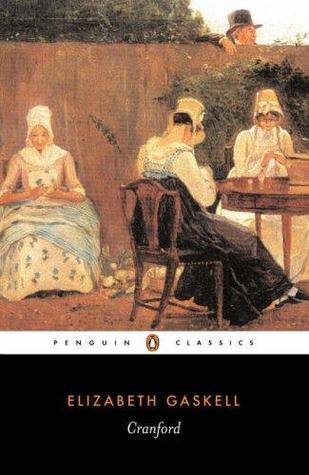
Cranford by Elizabeth Gaskell
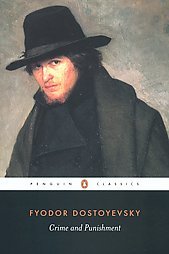
Crime and Punishment by Fyodor Dostoyevsky
Quite a few Gaskell and Hardy but I’ve always hoped to read all of Hardy’s full length novels. I’ve also hoped to read all of Dickens’ books so Little Dorrit would be quite a substantial book to tick off the list.
It is time for another Classics Club Spin event! I’m really hoping to make a dent in my Classics Club list this year as I haven’t done very well so far.
I’m looking forward to seeing what my next read will be. The end of the spin period is the 3rd March so that is my deadline to get the chosen book read by.
Here is my list:
Mansfield Park by Jane Austen
Persuasion by Jane Austen
Agnes Grey by Anne Bronte
Villette by Charlotte Bronte
Shirley by Charlotte Bronte
The Mill on the Floss by George Eliot
Northanger Abbey by Jane Austen
Middlemarch by George Eliot
Cecilia by Frances Burney
Evelina by Frances Burney
North and South by Elizabeth Gaskell
The Moonstone by Wilkie Collins
Love in Excess by Eliza Haywood
The Runaway by Elizabeth Anna Hart
Treasure Island by Robert Louis Stevenson
Robinson Crusoe by Daniel Defoe
Candide by Volatire
The Way We Live Now by Anthony Trollope
A Tale of Two Cities by Charles Dickens
Bleak House by Charles Dickens
Have you read any of the books off my list? I will be honest some of mine are rereads but you can never read Jane Austen too many times!
I haven’t taken part in a Classics Club Spin event in ages so I thought it was high time to take part again. My classics reading hasn’t been great so far this year and I know if I am going to manage the full 50 books I need to increase my reading.
Anyway, here are my selected 20 for the spin on the 15th October. I will then read the chosen book before 3rd December.
Mansfield Park by Jane Austen
Persuasion by Jane Austen
Agnes Grey by Anne Bronte
Villette by Charlotte Bronte
Shirley by Charlotte Bronte
The Mill on the Floss by George Eliot
Northanger Abbey by Jane Austen
Middlemarch by George Eliot
Cecilia by Frances Burney
Evelina by Frances Burney
North and South by Elizabeth Gaskell
The Moonstone by Wilkie Collins
Love in Excess by Eliza Haywood
The Runaway by Elizabeth Anna Hart
Treasure Island by Robert Louis Stevenson
Robinson Crusoe by Daniel Defoe
Candide by Volatire
The Way We Live Now by Anthony Trollope
A Tale of Two Cities by Charles Dickens
Bleak House by Charles Dickens
I’ve listed all the female authors from my list and then made up the rest with some of the male authors. Hopefully, a female author book is chosen as I really fancy a classic by a female author.
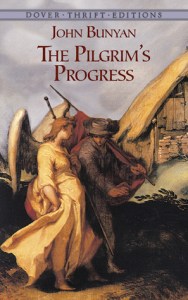
This famous story of man’s progress through life in search of salvation remains one of the most entertaining allegories of faith ever written. Set against realistic backdrops of town and country, the powerful drama of the pilgrim’s trials and temptations follows him in his harrowing journey to the Celestial City.
Along a road filled with monsters and spiritual terrors, Christian confronts such emblematic characters as Worldly Wiseman, Giant Despair, Talkative, Ignorance, and the demons of the Valley of the Shadow of Death. But he is also joined by Hopeful and Faithful.
An enormously influential 17th-century classic, universally known for its simplicity, vigor, and beauty of language, The Pilgrim’s Progress remains one of the most widely read books in the English language.
Review
I read this book a long time ago and I must admit I struggled with it then but I thought I would give it another chance and so I put it on my Classics Club list. In hindsight I probably should not have bothered as the book had still not improved for me.
The storyline for this book is good and I can see what Bunyan was trying to get across but I just can’t stand the main character Christian. The storyline is based on a dream and the dream is based around the character Christian. In all honesty as a Christian myself I really don’t think the character Christian shows us to our best advantage. The character Christian is in my opinion a pompous ass who thinks himself above everyone else. He is self righteous and really annoying. He also abandons his family and basically condemns them to their fate.
The story follows the many adventures of Christian and the many other characters he encounters. The other characters he encounters are all basically people who start out on the journey to faith but inevitably fail.
I really do not get along with this book and it is mainly because of the character Christian. I won’t be making the mistake of reading this book again and I only give this book 2 out of 5 Dragons.
(All purchases made using one of the above affiliate links gives a small percentage of money to myself with no extra cost to yourself. All proceeds go towards the upkeep of this blog. Thank you ever so much, your support is gratefully received.)
About the author
John Bunyan (1628-1688), a Christian writer and preacher, was born at Harrowden (one mile south-east of Bedford), in the Parish of Elstow, England. He wrote The Pilgrim’s Progress, arguably the most famous published Christian allegory. In the Church of England he is remembered with a Lesser Festival on 30 August.
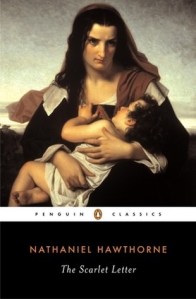
Set in 17th-century Puritan Boston, Massachusetts, during the years 1642 to 1649, it tells the story of Hester Prynne, who conceives a daughter through an affair and will not reveal her lover’s identity. The scarlet letter A (for adultery) she has to wear on her clothes, along with her public shaming, is her punishment for her sin and her secrecy. She struggles to create a new life of repentance and dignity. Throughout the book, Hawthorne explores themes of legalism, sin, and guilt.
Review
I have wanted to read this book since it was mentioned in an episode of Downton Abbey and the Dowager thought the book sounded most unsuitable. It is also one of the books on my Classics Club list.
I will be honest I almost lost the will to live with this book. The introductory chapter of this book is a lengthy chapter about the author and his life in the Customs office and I must admit I found it extremely dull. I was determined to carry on because the main story had not started yet but I will be honest I almost gave up with the book there and then.
The storyline of this book is great but sadly Hawthorne could not have written it in a more boring and long winded way. I found that Hawthorne is quite similar to Washington Irving in his writing style and I will be honest I also struggle with Irving. Basically something that could be said in 500 words they insist on using 5000 and I just find myself shouting at the author ‘why? Get to the point!’.
Hester Prynne is a wonderful character who is thoroughly wronged but because of the time and the place she lives in she is the one who is held up to blame and judged. After Hester’s disgrace she forms a life for herself living in repentance and trying to be the best Christian she can be and because of this people start to accept her again.
I had to really think about my rating of this book because I just could not get on with Hawthorne’s writing style. I almost gave it a lot lower rating but I reconsidered because I really enjoyed the storyline and the character Hester. Overall, I give this book 3 out of 5 Dragons but I will definitely say it won’t be a book that I read again.
(All purchases made using one of the above affiliate links gives a small percentage of money to myself with no extra cost to yourself. All proceeds go towards the upkeep of this blog. Thank you ever so much, your support is gratefully received.)
About the author
Nathaniel Hawthorne was a 19th century American novelist and short story writer. He is seen as a key figure in the development of American literature for his tales of the nation’s colonial history.
Shortly after graduating from Bowdoin College, Hathorne changed his name to Hawthorne. Hawthorne anonymously published his first work, a novel titled Fanshawe, in 1828. In 1837, he published Twice-Told Tales and became engaged to painter and illustrator Sophia Peabody the next year. He worked at a Custom House and joined a Transcendentalist Utopian community, before marrying Peabody in 1842. The couple moved to The Old Manse in Concord, Massachusetts, later moving to Salem, the Berkshires, then to The Wayside in Concord. The Scarlet Letter was published in 1850, followed by a succession of other novels. A political appointment took Hawthorne and family to Europe before returning to The Wayside in 1860. Hawthorne died on May 19, 1864, leaving behind his wife and their three children.
Much of Hawthorne’s writing centers around New England and many feature moral allegories with a Puritan inspiration. His work is considered part of the Romantic movement and includes novels, short stories, and a biography of his friend, the United States President Franklin Pierce.