Review 20: The Snowman by Michael Morpurgo

The Snowman (A new story inspired by the original tale by Raymond Briggs) by Michael Morpurgo and illustarted by Robin Shaw

516Ce29lajL._SX352_BO1,204,203,200_

About the author

fullsizeoutput_b49

Michael Morpurgo has written over 130 books, many of them award winning. His best known work is War Horse which has also been turned into a stage play and a film. In 2003 he was made Children’s Laureate. He set up a charity with his wife called Farms for City Children and in 1999 he was awarded an MBE for his charitable work. In 2017 he was awarded a Knighthood for his charitable work and literature.

About the illustrator

profile_robin_shaw

Robin Shaw is an award winning animator and illustrator, he is also a director of animated commercials. He has worked closely with Raymond Briggs in the past and was part of the directing team of The Snowman and the Snowdog. In 2017 he designed a series of animated sequences for Paddington 2.

Blurb

When James wakes to see snow falling one December morning, he rushes outside to make a snowman. With coal eyes, an old green hat and scarf, and a tangerine nose, the snowman is perfect. James can hardly bear to inside that evening and leave him. But in the middle of the night, he wakes and creeps out to see his snowman again- and to his amazement, the snowman comes to life…

Review

Firstly, I have a confession, I have never read The Snowman by Raymond Briggs but I have watched it on television many, many times. I have only seen The Snowman and the Snowdog once and it almost destroyed me emotionally so I have never seen it again. So when I saw this book sat on the supermarket shelf I immediately picked it up. I was a little worried as I always fear rewrites as most of the time they are never as good as the original, but then I saw it was done by Michael Morpurgo and realised I should have no fears because the man is a genius.

I was so pleased I trusted my instincts, as the story was wonderful, another triumph by Morpurgo. The story is based around James a little boy who suffers with a stammer and who is desperate to have a friend. James lives with his parents on a farm and for Christmas his grandma is staying with them at the farm. Grandma’s favourite story to read James at bedtime is The Snowman by Raymond Briggs.

During the night James’ wish is answered and it snows and so he builds a snowman, a giant of a snowman who towers above everyone wearing a green scarf and hat with a big tangerine nose. James loves this snowman and wants to spend all day with him, he is also really proud of his new friend and is desperate for his family to meet the snowman. Finally at nighttime he leaves the snowman but then in the night something magical happens, and James is not the only one to witness the magic of the snowman.

The story is very similar to the original but with a few subtle differences but this is what makes it a different tale to stand on its own. The story is full of magic and is very respectful of the original, this is just like a sequel to the original in fact. I also loved that when Morpurgo was approached to write this story he was worried and so approached Raymond Briggs who thankfully gave his blessing. The respect that Morpurgo has for Raymond Briggs’ story is humbling and comes through in his version of The Snowman.

I loved the character of James, I felt sorry for him, happy for him and he just made me smile and think aww. I also really liked Grandma, she is a Grandma who still believes in magic. I think this is a fantastic book for children and adults and a perfect read for around Christmas. The illustrations were also beautiful and really added to the story. I hope it gets turned into an animated film, as I think it would be perfect. I gave this book 5 stars out of 5 stars.

Plus I loved the extras at the end of the story, the Christmas traditions from other countries and the perfect method for making the best snowman.

Lady Book Dragon

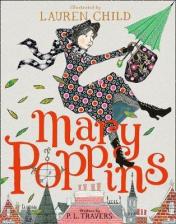
Review 17: Mary Poppins by P. L. Travers

Mary Poppins by P. L. Travers

9780008289362

About the author

Pamela Lyndon Travers was born in Australia in 1899 and her birth name was Helen Lyndon Goff. She was first published in her teenage years and also worked briefly as a Shakespearean actress. At the age of 25 she emigrated to England and changed her name to Pamela Lyndon Travers, she adopted the pen name P. L. Travers in 1933, when she started writing the Mary Poppins series. Walt Disney tried for years to get the rights for Mary Poppins to be made into a film, he even visited her several times at her house in London. Eventually Disney obtained the rights and the film Mary Poppins film was released in 1964. Travers did write many other novels, poetry and works of non-fiction but she is mainly remembered for Mary Poppins. She received an OBE in 1977 and died in 1996.

Blurb

When Mary Poppins arrives at their house on a gust of the East Wind, and slides up the banister, Jane and Michael Banks’s lives are turned magically and wonderfully upside down…

Review

Another book off my Christmas reading list finished and enjoyed. I’ve never read any of the Mary Poppins stories before but I have watched the film many times over, I used to happily sing along to all the songs and must admit I still do. I must admit I am looking forward to the new film coming out but only because one of my students stars in the film. I am not usually a fan of remakes if truth be told. When Waterstones emailed advertising this book I ordered it straight away and got a signed copy, always a thrill.

The first thing I noticed was that the story is abridged which was a little disappointing but the gorgeous illustrations more than made up for that. The story is based around the Banks family who are in need of another nanny and that is where Mary Poppins comes in.

The Banks family consists of Mr Banks the father and head of the house who is rather tight with money and goes out to work each day at the bank. Mrs Banks is the mother and is always out being very busy doing things and making sure the house is running correctly. The children are Michael and Jane the two oldest and the main characters of the story and the young twins John and Barbara who have a chapter of their own but are not otherwise really mentioned. Then there is Mrs Ellen who is the cook, Ellen the maid and Robertson Ay who is the butler but who is also a little useless.

Michael and Jane are rather naughty children and have driven away another Nanny and so Mary Poppins turns up to be the new Nanny. Mary Poppins instantly comes across as different to the children, to begin with she seems to arrive with the wind and then she sits at the bottom of the banister and slides up the staircase. The children know that Mary is different and soon begin to realise her ways and methods. The other thing I love about the children is their view of the world, a good example of this is the fact that they think their dad physically makes money at the bank. When I read this I had the image of Mr Banks sat there cutting out and minting coins and this is what I think the children also imagine their father does each day at work. I found the image adorable and it put a big smile on my face. Travers is a talented writer in this respect and fully understands the way a child’s mind works.

Mary Poppins was a bit of a surprise to me, firstly I could not believe how vain she is, she is constantly looking at her own reflection and deliberately wears clothes and hats that she knows are different and look good on her. The two children get frustrated with her when they go out as she constantly stops at windows to look at herself. In this respect I do not think she sets a good example to the children and I would not like to be around a person who did this either so I understand the children’s frustration. Mary Poppins is also very bossy which I was not happy about but she did get results from the children so I suppose it worked. I also found it odd how she called all birds sparrows, even pigeons, thankfully the children knew better.

I did not find Michael and Jane to be very naughty and thought that the previous nanny must have had a very low threshold of behaviour for the children to drive her to leave. I found the children inquisitive and just like normal happy high spirited children but maybe my opinion is a modern opinion and the time the story was written children were still meant to be seen and not heard.

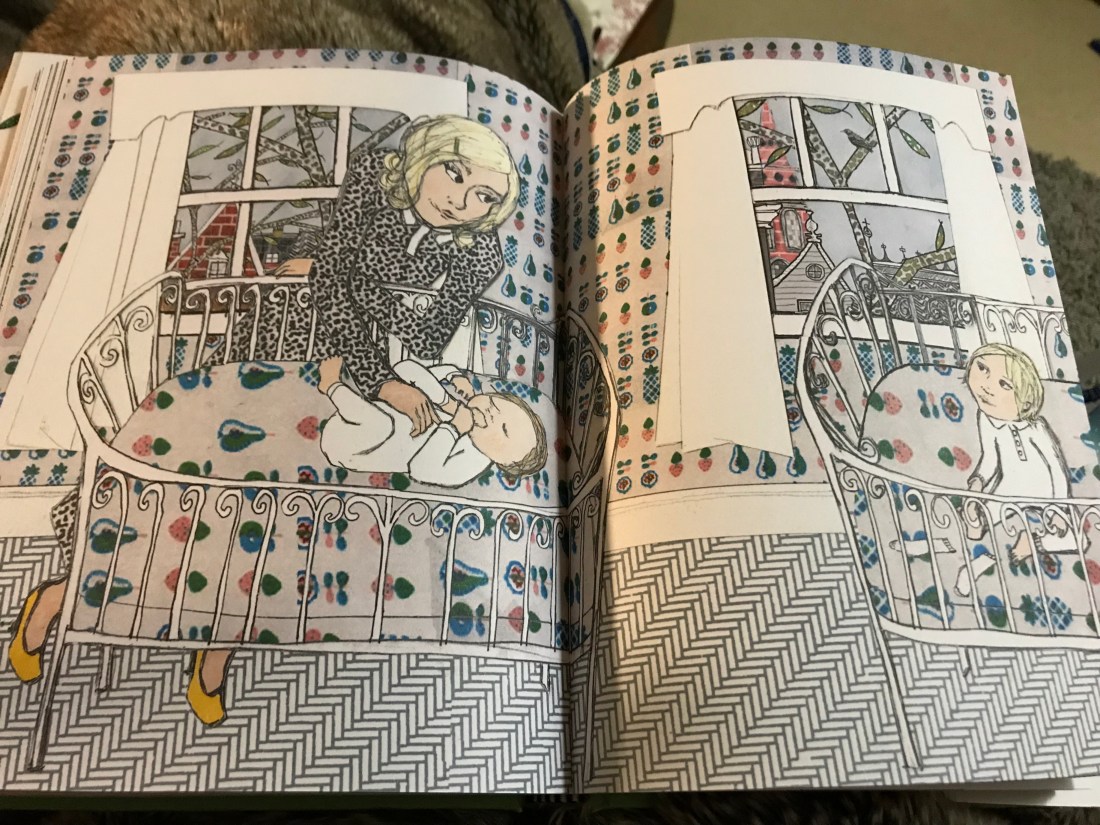
My favourite chapter was in fact the chapter based around John and Barbara and how when they reach the age of one everything changes. I found this chapter really sweet and it made me smile, it also made me a little sad but in a good way. The illustrations for this chapter also reminded me greatly of the TV series that Child created called Charlie and Lola. The other highlight of this chapter was the cheeky starling.

I did enjoy this book and I want to read the full version and maybe some of the sequels but it did disappoint in some areas, the main being Mary Poppins, she just came across as grumpy. The best characters were the children I loved their naivety and their undying love of Mary Poppins even though they can see her flaws they still love her and have also learnt how to get what they want from her. The other reason I enjoyed this book so much was the illustrations, Child is very talented and she really made the story come alive. I only gave this book 3 out 5 stars because it felt like a lot had been cut from the story and it seemed to detract from the storyline and at times felt rushed and disjointed. Also I struggled to accept Mary Poppins at times.

A beautiful book well worth the read and I will happily recommend it to children and adults. I will leave you with my favourite illustration from the book.

fullsizeoutput_b1f

Lady Book Dragon

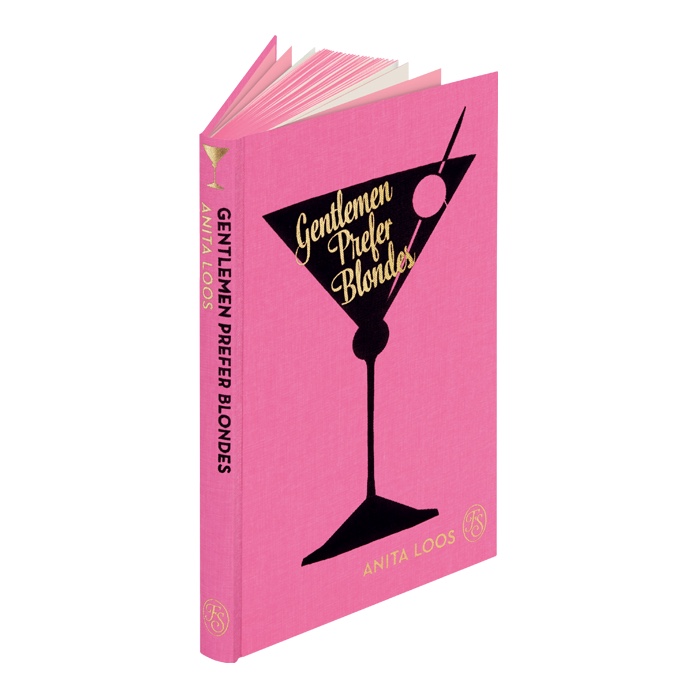
Review 13: Gentlemen Prefer Blondes by Anita Loos

Gentlemen Prefer Blondes by Anita Loos

About the author

Loos was an American screenwriter, playwright, and author born in 1889. She is best known for her novel Gentlemen Prefer Blondes. She wrote scripts from 1912 till her death in 1981 and was the first scriptwriter on the payroll of Triangle Film Corporation. She wrote a great many of the Douglas Fairbanks films and did the stage adaptation of Collette’s Gigi.

Blurb

With these deceptively simple words Lorelei Lee, a not-so-dumb blonde with a single-minded devotion to orchids, diamonds and champagne, embarks on what Edith Wharton was to call, perhaps not entirely seriously, ‘the great American novel’. Written in diary form, Lorelei Lee’s life makes for an outrageous, witty read. Capturing the carefree attitude of the glamorous jazz age, the flighty Lorelei moves from suitor to suitor, from scandalous situation to frivolous engagement, ever in search of the elusive millionaire who could provide her own happy ending.

With the help of her wise-cracking friend and protector Dorothy, Lorelei learns to spot a gentleman ‘whom you can call up at any time and ask him to go shopping and he is delighted’ at a hundred paces, dances with the Prince of Wales, and travels to Paris to enjoy ‘the Eyeful Tower’. Sharp, hilarious and undeniably endearing, Gentlemen Prefer Blondes would be immortalised by the 1953 musical starring Marilyn Monroe, and Anita Loos herself was so impressed by the success of her creation that she ended up dyeing her hair …

Review

Gosh this book was annoying! I got this book a couple of years ago free from The Folio Society because I had spent so much money with them, however I do remember it was meant to be another book but they had sold out and so they sent me this one instead. 

I struggled with this book, I know the book is written in diary form and Loos included grammatical and spelling errors but it was these errors that drove me mad. I just found them over the top and I know they were there to add to the feel of a diary but it just upset me, I wanted to correct all the errors with a big red pen. 

The diary belongs to Lorelei who is an American society girl who is moving through life going from one suitor to the other getting as many presents as she can out of them and looking for the richest man she can find to eventually marry or sue in court. Lorelei has a friend Dorothy who helps her in this quest. Lorelei starts the diary to help her become educated as she keeps saying she is an educated girl and just wants to read books and see the all education she can.

The first thing I worked out was that Lorelei is really not very educated, she pretends to be and tells the men she meets she is but in fact she is severely lacking. She is educated in one department and that department is using men to get what she wants and she can work out a rich man and poor man just by looking at them. I did like the fact that all the books she was given to read she found some excuse not to read and when she went to museums she just complained about her aching feet. This made me laugh a little bit but then it turned to despair.

I had high hopes for this book and I think I had in mind of something like The Great Gatsby but sadly I did not enjoy it like I did The Great Gatsby. Lorelei was just too annoying for me, I know it is set in a different time but she just came across as too immature and money grabbing. She just used men for her own advantage and only thought of shopping and champagne. I started to feel really sorry for all the men she took shopping and then discarded. She’s lazy and sleeps in till silly times basically because she is hungover all the time. The more I think of her character the more she annoys me and to be honest I would not like a person of her character anywhere near me. 

I am sorry that my review is so against the general grain of all the other reviews out there and I know that this book is considered a great American classic but I found it very hard to digest. I did not believe the spelling and grammatical errors were necessary and certainly deterred me from the book. Also I could not believe that such an annoying character could exist but I have found her. Until now I thought it was Jane Austen’s Emma who was the most annoying heroine in the literary world, but no she has moved to second place as Lorelei has taken her crown. I think it is most likely that it is because I prefer a strong female lead who does not depend on men to get through life and Lorelei just does not fit into this category.

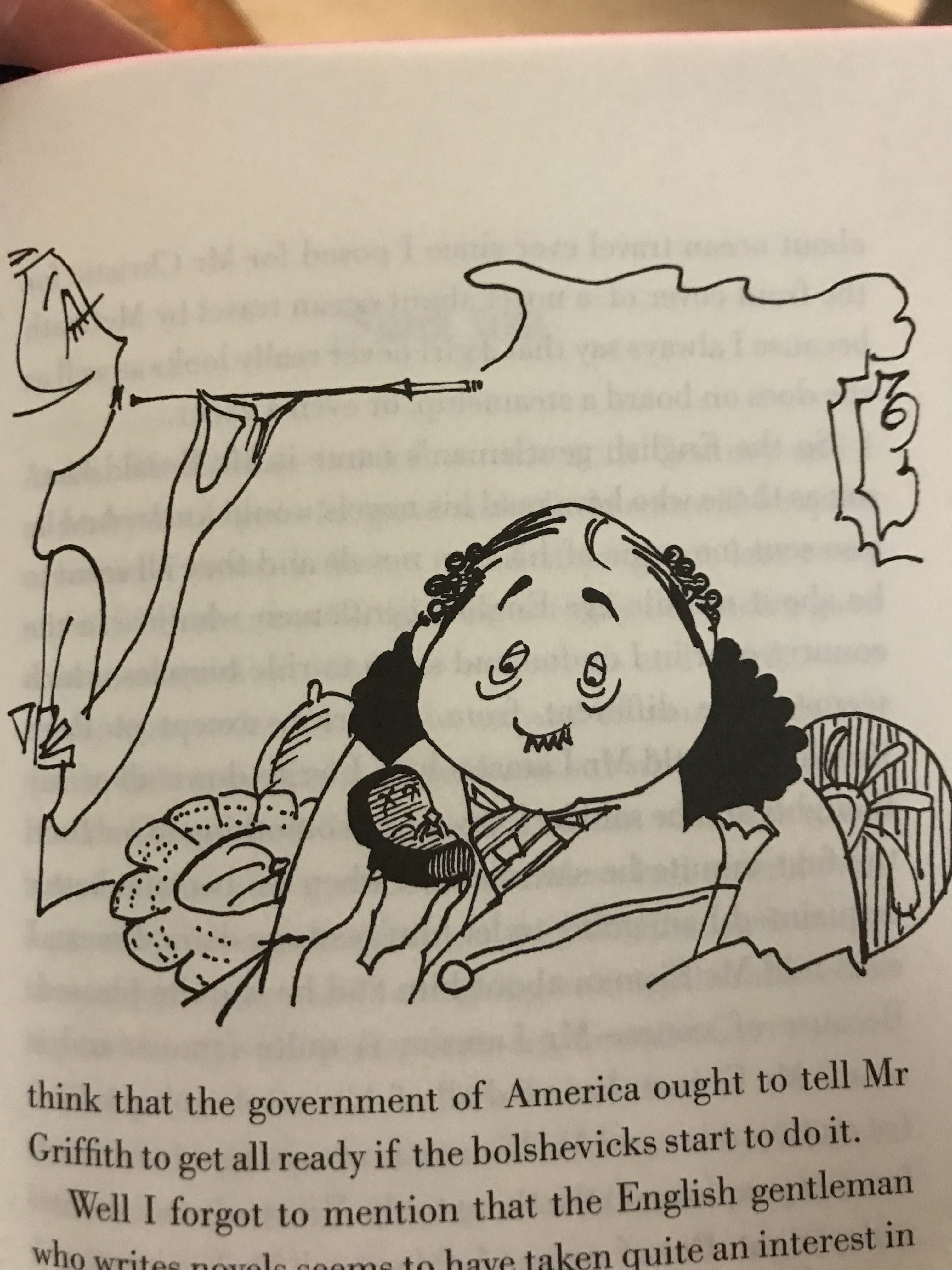
The other area I did not enjoy was the illustrations. I found they lacked finesse and I doubt I will be keen to read another book with illustrations by Ffolkes.

All in all a massive disappointment for me, thankfully it is not a long book and I got it for free from The Folio Society. Just 1 star out of 5 from me.

Lady Book Dragon.

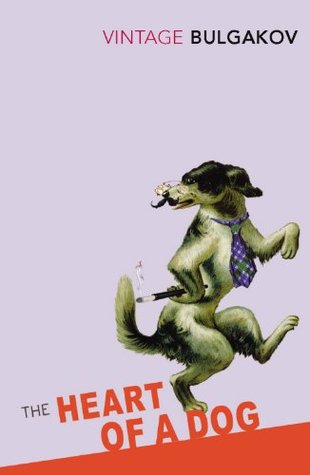
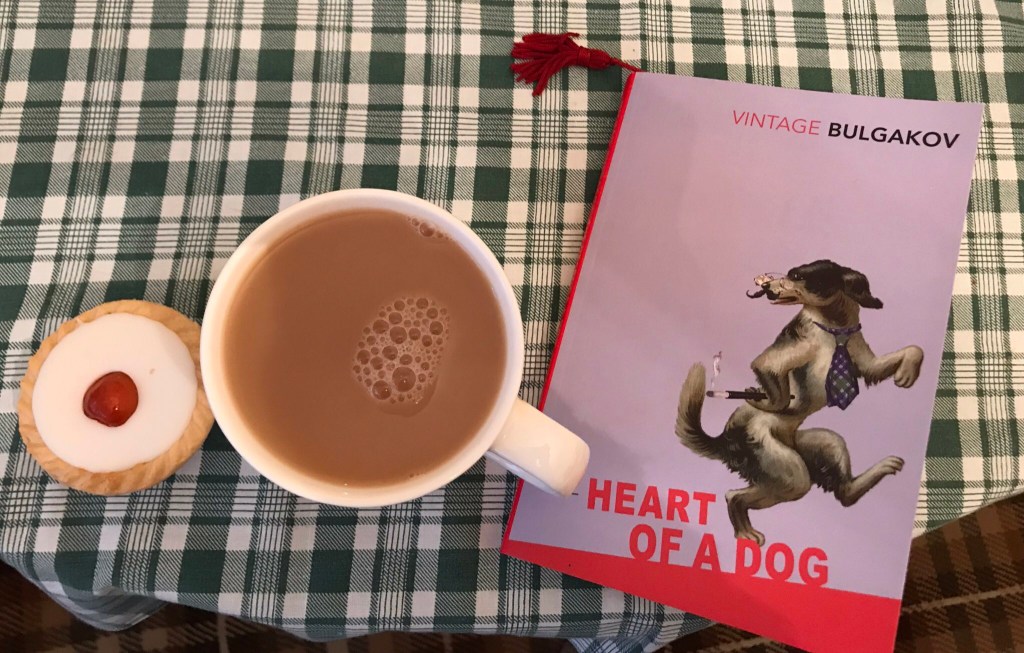
Review 12: The Heart of a Dog by Mikhail Bulgakov

The Heart of a Dog by Mikhail Bulgakov (Translated by Michael Glenny)

About the author

Mikhail Bulgakov was born in Kiev on 15th May 1891. He trained as a doctor but gave up practising medicine in 1920 to devote his life to writing. In 1925 he completed The Heart of a Dog, which remained unpublished in the Soviet Union until 1987. By 1930 Bulgakov had become so frustrated by the suppression of his work that he wrote to Stalin begging to be allowed to emigrate if he was not given the opportunity to make his living as a writer in the USSR. Stalin telephoned him personally and offered him a job at the Moscow Arts Theatre. In 1938, he completed The Master and Margarita. He sadly died in 1940. In 1973 The Master and Margarita was finally published in full.

Blurb

A rich, successful Moscow professor befriends a stray dog and attempts a scientific first by transplanting into it the testicles and pituitary gland of a recently deceased man. A distinctly worryingly human animal is now on the loose, and the professor’s hitherto respectable life becomes a nightmare. An absurd and superbly comic story, this novel can also be read as a fierce parable of the Russian Revolution.

Review

This book was on a table in the Waterstones in London and I must admit I was intrigued. I do find the piles of books on the tables at Waterstones very tempting and I often end up buying books I usually would not go for. Having read a few books with cats on the cover recently I thought it was about time I read a book with a dog on the front. Sadly I found this book rather a disappointment. 

Firstly, I have not read The Master and Margarita but it is on my to read pile and even though this book has been a disappointing read for me, I will give The Master and Margarita a chance and keep it on my to read pile. I do not regret reading this book, as it was interesting and I did enjoy small parts of it. 

The story begins with the meeting of the stray dog and the dog’s thoughts. The poor dog has been badly wounded and is contemplating its end and the reader gets to see the world of Russia through its eyes. Then Professor Philip Philipovich comes on to the scene and befriends the wounded dog. This Professor takes the stray into his home, treats his wounds and appears to be a dream come true for the dog. The dog’s world has changed for the better and it is glorious, until it all changes and the Professor’s true intentions become clear.

The Professor specialises in rejuvenating people’s sexual organs by replacing them with animal organs. This becomes clear when he examines a lady and says he will replace her ovaries with the ovaries of a monkey. This to be honest disturbed me when I read it and I was dubious whether to continue, as things like that quite often put me off, but by this point I had fallen in love with the little dog and wanted to know what would happen to him next.

The graphic detail of the surgery really put me off and I must admit I had to skim some of the details as I could not handle it, especially just before sleep. It was extremely realistic and this is obviously where Bulgakov’s medical background comes in handy when writing about the surgery. Again I only kept going because I desperately wanted to know what would happen next to the dog.

The descriptions of the way Soviet Russia was becoming was very interesting and I can see how worrying it would have been for the people living in Russia at the time it was all happening. I can also see why the book was confiscated from Bulgakov, because the last thing the Soviet Union would have wanted was this bleak view of Russia being broadcast to the world. I think the stray dog’s point of view whilst in the doorway waiting for death was the best description of Russia and really summed up what Bulgakov was trying to get across. 

However as the story went on, I just think it went somewhat off the rails and a bit too over the top for me. Also Philip started to drive me slightly crazy with his constantly quoting from the theatre for example “To the banks of the sacred nile…” it was like the man was demented and just made no sense. 

The dog as a normal dog was the best part of this book and I just could not understand why a man would want to perform the experiment that he did to the dog. Maybe it is because I have no real interest in science but it just did not make sense. Frankenstein made sense to me because the good doctor was trying to find a cure for death but putting the testicles and pituitary gland of a human into a dog made no sense at all to me. 

As a Russian book I was surprised at how short it was, my general experience of Russian literature is of huge tomes, some of which are my favourite books. Shortness for this book was one of its advantages though.

I do not think my review of this book will be popular as I tend to be against the general consensus but my views are my own and everyone has their own opinions, which is good as we would be a pretty boring race if we all felt and thought the same. My overall rating of the book is 2 stars out of 5, the reason it was not 1 star was because I liked the beginning a great deal and the dog before it all went wrong. 

A quick read to while away an afternoon break like I used it for.

Lady Book Dragon 


Friday Poetry

This week I have been trying to read a few poems, when I have the time and to be honest the inclination. I am determined in my quest though and will continue to read as much poetry as I can.

I chose this week’s poem because it made me giggle, and what better way to like something than when it makes you giggle. Also frogs and toads were my favourite animals as a child and I still have a soft spot for them. Happy reading!

“I’m nobody! Who are you?”

I’m nobody! Who are you?

Are you nobody, too?

Then there’s a pair of us – don’t tell!

They’d banish us you know.

How dreary to be somebody!

How public, like a frog

To tell your name the livelong day

To an admiring bog!

Emily Dickinson


Lady Book Dragon

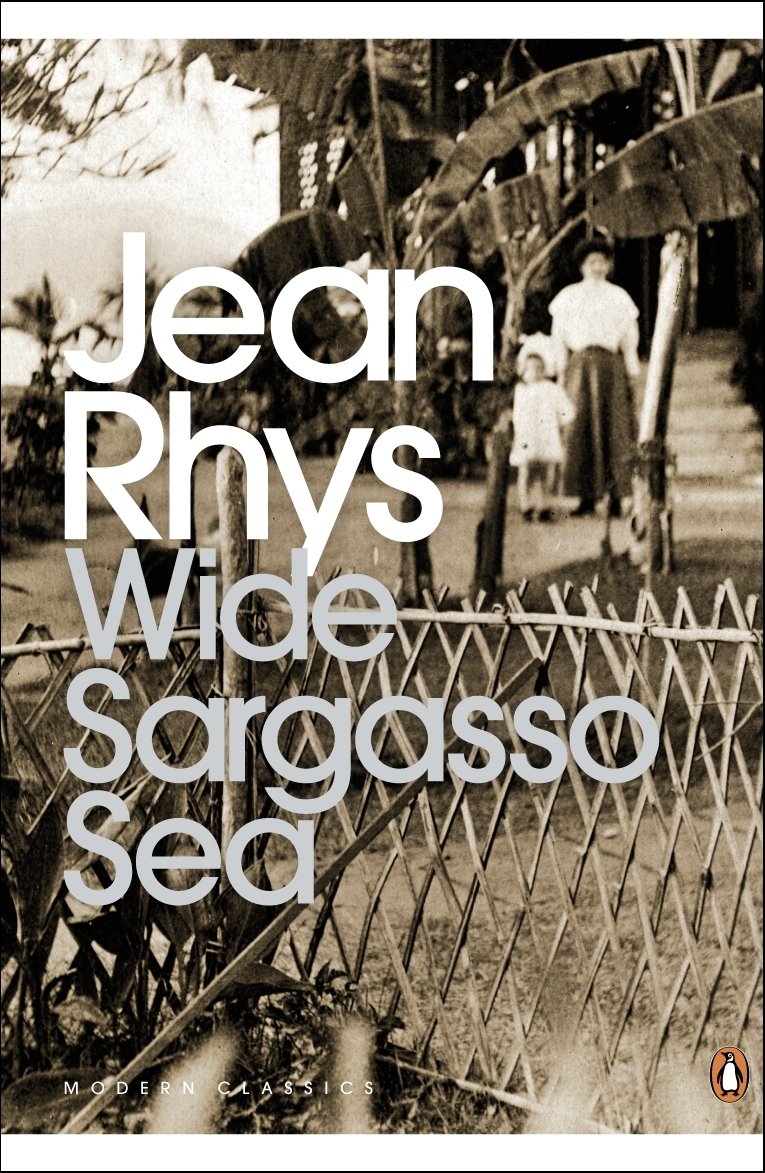
Review 4: Wide Sargasso Sea by Jean Rhys

71v7T1Jr2dL

Wide Sargasso Sea by Jean Rhys

About the author

Jean Rhys was born in Dominica in 1890, the daughter of a Welsh doctor and a white Creole mother. At sixteen she moved to England, where she worked at many different jobs, chorus girl, and artist’s model being just two of them.

After her first marriage broke up she started to write and was encouraged by Ford Madox Ford. She wrote The Left Bank, Quartet, Mr Mackenzie, Voyage in the Dark and Good Morning, Midnight between 1927 and 1939. However due to the themes being way ahead of their time, the books eventually went out of print and Rhys was sadly forgotten about.

In 1966 she made a come back with Wide Sargasso Sea and won the Royal Society of Literature Award and the W. H. Smith Award with it. She was awarded an CBE in 1978 and sadly passed away in 1979.

Blurb

Born into an oppressive colonialist society, Creole heiress Antoinette Conway meets a young Englishman who is drawn to her innocent sensuality and beauty. After their marriage, disturbing rumours begin to circulate, poisoning her husband against her. Caught between his demands and her own precarious sense of belonging, Antoinette is driven towards madness.

Review

I know my review of this book might prove unpopular to most, but it is just my opinion and nobody has to believe the same. I bought this book a couple of months ago from the Bronte Parsonage Museum (one of my favourite places) with high hopes, as I had heard such good things about it and remember my English Literature teacher telling me I should definitely read it. So quite a few years later, I decided to listen to my English teacher. Sadly, I was greatly disappointed and I did not get on well with the book at all.

sjQ22t5cQhSYpp076UOKEg

The book is written in three parts, the first part is told in Antoinette’s own words whilst she is a young girl. The second is in the words of her husband the young Mr Rochester telling us about his arrival in the West Indies, his marriage and subsequent events. The final part is again by Antoinette, but now set in England, in Thornfield Hall.

The first part I really struggled to get into and to be honest almost gave up on, I found it disjointed and difficult to read. I did feel sorry for Antoinette, her childhood was a not a happy one, her only real friend who seemed to be on her side was her Aunt Cora. 

Mr Rochester was a complete alien to me and I was not impressed by his portrayal and I had to think of him completely unrelated to Jane Eyre just to continue reading. The plot is believable, of Mr Rochester having to marry for money, but he is way too gullible and quite frankly appears at times like a drunken lunatic himself. 

Another major issue I had was Antoinette’s name, I just do not understand the change to Bertha, it just seems again too un-plausible a plot line to me. 

I really struggled with this book, and it left me disappointed and to be honest slightly angry. My review is not all bad though I promise, I did really enjoy the third part of the book and how it linked up to Jane Eyre. The descriptions in the attic were good and well linked, in fact I would have liked a little more from the third part, as it is only short. I also really enjoyed how Rhys described the locations and the local people and you could really tell she was drawing on real life memories.

The book is only short and did not take me long to read thankfully, as I am not sure I would have completed it if it had been longer. 

On Goodreads I gave this 2 out of 5 stars. 

Purchase from

Waterstones

Book Depository

Lady Book Dragon