Jane Austen’s Bookshelf by Rebecca Romney (Review)

Jane Austen’s Bookshelf: A Rare Book Collector’s Quest to Find the Women Writers Who Shaped a Legend by Rebecca Romney
Bookshop.org | Ebook | TG Jones | Waterstones | World of Books

Blurb

Long before she was a rare book dealer, Rebecca Romney was a devoted reader of Jane Austen. She loved that Austen’s books took the lives of women seriously, explored relationships with wit and confidence, and always, allowed for the possibility of a happy ending. She read and reread them, often wishing Austen wrote just one more.

But Austen wasn’t a lone genius. She wrote at a time of great experimentation for women writers—and clues about those women, and the exceptional books they wrote, are sprinkled like breadcrumbs throughout Austen’s work. Every character in Northanger Abbey who isn’t a boor sings the praises of Ann Radcliffe. The play that causes such a stir in Mansfield Park is a real one by the playwright Elizabeth Inchbald. In fact, the phrase “pride and prejudice” came from Frances Burney’s second novel Cecilia. The women that populated Jane Austen’s bookshelf profoundly influenced her work; Austen looked up to them, passionately discussed their books with her friends, and used an appreciation of their books as a litmus test for whether someone had good taste. So where had these women gone? Why hadn’t Romney—despite her training—ever read them? Or, in some cases, even heard of them? And why were they no longer embraced as part of the wider literary canon?

Jane Austen’s Bookshelf investigates the disappearance of Austen’s heroes—women writers who were erased from the Western canon—to reveal who they were, what they meant to Austen, and how they were forgotten. Each chapter profiles a different writer including Frances Burney, Ann Radcliffe, Charlotte Lennox, Charlotte Smith, Hannah More, Elizabeth Inchbald, Hester Lynch Thrale Piozzi, and Maria Edgeworth—and recounts Romney’s experience reading them, finding rare copies of their works, and drawing on connections between their words and Austen’s. Romney collects the once-famed works of these forgotten writers, physically recreating Austen’s bookshelf and making a convincing case for why these books should be placed back on the to-be-read pile of all book lovers today. Jane Austen’s Bookshelf will encourage you to look beyond assigned reading lists, question who decides what belongs there, and build your very own collection of favourite novels.

Review

As soon as I saw this book I put it on my birthday list and my wonderful husband bought it for me. It was on my TBR pile for just over a week before I started reading it as I couldn’t resist. 

I absolutely loved this book and could not put it down. The first thing I liked was the layout of the book as each chapter focuses on one of the authors that Jane Austen was known to have read. We get a good history of each author and what books, plays or collections of poems they wrote. We also learn about Jane Austen and how her life linked with these authors. I also really enjoyed learning about the reasons these women chose to write. 

The other element I enjoyed was learning a bit about the rare book trade and how rare book dealers work. I enjoyed learning about the different editions that Romney collected, how she hunted them down, purchased them and appreciated them. I loved learning about rare editions of Austen novels and first editions of the authors focused on in the book. I also loved learning about how books were published in Austen’s time, how the print runs ran and what the paper and binding was made out of. 

The only problem I had with this book was that as soon as I started reading this book I started a list of all the books these authors had written with the plan of reading them myself one day. This means my wish list of books has grown hugely. I have actually read a few off the list because I had an amazing English teacher who introduced me to the work of Ann Radcliffe and I became a fan of Frances Burney earlier this year. However, there are still plenty of books left for me to collect and read. I give this book 5 out of 5 Dragons and it is definitely one of my top reads of 2025. 

🐲🐲🐲🐲🐲

About the author

Rebecca Romney is a rare book dealer and the cofounder of Type Punch Matrix, a rare book company based in Washington, DC. She is the rare books specialist on the HISTORY Channel’s show Pawn Stars, and the cofounder of the Honey & Wax Book Collecting Prize. She is a generalist rare book dealer, handling works in all fields, from first editions of Jane Austen to science fiction paperbacks. Her work as a bookseller or writer has been featured in The New York Times, The Atlantic, Forbes, Variety, The Paris Review, and more. In 2019, she was featured in the documentary on the rare book trade, The Booksellers. She is on the Board of the Antiquarian Booksellers’ Association of America (ABAA) and the faculty of the Antiquarian Book Seminar (CABS-Minnesota).

Etsy

If you enjoy reading my blog and would like to make a donation I would be very grateful. Thank you

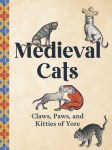
Medieval Cats: Claws, Paws, and Kitties of Lore by Catherine Nappington (Review)

Medieval Cats: Claws, Paws, and Kitties of Lore by Catherine Nappington

Bookshop.org | Waterstones | WH Smith

Blurb

A hilarious celebration of cats in artwork from medieval times

From the year 500 to 1500 numerous medieval manuscripts and works of art portrayed cats as lazy, selfish, and vicious. Centuries later, these masterpieces live on, shining a bright light on the dark age of cats and telling a brand-new story of their glory. Medieval Cats celebrates more than two hundred cats who are up to no good.

Also included are cat facts from the Middle Ages as well as poems and excerpts from literature where cats were mentioned. Both a humorous book and a peek into medieval art and literature, Medieval Cats will appeal to cat and art lovers everywhere.

Review

My husband had this fun little book as a Christmas present so as soon as he had read it I knew I had to read it as well. 

I read this book in one sitting because there are a lot of pictures but there are also some very interesting facts about cats. Some of these facts are quite gruesome so this book isn’t for the faint hearted. I didn’t realise just how cruel people could be to cats between year 500 and 1500. 

However, it wasn’t all doom and gloom. There were also some very humorous facts about cats. The chosen manuscripts to feature were also excellent and very amusing. Monks had a real love for cats and managed to slip a cat picture into their manuscripts in very cunning ways. 

This is a fun little book that is perfect for the coffee table and one that you can always dip into for some beautiful cat pictures and some fun facts. I give this book 4 out of 5 Dragons. 

🐲🐲🐲🐲

Etsy

If you enjoy reading my blog and would like to make a donation I would be very grateful. Thank you

Goodreads Monday: 28/4/2025

Goodreads Monday is now hosted by Budget Tales Book Club.  All you have to do is show off a book from your TBR that you’re looking forward to reading.

Hello!

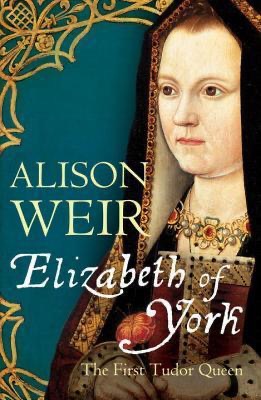
I hope everyone has had a good start to the week. My chosen book to feature this week is by one of my all time favourite authors, Alison Weir. I really want to read this one as well because I don’t know very much about Elizabeth of York and would love to learn more.

Bookshop.org | Waterstones | WH Smith

Many are familiar with the story of the much-married King Henry VIII of England and the celebrated reign of his daughter, Elizabeth I. But it is often forgotten that the life of the first Tudor queen, Elizabeth of York, Henry’s mother and Elizabeth’s grandmother, spanned one of England’s most dramatic and perilous periods. Now New York Times bestselling author and acclaimed historian Alison Weir presents the first modern biography of this extraordinary woman, whose very existence united the realm and ensured the survival of the Plantagenet bloodline.
 
Her birth was greeted with as much pomp and ceremony as that of a male heir. The first child of King Edward IV, Elizabeth enjoyed all the glittering trappings of royalty. But after the death of her father; the disappearance and probable murder of her brothers—the Princes in the Tower; and the usurpation of the throne by her calculating uncle Richard III, Elizabeth found her world turned upside-down: She and her siblings were declared bastards.
 
As Richard’s wife, Anne Neville, was dying, there were murmurs that the king sought to marry his niece Elizabeth, knowing that most people believed her to be England’s rightful queen. Weir addresses Elizabeth’s possible role in this and her covert support for Henry Tudor, the exiled pretender who defeated Richard at the Battle of Bosworth and was crowned Henry VII, first sovereign of the House of Tudor. Elizabeth’s subsequent marriage to Henry united the houses of York and Lancaster and signaled the end of the Wars of the Roses. For centuries historians have asserted that, as queen, she was kept under Henry’s firm grasp, but Weir shows that Elizabeth proved to be a model consort—pious and generous—who enjoyed the confidence of her husband, exerted a tangible and beneficial influence, and was revered by her son, the future King Henry VIII. 
 
Drawing from a rich trove of historical records, Weir gives a long overdue and much-deserved look at this unforgettable princess whose line descends to today’s British monarch—a woman who overcame tragedy and danger to become one of England’s most beloved consorts.

Happy Reading

Etsy

If you enjoy reading my blog and would like to make a donation I would be very grateful. Thank you

Catherine de’ Medici: The Life and Times of the Serpent Queen by Mary Hollingsworth (Review)

Catherine de’ Medici: The Life and Times of the Serpent Queen by Mary Hollingsworth

Blurb

A new biography of Catherine de’ Medici, the most powerful woman in sixteenth-century Europe, whose author uses neglected primary sources to recreate the life and times of a remarkable – and remarkably traduced – woman.

History is rarely kind to women of power, but few have had their reputations quite so brutally shredded as Catherine de’ Medici, Italian-born queen of France and influential mother of three successive French kings during that country’s long sequence of sectarian wars in the second half of the sixteenth century. Thanks to the malign efforts of propagandists motivated by religious hatred, history tends to remember Catherine as a schemer who used witchcraft and poison to eradicate her rivals, as a spendthrift dilettante who wasted ruinous sums of money on building and embellishment of monuments and palaces, and most sinister of all, as instigator of the St Bartholomew’s Day massacre of 1572, in which thousands of innocent Protestants were slaughtered by Catholic mobs.

Mary Hollingsworth delves into contemporary archives to discover deeper truths behind these persistent myths. The correspondence of diplomats and Catherine’s own letters reveal a woman who worked tirelessly to find a way for Catholics and Protestants to coexist in peace (a goal for which she continued to strive until the end of her life), who was well-informed on both literary and scientific matters, and whose patronage of the arts helped bring into being glorious châteaux and gardens, priceless work of art, and magnificent festivities combining theatre, music and ballet, which display the grandeur of the French court.

Review

I’ve only ever read history books that mention Catherine de’ Medici in passing but I have always wanted to know more about this formidable character from history. This is also my first book by Mary Hollingsworth. 

I’ve read a lot of history books over the years and after studying Ancient Greek and Roman history it is quite clear that history is written by men and is about men and any woman who even dared to take control and show her strength was severely slandered by the male history writers. Catherine de’ Medici was no different. 

Catherine de’ Medici was an Italian born French queen who was also the mother of three French kings during a tumultuous time of the sectarian wars. History tends to remember Catherine de’ Medici as a schemer who used witchcraft and poison to get rid of her enemies. A woman who wasted huge amounts of money on building projects and statues and the person who instigated the St Bartholomew’s Day massacre of 1572 which saw thousands of Protestants slaughtered by Catholic mobs. 

Hollingsworth challenges these preconceptions by using letters written by Catherine de’ Medici, correspondence of diplomats, and other historical sources from the time. By piecing together all her findings she shows a very different story of Catherine de’ Medici and one that I wasn’t expecting. 

I absolutely loved reading this book and I really liked how you could see how well researched it is. Hollingsworth shows a completely different Catherine de’ Medici and she is definitely a new favourite for me and I can’t wait to read more about her. Catherine de’ Medici worked tirelessly for her sons and her country and the only thing that stopped her working was illness. I give this book 5 out of 5 Dragons and will definitely be reading more books by Mary Hollingsworth soon. 

🐲🐲🐲🐲🐲

Purchase Links

Bookshop.org | Waterstones | WH Smith

(All purchases made using one of the above affiliate links gives a small percentage of money to myself with no extra cost to yourself. All proceeds go towards the upkeep of this blog. Thank you ever so much, your support is gratefully received.)

About the author

Mary Hollingsworth is a scholar of the Italian Renaissance, and author of The Cardinal’s Hat, The Borgias: History’s Most Notorious Dynasty and Patronage in Renaissance Italy: From 1400 to the Early Sixteenth Century.

Etsy

If you enjoy reading my blog and would like to make a donation I would be very grateful. Thank you

Non Fiction November 2024

Hello!

This year I have decided to take part in Non Fiction November. Over the last few years I have really got into reading non fiction but this year I haven’t done as much as I would like. Having this month to just read solid non fiction seems like a perfect plan.

My planned non fiction books. I probably won’t manage to read all these books but I am planning on giving it my best.

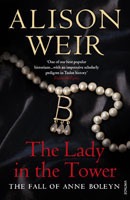
  • The Lady in the Tower by Alison Weir – This was a birthday present last month which I’m very excited to read.
  • The Princes in the Tower by Philippa Langley – I’ve never read any Philippa Langley but I watched the documentary that went with this book and really enjoyed it.
  • Emperor of Rome by Mary Beard – Anything by Mary Beard I read!
  • Life, Death and Disease in the Middle Ages and Beyond by Professor Alice Roberts – Another new author for me but I love her documentaries.
  • Queens of the Crusades by Alison Weir – My favourite historian, what more of an excuse do I need?
  • What the Greeks Did for Us by Tony Spawforth – Another new author for me but one I’m looking forward to reading.
  • Twelve Caesars by Mary Beard – I have actually started this but haven’t finished it yet.
  • Children of England by Alison Weir – Again it is Alison Weir , what more can I say?

What books are you planning on reading for Non Fiction November?

Happy Reading

Etsy

If you enjoy reading my blog and would like to make a donation I would be very grateful. Thank you

The Woman Who Would Be King: Hatshepsut’s Rise to Power in Ancient Egypt by Kara Cooney (Review #8)

The Woman Who Would Be King: Hatshepsut’s Rise to Power in Ancient Egypt by Kara Cooney 

Blurb

An engrossing biography of the longest-reigning female pharaoh in Ancient Egypt and the story of her audacious rise to power in a man’s world.

Hatshepsut, the daughter of a general who took Egypt’s throne without status as a king’s son and a mother with ties to the previous dynasty, was born into a privileged position of the royal household. Married to her brother, she was expected to bear the sons who would legitimize the reign of her father’s family. Her failure to produce a male heir was ultimately the twist of fate that paved the way for her inconceivable rule as a cross-dressing king. At just twenty, Hatshepsut ascended to the rank of king in an elaborate coronation ceremony that set the tone for her spectacular twenty-two year reign as co-regent with Thutmose III, the infant king whose mother Hatshepsut out-maneuvered for a seat on the throne. Hatshepsut was a master strategist, cloaking her political power plays with the veil of piety and sexual expression. Just as women today face obstacles from a society that equates authority with masculinity, Hatshepsut had to shrewdly operate the levers of a patriarchal system to emerge as Egypt’s second female pharaoh.

Hatshepsut had successfully negotiated a path from the royal nursery to the very pinnacle of authority, and her reign saw one of Ancient Egypt’s most prolific building periods. Scholars have long speculated as to why her images were destroyed within a few decades of her death, all but erasing evidence of her rule. Constructing a rich narrative history using the artifacts that remain, noted Egyptologist Kara Cooney offers a remarkable interpretation of how Hatshepsut rapidly but methodically consolidated power—and why she fell from public favor just as quickly. The Woman Who Would Be King traces the unconventional life of an almost-forgotten pharaoh and explores our complicated reactions to women in power.

Review

I have been wanting to read this book for ages as I have always been fascinated by Ancient Egypt and have always been interested in Hatshepsut. My wonderful husband bought me the book for Christmas so I decided it would be my nonfiction read of February. 

Hatshepsut was an amazing woman and one who was unrivalled for hundreds of years but as usual she was also a woman who was driven out of history. Due to the destruction of her statues, monuments and building projects a lot of her history is lost so Cooney has had to do some educated guesswork about certain aspects of Hatshepsut’s life. Cooney explains her reasoning for the guesswork and it is clear that it is all backed by what she knows about the period in history and also by the evidence of Hatshepsut’s life that does thankfully still survive. 

Cooney’s writing is packed full of information but it is still an easy read that doesn’t make you feel bogged down with information. It almost reads in places like historical fiction but it isn’t. The only criticism that I do have and it did start to drive me a little crazy was the repetition. Cooney would tell you a fact then repeat it either on the next page or a few pages along and it really wasn’t necessary. I started to find myself sighing and thinking why are you telling me this again when you have literally just told me, I don’t need to be told again but with slightly different wording. I will definitely read more books by Cooney and I give this book 4 out of 5 Dragons. 

🐲🐲🐲🐲

Purchase Links

Book Depository | Bookshop.org | Foyles | Waterstones | Wordery

(All purchases made using one of the above affiliate links gives a small percentage of money to myself with no extra cost to yourself. All proceeds go towards the upkeep of this blog. Thank you ever so much, your support is gratefully received.)

About the author

Dr. Kathlyn M. Cooney aka Dr. Kara Cooney is an Egyptologist and Assistant Professor of Egyptian Art and Architecture at UCLA. She was awarded a PhD in 2002 by Johns Hopkins University for Near Eastern Studies. She was part of an archaeological team excavating at the artisans’ village of Deir el Medina in Egypt, as well as Dahshur and various tombs at Thebes.

In 2002 she was Kress Fellow at the National Gallery of Art and worked on the preparation of the Cairo Museum exhibition Quest for Immortality: Treasures of Ancient Egypt. She was a member of the teaching staff at Stanford and Howard University. In 2005, she acted as fellow curator for Tutankhamun and the Golden Age of the Pharaohs at the Los Angeles County Museum of Art. Raised in Houston, she obtained her B.A. from the University of Texas.

She worked on two Discovery Channel documentary series: Out of Egypt, first aired in August 2009, and Egypt’s Lost Queen, which also featured Dr. Zahi Hawass.

Etsy

The Greek Myths that Shape the Way We Think by Richard Buxton (Review #5)

The Greek Myths that Shape the Way We Think by Richard Buxton

Blurb

How do ancient Greek myths find themselves retold and reinterpreted in cultures across the world, several millennia later? In this volume, bestselling author Richard Buxton explores the power that eight iconic Greek myths hold in the modern world. Buxton traces these stories and archetypes from their ancient forms through their transformations over time in literature, art, cinema, psychology, and politics.

Review

I bought this book and started reading it last year but I only read the first chapter then for some reason I stopped reading it. This week I decided to pick the book back up and I will be honest I couldn’t put it down or work out why I stopped reading it in the first place. 

As my regular followers will probably know I completed a Masters degree in Classics a couple of years ago and since then I try to regularly read nonfiction about Ancient Greece and Rome. I have never read anything by Buxton before so I was excited to read this book and see what Buxton had to say about some of the myths we know so well. 

The first thing I realised about this book was just how accessible it was. You really don’t have to have a background in Classics to understand this book because Buxton explains everything in a way that anybody can understand. He explains the original myth and what texts the myth appears in. He then explains how the myths appear in Ancient Roman texts and plays and goes from there through history right to modern day. There were some films that he mentioned like The Others (2001) starring Nicole Kidman that I hadn’t even associated with an Ancient Greek myth but when Buxton highlighted the fact it all became clear. 

The other thing I loved about this book was the clever use of images. It is really clear that Buxton has carefully selected his visual sources to help highlight his examples. The images are of ancient vases, ancient sculptors, medieval paintings and modern day images from movies. The images are mainly black and white but there are also some fantastic colour images. 

I will be honest the book only skimmed the edges of the political and psychological aspects of the ancient myths but I suspect that was because Buxton wanted to keep the book as accessible as possible. The focus on the literature, art and cinema definitely makes it more relatable for people. I would have liked a more in-depth look at the political and psychological aspects but I’m not overly disappointed. 

I really enjoyed this book and once I started reading it this week I couldn’t put it down. The book is a fantastic introduction for people who are not familiar with the Ancient Greek myths and makes the myths applicable and relevant to modern day thinking. The book is expertly researched and written and a fantastic read. I will definitely be reading more books by Buxton. 5 out of 5 Dragons from me. 

🐲🐲🐲🐲🐲

Purchase Links

Book Depository | Bookshop.org | Foyles | Waterstones | Wordery

(All purchases made using one of the above affiliate links gives a small percentage of money to myself with no extra cost to yourself. All proceeds go towards the upkeep of this blog. Thank you ever so much, your support is gratefully received.)

About the author

Richard Buxton works on ancient Greek literature (especially tragedy), and ancient mythology and religion. One of his main aims is to explore the contexts – for example, social life and the landscape – which can help us to recover the meanings which myths had for their tellers and hearers/readers (see his Imaginary Greece, 1994, and The Complete World of Greek Mythology, 2004).

In 1996 he organized a major international conference at Bristol, whose proceedings appeared as From Myth to Reason? (1999) Since 2003 he has been one of the editors of Thesaurus Cultus et Rituum Antiquorum and since 2006 he has been President of the LIMC Foundation. His book ‘Forms of Astonishment: Greek Myths of Metamorphosis’ was published in 2009. He will next be revising for publication a selection of his papers on Greek myth and tragedy.

He has taken part in a number of radio programs about myth. His work has been translated into nine languages.

Etsy

If you enjoy reading my blog and would like to make a donation I would be very grateful. Thank you

Warrior Queens and Quiet Revolutionaries by Kate Mosse (Review)

Warrior Queens and Quiet Revolutionaries by Kate Mosse

Blurb

Warrior Queens & Quiet Revolutionaries brings together Kate’s rich and detailed knowledge of unheard and under-heard women’s history, and of how and why women’s achievements have routinely been omitted from the history books. This beautiful illustrated book is both an alternative feminist history of the world and a personal memoir about the nature of women’s struggles to be heard, about how history is made and by whom.

Split into ten sections, each covering a different category of women’s achievements in history, Kate Mosse tells the stories of female inventors and scientists, philanthropists and conservationists, authors and campaigners. It is the most accessible narrative non-fiction with a genuinely diverse, truly global perspective featuring names such as Sophie Scholl, Mary Seacole, Cornelia Sorabji, Helen Suzman, Shirley Chisholm, and Violette Szabo. And in deeply personal passages Kate writes about the life of her great-grandmother, Lily Watson, where she turns detective to find out why she has all but disappeared from the record.

Review

I discovered Kate Mosse this year so when I saw this book come out I bought it straight away. It took me a long time to read this book because I found that I preferred to dip into it when I was in the mood for some nonfiction. 

I found this book absolutely fascinating but at the same time rather frustrating. Just as I discover this fantastic pioneering woman from history the book quickly moves on to another pioneering woman from history. There were certain women that I would have loved to have learned more about. It did mean that I started doing my own research into these interesting characters. 

I will be honest I didn’t really find the sections on Lily, Mosse’s great-grandmother, very interesting and would have happily done without them. I can understand Mosse’s interest in her great-grandmother but it just felt a little bit like she was trying too hard to make her relative who published books and articles known to the general public again as Lily had fallen from everyone’s memory and her books are out of publication. 

This book is an amazing resource to dip into and one that I will return to again and again. I learned so much from this book and found some amazing women from history who I plan to research further. History has always generally been written by men about men so it was refreshing to find a book written by a woman about women from history. I didn’t find this book an easy read because I found it jumped around rather a lot but I still loved it. I give this book 4 out of 5 Dragons. 

🐲🐲🐲🐲

Purchase Links

Book Depository | Bookshop.org | Foyles | Waterstones | Wordery

(All purchases made using one of the above affiliate links gives a small percentage of money to myself with no extra cost to yourself. All proceeds go towards the upkeep of this blog. Thank you ever so much, your support is gratefully received.)

About the author

Kate Mosse is an international bestselling author with sales of more than five million copies in 42 languages. Her fiction includes the novels Labyrinth (2005), Sepulchre (2007), The Winter Ghosts (2009), and Citadel (2012), as well as an acclaimed collection of short stories, The Mistletoe Bride & Other Haunting Tales (2013). Kate’s new novel, The Taxidermist’s Daughter is out now.

Kate is the Co-Founder and Chair of the Board of the Baileys Women’s Prize for Fiction (previously the Orange Prize) and in June 2013, was awarded an OBE in the Queen’s Birthday Honours List for services to literature. She lives in Sussex.

Etsy

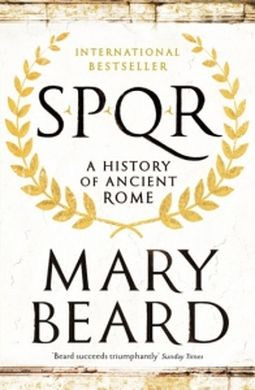
SPQR: A History of Ancient Rome by Professor Mary Beard (Review)

SPQR: A History of Ancient Rome by Professor Mary Beard

Blurb

By 63 BCE the city of Rome was a sprawling, imperial metropolis of more than a million inhabitants. But how did this massive city—the seat of power for an empire that spanned from Spain to Syria—emerge from what was once an insignificant village in central Italy? 

In S.P.Q.R., Beard changes our historical perspective, exploring how the Romans themselves challenged the idea of imperial rule, how they responded to terrorism and revolution, and how they invented a new idea of citizenship and nation, while also keeping her eye open for those overlooked in traditional histories: women, slaves and ex-slaves, conspirators, and losers. 

Like the best detectives, Beard separates fact from fiction, myth and propaganda from historical record. She introduces the familiar characters of Julius Caesar, Cicero, and Nero as well as the untold, the loud women, the shrewd bakers, and the brave 

jokers. 

S.P.Q.R. promises to shape our view of Roman history for decades to come. 

100 illustrations; 16 pages of colour; 5 maps

Review

I will be honest I did not read this very quickly but I still absolutely loved it. I love how Beard explains things and could easily read her books all the time. I don’t find her writing too in depth or complicated to read but find it informative, interesting and rather funny at times. 

Beard’s focus in this book is how Rome grew not how Rome fell. The book begins at around 63BCE with Cicero uncovering the plot of Catiline. By uncovering this plot by Catiline, Cicero basically saves the state. Although Beard is explaining about the beginnings of Rome she starts in 63BCE because there are more historical records that exist from that period. The Romans very kindly left us a lot of written material.

I found this book a refreshing take on the Roman history because it focuses on Rome’s advancement, how it grew and developed rather than its decline which a lot of books focus on. Beard talks about consuls, senators, generals, emperors and even the middle classes, the poor and slaves. Having studied Classics I know that there is very little written about the lower classes in Rome or in fact women because the people who were writing in Ancient Rome were mainly rich men and that is what they focused on in their writing, they didn’t really bother with the lower classes or women. The fact that Beard has bothered to include the lower classes and women in her book is brilliant and very enjoyable to read about. 

The maps and illustrations both colour and black and white work brilliantly within the book and I found them very helpful with the text. I found the maps particularly useful and the colour illustrations very beautiful. 

I know that some people take issue with this book and I know it is nowhere near a definitive history of Ancient Rome but I found it a highly enjoyable read and not a stale read like some books I have read on Ancient Rome or Greece. I give this book 5 out of 5 Dragons. 

🐲🐲🐲🐲🐲

Purchase Links

Book depository | Foyles | Waterstones | Wordery

(All purchases made using one of the above affiliate links gives a small percentage of money to myself with no extra cost to yourself. All proceeds go towards the upkeep of this blog. Thank you ever so much, your support is gratefully received.)

About the author

Mary Beard is a Professor of Classics at the University of Cambridge, a Fellow of Newman College and Classics editor of the TLS. She has world-wide academic acclaim, and is a fellow of the British Academy and a foreign member of the American Academy of Arts and Sciences. 

Dogs in Medieval Manuscripts by Kathleen Walker-Meikle (Review)

Dogs in Medieval Manuscripts by Kathleen Walker-Meikle

Blurb

Throughout the Middle Ages, medieval manuscripts often featured dogs, from beautiful and loving depictions of man’s best friend, to bloodthirsty illustrations of savage beasts, to more whimsical and humorous interpretations. Featuring stunning illustrations from the British Library’s rich medieval collection, Dogs in Medieval Manuscripts provides—through discussion of dogs both real and imaginary—an astonishing picture of the relationship of dogs to humans in the medieval world. Now in a gift book format. 

Review

I am definitely a dog person and even though I currently live with a cat and have done for quite a few years cats are still a mystery to me and my love of dogs is still there. So when I saw this book in Topping and Company bookshop in Bath I knew I had to buy it. 

The things I love about this book is that it doesn’t bombard you with information like some history books do. Instead every two page spread has a beautiful example of a medieval manuscript and a fact on the opposite page with another smaller manuscript example. The pictures and the facts don’t always go together but that doesn’t matter because a description of what and where the manuscript comes from is always included on the page as well. 

The book contains a wide variety of facts about dogs in medieval manuscripts all the way from what names were considered best for dogs, to what medicines you could use to treat different illnesses dogs had including some very strange ones for dogs who were rabid. There was also a very interesting use of dogs for pulling up mandrake roots. 

I really enjoyed this book and will be getting Kathleen Walker-Meikle’s other books because I loved her writing style. I give this book 5 out of 5 Dragons and will definitely be reading it again in the future even to just look at the beautiful images.  

🐲🐲🐲🐲🐲

Purchase Links

Book Depository | Foyles | Waterstones | Wordery

(All purchases made using one of the above affiliate links gives a small percentage of money to myself with no extra cost to yourself. All proceeds go towards the upkeep of this blog. Thank you ever so much, your support is gratefully received.)

About the author

Kathleen Walker-Meikle completed her PhD at University College, London on late-medieval pet keeping. She researches and writes on medieval and early modern animals and medicine.

If you enjoy reading my blog and would like to make a donation I would be very grateful. Thank you