My chosen poem this week is by the early Romantic poet, novelist and translator Charlotte Smith (1749-1806).
On the Departure of the Nightingale

Sweet poet of the woods, a long adieu!
Farewell soft minstrel of the early year!
Ah! 'twill be long ere thou shalt sing anew,
And pour thy music on the night's dull ear.
Whether on spring thy wandering flights await,
Or whether silent in our groves you dwell,
The pensive muse shall own thee for her mate,
And still protect the song she loves so well.
With cautious step the love-lorn youth shall glide
Through the lone brake that shades thy mossy nest;
And shepherd girls from eyes profane shall hide
The gentle bird who sings of pity best:
For still thy voice shall soft affections move,
And still be dear to sorrow and to love!

Charlotte Smith
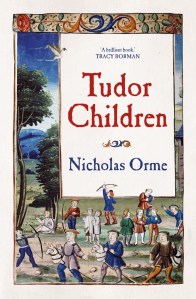
What was it like to grow up in England under the Tudors? How were children cared for, what did they play with, and what dangers did they face?
In this beautifully illustrated and characteristically lively account, leading historian Nicholas Orme provides a rich survey of childhood in the period. Beginning with birth and infancy, he explores all aspects of children’s experiences, including the games they played, such as Blind Man’s Bluff and Mumble-the-Peg, and the songs they sang, such as “Three Blind Mice” and “Jack Boy, Ho Boy.” He shows how social status determined everything from the food children ate and the clothes they wore to the education they received and the work they undertook.
Although childhood and adolescence could be challenging and even hazardous, it was also, as Nicholas Orme shows, a treasured time of learning and development. By looking at the lives of Tudor children we can gain a richer understanding of the era as a whole.
Review
I am still going through my Tudor phase and I just can’t get enough of books about Tudor history. When I saw this book in the bookshop I knew I had to have it and read it. It did not disappoint.
Children are so often ignored in the history books especially poor children and this is no different in the Tudor period. Sadly, there are a lack of records for the poorer ranks of children but what information there is Orme has found it as well as the surviving information about the children of rich people. It is so refreshing to find a researcher who is concerned with children from history because even today researchers quite often go for the more glamorous subjects.
This book is such a good read and I could not put it down. The book is packed full of information but is not too academic or dry. I loved being able to see Orme’s character through his writing instead of just a list of events and dates. I also really enjoyed how the book is divided up into chapters that are important to the lives of children, such as play, school etc.
The other element of the book that I loved was the illustrations. Orme obviously put a lot of thought into what illustrations to use for his book and they all fitted perfectly and helped demonstrate his point. I also liked how they were in the text rather than in the middle of book. This meant I didn’t have to keep flicking backwards and forwards to see the relevant illustrations.
Overall, I loved this book and I enjoyed how Orme challenged the preconceptions that Tudor adults didn’t care very much for their children. I will definitely be reading more books by Orme in the future and I give this book 5 out of 5 Dragons.
(All purchases made using one of the above affiliate links gives a small percentage of money to myself with no extra cost to yourself. All proceeds go towards the upkeep of this blog. Thank you ever so much, your support is gratefully received.)
About the author
A specialist in the Middle Ages and Tudor period, Nicholas Orme is an Emeritus Professor of History at Exeter University. He studied at Magdalen College, Oxford, and has worked as a visiting scholar at, among others, Merton College, Oxford, St John’s College, Oxford, and the University of Arizona.
My chosen quote this week is one I read on the breakfast menu at the hotel I was staying at in Bath and it has stuck with me because I completely agree with it.
The quote is by the American science fiction author, aeronautical engineer and naval officer Robert Anson Heinlein (1907-1988).
“One should not attend even the end of the world without a good breakfast.”
The rules are answer the questions below and share a link to your blog in the comments section of Sam’s blog.
What are you currently reading?
What did you recently finish reading?
What do you think you will read next?
Hello!
I hope everyone’s reading is going well so far this week. I’ve sadly slowed down a little with my reading this week but I am still plodding along.
What I am Currently Reading
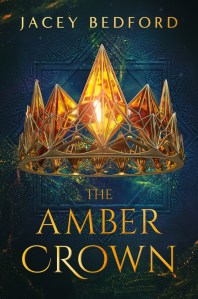
The wonderful Jacey Bedford sent me this book for me to read and review and so far I am really enjoying it. It took me a while to get used to the world she has built but now I’m hooked.
What I have Recently Finished Reading
I thoroughly enjoyed Tudor Children and found it really interesting, I will be writing the review soon. The Ice Dragon I read in one sitting and it was quite enjoyable. Here is the review.
What I Think I will Read Next
I’m not sure why but I only really want to read hardbacks at the moment and I’m not sure why. Hence why my selection are all hardbacks that I own.
Please drop me a comment with your WWW Wednesday and I will head over for a visit.
Goodreads Monday is now hosted by Budget Tales Book Club. All you have to do is show off a book from your TBR that you’re looking forward to reading.
Hello
I hope everyone has had a good start to the week so far.
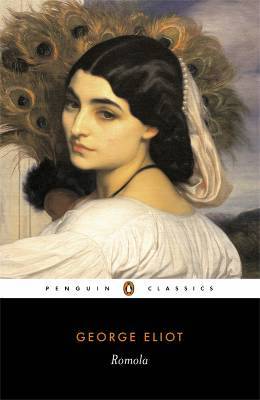
My chosen book this week is another that has been on my TBR pile for way too long. I plan to read all of George Eliot’s books eventually so this one would be a good step in that direction.
One of George Eliot’s most ambitious and imaginative novels, Romola is set in Renaissance Florence during the turbulent years following the expulsion of the powerful Medici family during which the zealous religious reformer Savonarola rose to control the city. At its heart is Romola, the devoted daughter of a blind scholar, married to the clever but ultimately treacherous Tito whose duplicity in both love and politics threatens to destroy everything she values, and she must break away to find her own path in life. Described by Eliot as ‘written with my best blood’, the story of Romola’s intellectual and spiritual awakening is a compelling portrayal of a Utopian heroine, played out against a turbulent historical backdrop.
Please drop me a link with your Goodreads Monday and I will head over for a visit.
I hope everyone has had a fab weekend. I had a lovely day yesterday spending time with family and having a mooch around a craft fair. Today has been more work based with church in the morning and this evening has been busy making up orders for my Etsy.
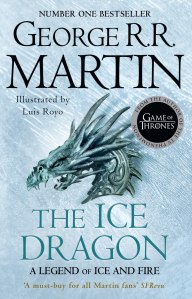
From ancient times the ice dragon was a creature of legend and fear, for no man had ever tamed one. But Adara was not afraid. For Adara was a winter child, born during the worst freeze that anyone, even the Old Ones, could remember. The ice dragon had always been in her life, glimpsed from afar as she played in the snow long after the other children had fled the cold. In her fourth year she touched it, and in her fifth year she rode upon its broad, chilled back. Then, in her seventh year, on a calm summer day, fiery dragons from the North swooped down upon the peaceful farm that was Adara’s home. And only a winter child – and the ice dragon who loved her – could save her world from utter destruction.
Review
I bought this little book last week and I thought it would be a nice quick read before I start another longer book.
This little story really reminded me of the Grimm’s fairytales, it just had the feel of a fairytale about it. The illustrations also helped build the fairytale atmosphere. The story is based around the little girl Adara. Adara loves winter, she is a winter child born in the worst freeze ever remembered and because of this the Ice Dragon becomes a part of her childhood.
Adara is a child who nobody understands. She barely smiles and hardly ever shows emotion, she lives for winter where she builds her snow castles and sees her Ice Dragon. The other thing that she loves though is her family and she would do anything for them just as the Ice Dragon will do anything for her.
This is a children’s story with beautiful illustrations but I think it is perfect for adults to read as well. This is a lovely little story that I read in one sitting but I will be honest I didn’t like the ending but without that ending it would lose the fairytale element. I give this book 3 out of 5 Dragons.
(All purchases made using one of the above affiliate links gives a small percentage of money to myself with no extra cost to yourself. All proceeds go towards the upkeep of this blog. Thank you ever so much, your support is gratefully received.)
About the author
George Raymond Richard Martin (1948) is an American novelist, screenwriter, television producer and short story writer.
First Lines Fridays is a weekly feature for book lovers hosted by Wandering Words. What if instead of judging a book by its cover, its author or its prestige, we judged it by its opening lines?
Pick a book off your shelf (it could be your current read or on your TBR) and open to the first page
Copy the first few lines, but don’t give anything else about the book away just yet – you need to hook the reader first
Finally… reveal the book!
Hello!
I haven’t taken part in First Lines Friday for a long time, mainly because I haven’t been starting any new books on Fridays. However, today I have started a new book so I thought I would take part.
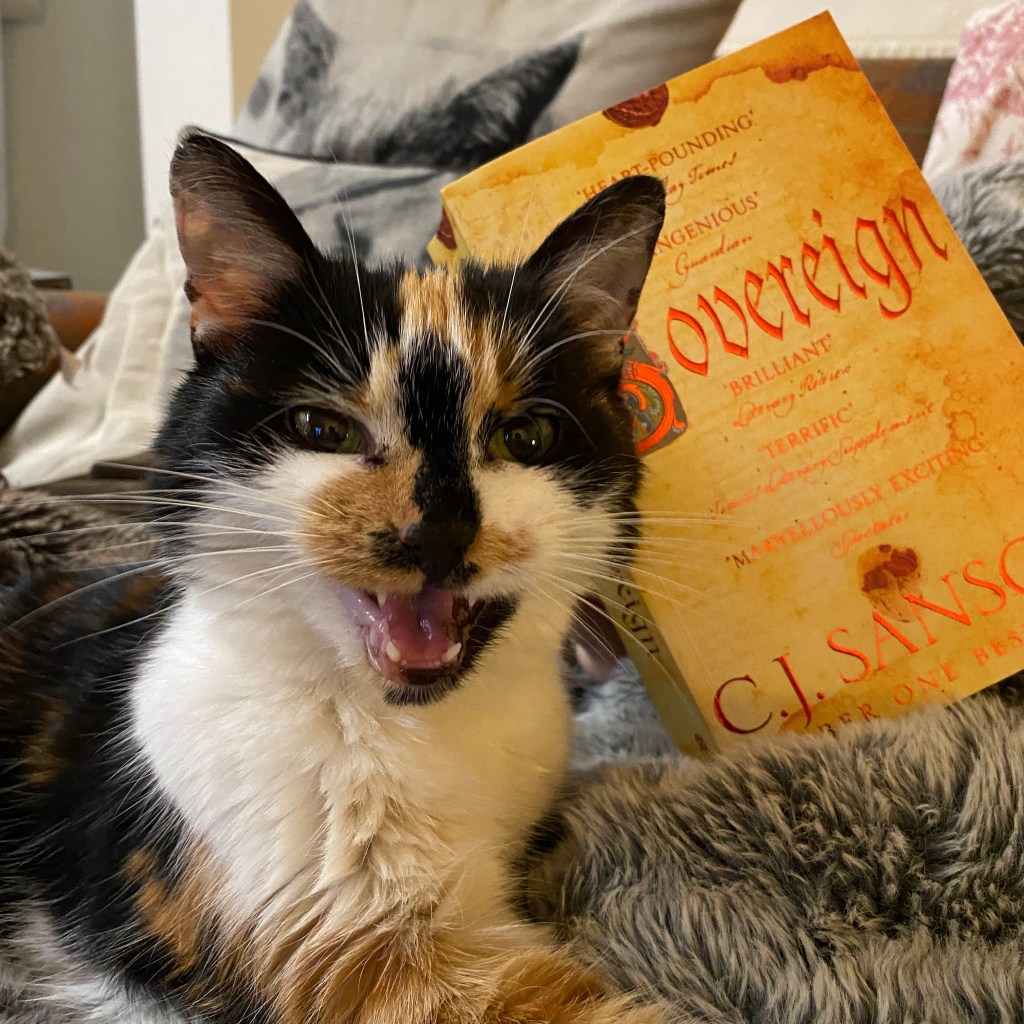
As usual the answer is below the cat pictures.
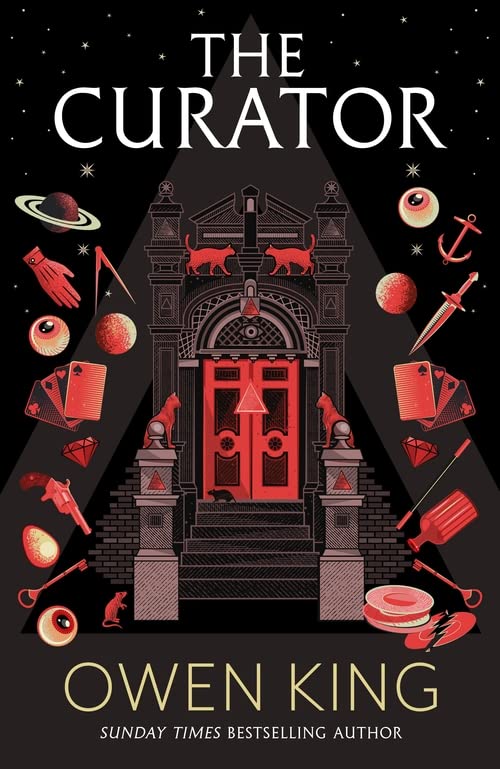
“The Didelis Bell tolled the death of a king. It sounded from high on the Gura and echoed across the famed white city. Valdas Zalecki felt the sound in his skull.
Get guessing
In this new epic fantasy, three societal outcasts must work together to fulfill the orders of a dead king’s ghost or risk their nation falling to a tyrant
The king is dead, his queen is missing. On the amber coast, the usurper king is driving Zavonia to the brink of war. A dangerous magical power is rising up in Biela Miasto, and the only people who can set things right are a failed bodyguard, a Landstrider witch, and the assassin who set off the whole sorry chain of events.
Valdas, Captain of the High Guard, has not only failed in his duty to protect the king, but he’s been accused of the murder, and he’s on the run. He’s sworn to seek justice, but his king sets him another task from beyond the grave. Valdas doesn’t believe in magic, which is unfortunate as it turns out.
Mirza is the healer-witch of a Landstrider band, valued and feared in equal measure for her witchmark, her scolding tongue, and her ability to walk the spirit world. When she’s given a task by Valdas’ dead king, she believes that the journey she must take is one she can never return from.
Lind is the clever assassin. Yes, someone paid him to kill the king, but who is to blame, the weapon or the power behind it? Lind must face his traumatic past if he’s to have a future.
Can these three discover the real villain, find the queen, and set the rightful king on the throne before the country is overcome?
Did anybody guess correctly?
Please drop me a comment with your First Line Friday and I will head over for a visit.
I hope everyone has some fun plans for the weekend. I’m hoping to get some reading in as I’m doing really well with my reading so far this month so I don’t want it to slip.
My chosen poem this week is by the African-American writer, poet, literary critic, anthologist and publisher William Stanley Braithwaite (1878-1962).
Rhapsody

I am glad daylong for the gift of song,
For time and change and sorrow;
For the sunset wings and the world-end things
Which hang on the edges of to-morrow.
I am glad for my heart whose gates apart
Are the entrance-place of wonders,
Where dreams come in from the rush and din
Like sheep from the rains and thunders.

William Stanley Braithwaite
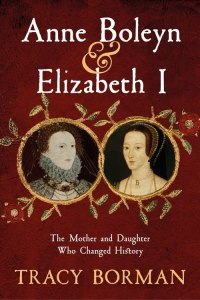
Anne Boleyn & Elizabeth I: The Mother and Daughter Who Changed History by Tracy Borman
Blurb
Anne Boleyn is a subject of enduring fascination. By far the most famous of Henry VIII’s six wives, she has inspired books, documentaries and films, and is the subject of intense debate even today, almost 500 years after her violent death. For the most part, she is considered in the context of her relationship with Tudor England’s much-married monarch. Dramatic though this story is, of even greater interest – and significance – is the relationship between Anne and her daughter, the future Elizabeth I.
Elizabeth was less than three years old when her mother was executed. Given that she could have held precious few memories of Anne, it is often assumed that her mother exerted little influence over her.
Nothing could be further from the truth. Elizabeth knew that she had to be discreet about Anne, but there is compelling evidence that her mother had a profound impact on her character, beliefs and reign. Anne’s radical religious views shaped those of her daughter, and as a woman who wielded power over a male-dominated court, she provided an inspiring role model for Elizabeth’s queenship. Even during Henry’s lifetime, Elizabeth dared to express her sympathy for her late mother by secretly wearing Anne’s famous ‘A’ pendant when she sat for a painting with her father and siblings.
Piecing together evidence from original documents and artefacts, this book tells the fascinating, often surprising story of Anne Boleyn’s relationship with, and influence over her daughter Elizabeth. In so doing, it sheds new light on two of the most famous women in history and how they changed England forever.
Review
I have always loved Tudor history and Elizabeth I is my favourite monarch from history so when I saw this book I was intrigued to read it. It was also my first Tracy Borman book and it definitely won’t be my last.
The thing I loved about this was how Borman had such a fresh and different take on Anne Boleyn and Elizabeth I. Usually history books keep them quite separate but Borman has their two histories running together. Even though Anne Boleyn was executed when Elizabeth I was only 3 years old, Borman shows how Elizabeth I was influenced by her mother through all of her life and reign.
Borman pieces together historical evidence from surviving letters, documents, paintings, books and more showing the link between mother and daughter. Borman takes us right from Anne Boleyn’s birth to her death and the same for Elizabeth I.
The other thing I liked about Borman’s take on the evidence is that it felt so truthful and not sugar coated. So many history books either describe Anne Boleyn as an angel who was severally wronged or as an evil woman who deserved her fate. However, Borman shows Anne from all angles. She shows Anne’s faults, her character flaws, her lack of restraint and all her good points. We know that Anne Boleyn was wrongly accused and executed but Borman paints her as a real person and not a saint, which I liked.
The only reason this book didn’t receive the full 5 out of 5 dragons, but only 4, was because it just felt a bit dry at times. It felt like a big list of events and lost the feeling that other historians put into their books which I missed. However, I still thoroughly enjoyed the book and found it very interesting.
(All purchases made using one of the above affiliate links gives a small percentage of money to myself with no extra cost to yourself. All proceeds go towards the upkeep of this blog. Thank you ever so much, your support is gratefully received.)
About the author
Tracy Borman, PhD, FRHistS, FSA is a historian and author from Scothern, United Kingdom. She is most widely known as the author of Elizabeth’s Women.
Borman was born and brought up in the village of Scothern, England near Lincoln. She was educated at Scothern Primary School (now Ellison Boulters School), William Farr School, Welton, and Yarborough School, Lincoln. She taught history at the University of Hull, where she was awarded a Ph.D in 1997. Elizabeth’s Women was serialized and became a BBC Radio 4 Book of the Week in September 2009. Tracy Borman appeared on BBC Radio 4’s Woman’s Hour, also in September 2009












 Lady Book Dragon