The Two-Penny Bar by Georges Simenon (#28 Review)

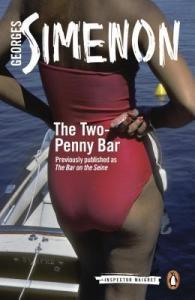
The Two-Penny Bar by Georges Simenon
Blurb

‘We saw a door opening ahead of us. There was a car parked by the roadside. This guy came out pushing another guy in front of him. No, not pushing. Imagine you’re carrying a shop dummy and trying to make it look like it’s your friend walking next to you. He put him in the car and got into the driver’s seat . . . The guy drove all over the place. He seemed to be looking for something, but seemed to keep losing his way. In the end, we realised what he’d been looking for.’

A series of chance encounters sends Inspector Maigret down yet another winding path of murder and mystery. While visiting a criminal in his cell, the young convict tells Maigret of a man who’d been spotted dumping a body in a Parisian canal some years ago.  On an unexpected trip to a popular inn, Maigret finds himself in the very place the suspected killer was last seen, and the Inspector is pulled deeper into the web of blackmail and deceit.

Review

I really enjoyed this Maigret book but yet again I felt very sorry for poor Mrs Maigret. All Mrs Maigret wants is her husband on holiday with her but as per usual Maigret chooses his work first. The poor woman deserves a medal in my opinion.

While visiting a criminal in his cell the criminal tells Maigret of a crime scene he witnessed years ago. The criminal witnessed a man dumping a body in the canal years ago and of course Maigret is intrigued. 

Maigret ends up getting caught up with a group of friends who meet every weekend at a bar near the Seine. This group of friends happily drink, gamble and party the weekend away and enjoy swinging. This leaves Maigret drinking way too much and trying to work out what exactly these people are hiding. 

Maigret has quite a task on his hands in this book as he really has no idea who could have done the crime and been responsible for the disposal of the body. After all he has no evidence just the man’s account of the crime. As he is trying to put the pieces together and deal with the people he also has Mrs Maigret sending him telegrams asking him when he will join her on holiday. 

I really found this book quite different to the ones I had read before and I enjoyed the different feel about it. I also found this book quite funny in places. Overall, I give this book 4 out of 5 Dragons. 

🐲🐲🐲🐲

Purchase Links

Bookshop.org | Foyles | Waterstones

(All purchases made using one of the above affiliate links gives a small percentage of money to myself with no extra cost to yourself. All proceeds go towards the upkeep of this blog. Thank you ever so much, your support is gratefully received.)

About the author

Georges Simenon (1903-1989) was a Belgian writer who published nearly 500 novels and many short stories. Simenon is best known as the creator of the Maigret stories.

Etsy

If you enjoy reading my blog and would like to make a donation I would be very grateful. Thank you

An Old-Fashioned Girl by Louisa May Alcott (Review #23) #20BooksofSummer23 3/20

An Old-Fashioned Girl by Louisa May Alcott

Blurb

It was first serialised in the Merry’s Museum magazine between July and August in 1869 and consisted of only six chapters. For the finished product, however, Alcott continued the story from the chapter “Six Years Afterwards” and so it ended up with nineteen chapters in all. The book revolves around Polly Milton, the old-fashioned girl who titles the story. Polly visits her wealthy friend Fanny Shaw in the city and is overwhelmed by the fashionable and urban life they live–but also left out because of her “countrified” manners and outdated clothes.

Review

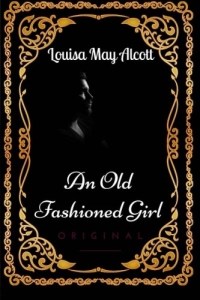
I was really excited to read this because I love Little Women and the sequels and have always wanted to read more books by Alcott. The version of the book that I bought was a big mistake though. Sadly I got a printed by Amazon edition and it was bizarre to say the least. The book contained weird pictures that didn’t entirely relate to the story and they were all badly pixelated. The layout of the book was also terrible which made the book difficult to read and I found myself wondering who random people were because new names had suddenly appeared but then realised that yet again it was just a wrong name for one of the characters. 

Anyway, ignoring all the terrible faults with the publishing I really enjoyed this little story of the adorable Polly. The story begins with Polly visiting her wealthy friend Fanny Shaw and her family. Fanny lives in the city and is fashionable and surrounded by wealthy and fashionable friends. These friends find Polly countrified and old fashioned and this also means that poor Polly feels left out at times. However, Polly soon makes an impression on the Shaw family. 

The Shaw family comprises Mr and Mrs Shaw, Grandma, Maud, Tom and of course Fanny. Each of these characters need some sort of help and comfort and little Polly in her own way sees this and helps them. 

As the book goes on we see Polly getting older and eventually moving to the city herself and we see her struggles, her loneliness and isolation. However, we also see her grow, we see her learn and appreciate every little thing around her. Polly shows us that there are things to be thankful for everywhere even things we don’t normally consider or even think about Polly considers them and appreciates them. 

I thoroughly enjoyed this book but for me it was nowhere near as good as Little Women and it just felt less sophisticated in the way it was written than Little Women and the sequels. Whether it is because the book was originally written in a serialised format I don’t know but I didn’t gel with the writing as I usually do. However, I still give this book 4 out of 5 Dragons.

🐲🐲🐲🐲

Purchase Links

Bookshop.org | Foyles | Waterstones

(All purchases made using one of the above affiliate links gives a small percentage of money to myself with no extra cost to yourself. All proceeds go towards the upkeep of this blog. Thank you ever so much, your support is gratefully received.)

About the author

Louisa May Alcott (1832-1888) was an American novelist, short story writer, and poet best known as the author of the novel Little Women (1868) and its sequels.

Etsy

If you enjoy reading my blog and would like to make a donation I would be very grateful. Thank you

The Power and the Glory by Graham Greene (Review #20)

The Power and the Glory by Graham Greene

Blurb

During a vicious persecution of the clergy in Mexico, a worldly priest, the ‘whisky priest’, is on the run. With the police closing in, his routes of escape are being shut off, his chances getting fewer. But compassion and humanity force him along the road to his destiny, reluctant to abandon those who need him, and those he cares for.

Review

I really like Graham Greene and this had been sat on my TBR pile for quite a while so I picked it up when I fancied reading a short book. I have read that this book is considered one of Greene’s greatest books but I must admit I have read better books by Greene than this one. 

The book is set in the 1930’s in Mexico during the time when the church was under persecution and the Catholic priests either had to marry and renounce being a priest or face execution if they refused. This leads us to follow the “Whiskey priest” who is on the run from the authorities and who I think is my least favourite character I have ever come across. The “Whiskey Priest” is lazy, arrogant and clearly only a priest because he wants a cushy life and not because he wants to help the people. 

The story follows the priest on the run and also the authorities trying to find him. In particular the incorruptible lieutenant who is willing to cross any line to capture the priest. 

There are so many themes in this book. There is hatred, foreboding, fear, greed and very little joy. As usual the book is excellently written and even if I didn’t know the author I would be able to tell it was Greene from his style and finesse but I just did not like the characters. I knew it wouldn’t be a happy read and the “Whiskey priest” was clearly written to be an unlikeable character but I hated him. I hated the lieutenant and the only good thing about this book was how well it was written. I give this book 3 out of 5 Dragons. 

🐲🐲🐲

Purchase Links

Bookshop.org | Foyles | Waterstones

(All purchases made using one of the above affiliate links gives a small percentage of money to myself with no extra cost to yourself. All proceeds go towards the upkeep of this blog. Thank you ever so much, your support is gratefully received.)

About the author

Henry Graham Greene (1904-1991) was an English writer and journalist regarded as one of the leading English novelistsof the20th century.

Etsy

If you enjoy reading my blog and would like to make a donation I would be very grateful. Thank you

Diddly Squat: ’Til The Cows Come Home by Jeremy Clarkson (Review #12)

Diddly Squat: ’Til The Cows Come Home by Jeremy Clarkson

Blurb

The seeds are being sown, the soil turned, the farm shop restocked – that’s right, it’s time for another riotous trip to Diddly Squat Farm with farmer-in-progress Jeremy Clarkson . . .

Welcome back to Clarkson’s Farm.

At the end of Jeremy’s first year in the tractor’s driving seat, Diddly Squat farm rewarded him with a profit of just £144. So, while he’s the first to admit that he’s still only a ‘trainee farmer’*, there is clearly still work to be done.

Because while he’s mastered the art of moaning about nearly everything, some of the other attributes required of a successful farmer prove more of a challenge.

Who knew, for instance . . .

That loading a grain trailer was more demanding than flying an Apache gunship?

That cows were more dangerous than motor-racing?

Or that it would have been easier to get planning permission to build a nuclear power station than to turn an old barn into a farm restaurant?

But if the council planning department and the local red trouser brigade seem determined to frustrate his schemes at every turn, at least he’s got Lisa, Kaleb, Cheerful Charlie and Gerald, his dry-stone-walling Head of Security to see him through.

Life on Clarkson’s Farm may not always go according to plan. There may not always be one. But there’s not a day goes by when Jeremy can’t say ‘I’ve done a thing’ and mean it . . .

Review

Like the first Clarkson’s Farm book I flew through this book and could have easily read it in one sitting. The format was the same as the first book which I love and the illustrations that marked the different chapters were beautiful. 

The main thing I loved about this book was that Lisa, Kaleb and Charlie featured more and they had their say which didn’t happen in the first book. Like the first book Clarkson really highlights the plight of farmers in the UK and all the red tape they have to work through and I think it was highlighted even more in this book because we learn about the situations of farmers who are local to Clarkson’s farm. 

I found this book even funnier than the first book and I actually enjoyed it more than the first. Clarkson calls himself a trainee farmer and he really is but he is also willing to learn and will try his hand at anything. Even if this means Kaleb coming along and shouting at him for doing it wrong. At least Clarkson is willing to try. 

I can’t wait for the next instalment of Clarkson’s farm and really hope that Clarkson does succeed with beating the council and getting his restaurant. I give this book 4 out of 5 Dragons. 

🐲🐲🐲🐲

Purchase Links

Bookshop.org | Foyles | Waterstones | Wordery

(All purchases made using one of the above affiliate links gives a small percentage of money to myself with no extra cost to yourself. All proceeds go towards the upkeep of this blog. Thank you ever so much, your support is gratefully received.)

About the author

Jeremy Charles Robert Clarkson (born April 11, 1960) is an English broadcaster and writer who specialises in motoring.

He writes weekly columns for The Sunday Times and The Sun, but is better known for his role on the BBC television programme Top Gear.

From a career as a local journalist in the north of England, he rose to public prominence as a presenter of the original format of Top Gear in 1988. Since the mid-1990s Clarkson has become a recognised public personality, regularly appearing on British television presenting his own shows and appearing as a guest on other shows. As well as motoring, Clarkson has produced programmes and books on subjects such as history and engineering. From 1998 to 2000 he also hosted his own chat show, Clarkson.

Etsy

The Scarlet Letter by Nathaniel Hawthorne (Review #7)

The Scarlet Letter by Nathaniel Hawthorne

Blurb

Set in 17th-century Puritan Boston, Massachusetts, during the years 1642 to 1649, it tells the story of Hester Prynne, who conceives a daughter through an affair and will not reveal her lover’s identity. The scarlet letter A (for adultery) she has to wear on her clothes, along with her public shaming, is her punishment for her sin and her secrecy. She struggles to create a new life of repentance and dignity. Throughout the book, Hawthorne explores themes of legalism, sin, and guilt.

Review

I have wanted to read this book since it was mentioned in an episode of Downton Abbey and the Dowager thought the book sounded most unsuitable. It is also one of the books on my Classics Club list. 

I will be honest I almost lost the will to live with this book. The introductory chapter of this book is a lengthy chapter about the author and his life in the Customs office and I must admit I found it extremely dull. I was determined to carry on because the main story had not started yet but I will be honest I almost gave up with the book there and then. 

The storyline of this book is great but sadly Hawthorne could not have written it in a more boring and long winded way. I found that Hawthorne is quite similar to Washington Irving in his writing style and I will be honest I also struggle with Irving. Basically something that could be said in 500 words they insist on using 5000 and I just find myself shouting at the author ‘why? Get to the point!’. 

Hester Prynne is a wonderful character who is thoroughly wronged but because of the time and the place she lives in she is the one who is held up to blame and judged. After Hester’s disgrace she forms a life for herself living in repentance and trying to be the best Christian she can be and because of this people start to accept her again. 

I had to really think about my rating of this book because I just could not get on with Hawthorne’s writing style. I almost gave it a lot lower rating but I reconsidered because I really enjoyed the storyline and the character Hester. Overall, I give this book 3 out of 5 Dragons but I will definitely say it won’t be a book that I read again.

🐲🐲🐲

Purchase Links

Book Depository | Bookshop.org | Foyles | Waterstones | Wordery

(All purchases made using one of the above affiliate links gives a small percentage of money to myself with no extra cost to yourself. All proceeds go towards the upkeep of this blog. Thank you ever so much, your support is gratefully received.)

About the author

Nathaniel Hawthorne was a 19th century American novelist and short story writer. He is seen as a key figure in the development of American literature for his tales of the nation’s colonial history.

Shortly after graduating from Bowdoin College, Hathorne changed his name to Hawthorne. Hawthorne anonymously published his first work, a novel titled Fanshawe, in 1828. In 1837, he published Twice-Told Tales and became engaged to painter and illustrator Sophia Peabody the next year. He worked at a Custom House and joined a Transcendentalist Utopian community, before marrying Peabody in 1842. The couple moved to The Old Manse in Concord, Massachusetts, later moving to Salem, the Berkshires, then to The Wayside in Concord. The Scarlet Letter was published in 1850, followed by a succession of other novels. A political appointment took Hawthorne and family to Europe before returning to The Wayside in 1860. Hawthorne died on May 19, 1864, leaving behind his wife and their three children.

Much of Hawthorne’s writing centers around New England and many feature moral allegories with a Puritan inspiration. His work is considered part of the Romantic movement and includes novels, short stories, and a biography of his friend, the United States President Franklin Pierce.

Etsy

The Aeneid by Virgil (translated by by Frederick Ahl)(Review #3)

The Aeneid by Virgil (translated by by Frederick Ahl)

Blurb

After a century of civil strife in Rome and Italy, Virgil wrote the Aeneid to honour the emperor Augustus by praising his legendary ancestor Aeneas. As a patriotic epic imitating Homer, the Aeneid also set out to provide Rome with a literature equal to that of Greece. It tells of Aeneas, survivor of the sack of Troy, and of his seven-year journey: to Carthage, where he falls tragically in love with Queen Dido; then to the underworld,; and finally to Italy, where he founds Rome. It is a story of defeat and exile, of love and war, hailed by Tennyson as ‘the stateliest measure ever moulded by the lips of man’.

Review

I have finally finished this book! When I first started reading it I was in the middle of my Masters and this sadly had to fall by the way side. However, on the 1st January I decided to read one book a day of this book and yesterday (yes I know a day behind) I finally finished. 

The book begins in Carthage where Aeneas tells his journey to Queen Dido starting from  the fall of Troy where Aeneas and the survivors he manages to gather including his father and son flee Troy and begin their 7 year journey to find a new home. Their journey goes from Carthage, to the Underworld and finally Italy his final destination.  

My first thought about this book is what an amazing piece of propaganda. The amount of propaganda in this book really made me laugh but I think the pinnacle of it was in book 7. In book 7 Anchises shows Aeneas all the descendants that will come from his line and it is quite a list. Aeneas is basically the father of all the great leaders of Rome which seems highly improbable. 

My husband kindly treated me to see Purcell’s Dido and Aeneas opera for my birthday which I absolutely loved but I do think Purcell was rather kind to Aeneas. In truth I always found Aeneas to be a bit of an ass. Whilst he is fleeing Troy he accidentally loses his wife, he does go back and look for her but really he shouldn’t have lost her in the first place. Then what he does with Queen Dido is in my opinion absolutely awful. Yes, I know the gods had something to do with it but really the man did not show any remorse at all and was a complete b__.

The last 6 books of the book is where Aeneas and his men, and we presume some women and children as they are briefly mentioned, land in Italy and all hell breaks loose in war. I loved how all the gods get involved and even some nymphs as this really parallels with Homer’s depiction of the war of Troy. In fact Virgil is very clever with his direct links with Homer’s work. When studying my Masters it was always amazing how much the Romans wanted to be as good as the Ancient Greeks. The Romans copied their sculptures, their texts and much more but always keeping their Roman values. 

I really enjoyed this book and it was a great start to 2023 and my plan to read at least one Ancient Greek or Roman text a month. Virgil was a very talented writer who knew how to write an excellent piece of propaganda. I also loved Ahl’s translation but I knew it would be good as he is one of my favourite translators. I happily give this book 5 out of 5 Dragons. 

🐲🐲🐲🐲🐲

Purchase Links

Book Depository | Bookshop.org | Foyles | Waterstones | Wordery

(All purchases made using one of the above affiliate links gives a small percentage of money to myself with no extra cost to yourself. All proceeds go towards the upkeep of this blog. Thank you ever so much, your support is gratefully received.)

About the author

Publius Vergilius Maro (October 15, 70 BCE – September 21, 19 BCE), usually called Virgil or Vergil /ˈvɜrdʒəl/ in English, was an ancient Roman poet of the Augustan period. He is known for three major works of Latin literature, the Eclogues (or Bucolics), the Georgics, and the epic Aeneid. A number of minor poems, collected in the Appendix Vergiliana, are sometimes attributed to him.

Virgil is traditionally ranked as one of Rome’s greatest poets. His Aeneid has been considered the national epic of ancient Rome from the time of its composition to the present day. Modeled after Homer’s Iliad and Odyssey, the Aeneid follows the Trojan refugee Aeneas as he struggles to fulfill his destiny and arrive on the shores of Italy—in Roman mythology the founding act of Rome. Virgil’s work has had wide and deep influence on Western literature, most notably the Divine Comedy of Dante, in which Virgil appears as Dante’s guide through hell and purgatory.

Etsy

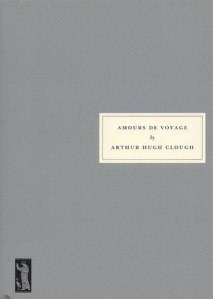
Amours de Voyage by Arthur Hugh Clough (Review #2)

Amours de Voyage by Arthur Hugh Clough

Blurb

Amours de Voyage is a novel in verse and is arranged in five cantos, or chapters, as a sequence of letters. It is about a group of English travellers in Italy: Claude, and the Trevellyn family, are caught up in the 1849 political turmoil. The poem mixes the political (‘Sweet it may be, and decorous, perhaps, for the country to die; but,/On the whole, we conclude the Romans won’t do it, and I sha’n’t’) and the personal (‘After all, do I know that I really cared so about her?/Do whatever I will, I cannot call up her image’). The political is important but the personal dilemmas are the crucial ones.

Claude, about to declare himself, retreats, regrets. It is this retreat, his scruples and fastidiousness, that, like a conventional novel, is the core of Amours de Voyage. The poem thus contributed something important to the modern sensibility; it is a portrait of an anti-hero; it is about love and marriage (the difficulties of); and it is about Italy.

Review

I had never heard of Arthur Hugh Clough before but I was really intrigued when I saw this book in Persephone books so I bought it. I have been reading some pretty hefty books recently so last weekend I thought I would read a shorter book as a quick read and this was the book I chose. 

The first thing I loved about this book was the preface by Julian Barnes. Barnes gave a wonderful description of Clough’s life and the background behind this book. It really set the scene well. 

This was quite a different read for me but one that I flew through. I really loved Claude’s thoughts on Rome as he really was very unimpressed with the whole affair and I found his reactions to it quite amusing. The book is a novel in verse and made up of letters. Claude writes to his long suffering friend Eustace and I say long suffering because I think the poor man has a lot of letters of Claude. The other letters are from the Trevellyn sisters to their friend. 

I will be honest the character Claude was not my favourite. He found Rome boring, he was self centred, looked down on people and only found Mary interesting when she had gone. Personally I think Mary was better off without Claude in her life. Mary thought a lot more about Claude than Claude did about Mary. 

Overall, I loved Clough’s writing and I would love to read more of his work but what let it down for me was simply his main character Claude. I just could not deal with Claude’s selfish behaviour sadly. Due to this I give the book 3 out of 5 Dragons. 

🐲🐲🐲

Purchase Links

Book Depository | Bookshop.org | Waterstones | Wordery

(All purchases made using one of the above affiliate links gives a small percentage of money to myself with no extra cost to yourself. All proceeds go towards the upkeep of this blog. Thank you ever so much, your support is gratefully received.)

About the author

Arthur Hugh Clough (1819-1861) was an English poet, an educationalist, and the devoted assistant to Florence Nightingale. 

Etsy

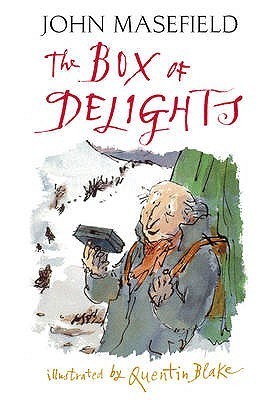
The Box of Delights by John Masefield (Review #1)

The Box of Delights by John Masefield

Blurb

When Kay Harker meets a mysterious Punch and Judy man on his way home for Christmas, he little realizes that he is about to be plunged into adventure. The old man entrusts Kay with a strange puzzle box – the Box of Delights – before suddenly disappearing. Kay soon discovers two things: the box can transport him through time and space, and there is a plot to steal it. He must battle heroically against terrifying forces of evil in order to win the day… 

Review

When I met my husband I was introduced to the BBC adaptation of The Box of Delights because it is their Christmas tradition to watch the series every Christmas. Since then I have really wanted to read the book and this Christmas I bought a copy and got reading. 

I will be honest I have read more children’s books as an adult than as a child and this has got to be one of my favourites. I loved this book so much and even though I read it after Christmas it kept me in the Christmas spirit. 

The slang in this book is absolutely adorable and I know it is appropriate for the time it was written but phrases like ‘scrobbled’ and ‘the purple pim’ just made me smile. The characters in this book are also fantastic and even Maria who I can’t stand in the TV adaptation is bearable in the book. 

This book is so beautifully written and every scene and character is so well described that I could easily visualise everything. Abner Brown is a particular favourite of mine, he was such a fantastic baddie. Herne the Hunter and the Lady of the Oak Tree were also wonderful characters and of course Cole Hawlings. 

The one thing I did find concerning was the lack of interest the police had in reports of kidnapping and missing people. Also certain characters went missing and their nearest and dearest did not seem that concerned.

This book is full of magic and wonder and it really had me enthralled and it had so many wonderful scenes in it that aren’t in the TV adaptation. My particular favourite is lunch with the field mouse in the tree. I loved Masefield’s writing and I have ordered the prequel to The Box of Delights, The Midnight Folk to read next because I am not quite ready to see the end of Kay just yet. I loved this book and it was a great first read of 2023. I give this book 5 out of 5 Dragons. 

🐲🐲🐲🐲🐲

Purchase Links

Book Depository | Bookshop.org | Foyles | Waterstones | Wordery

(All purchases made using one of the above affiliate links gives a small percentage of money to myself with no extra cost to yourself. All proceeds go towards the upkeep of this blog. Thank you ever so much, your support is gratefully received.)

About the author

John Masefield (1878-1967) was an English poet and writer, and Poet Laureate from 1930 until 1967. 

Etsy

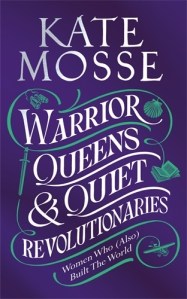
Warrior Queens and Quiet Revolutionaries by Kate Mosse (Review)

Warrior Queens and Quiet Revolutionaries by Kate Mosse

Blurb

Warrior Queens & Quiet Revolutionaries brings together Kate’s rich and detailed knowledge of unheard and under-heard women’s history, and of how and why women’s achievements have routinely been omitted from the history books. This beautiful illustrated book is both an alternative feminist history of the world and a personal memoir about the nature of women’s struggles to be heard, about how history is made and by whom.

Split into ten sections, each covering a different category of women’s achievements in history, Kate Mosse tells the stories of female inventors and scientists, philanthropists and conservationists, authors and campaigners. It is the most accessible narrative non-fiction with a genuinely diverse, truly global perspective featuring names such as Sophie Scholl, Mary Seacole, Cornelia Sorabji, Helen Suzman, Shirley Chisholm, and Violette Szabo. And in deeply personal passages Kate writes about the life of her great-grandmother, Lily Watson, where she turns detective to find out why she has all but disappeared from the record.

Review

I discovered Kate Mosse this year so when I saw this book come out I bought it straight away. It took me a long time to read this book because I found that I preferred to dip into it when I was in the mood for some nonfiction. 

I found this book absolutely fascinating but at the same time rather frustrating. Just as I discover this fantastic pioneering woman from history the book quickly moves on to another pioneering woman from history. There were certain women that I would have loved to have learned more about. It did mean that I started doing my own research into these interesting characters. 

I will be honest I didn’t really find the sections on Lily, Mosse’s great-grandmother, very interesting and would have happily done without them. I can understand Mosse’s interest in her great-grandmother but it just felt a little bit like she was trying too hard to make her relative who published books and articles known to the general public again as Lily had fallen from everyone’s memory and her books are out of publication. 

This book is an amazing resource to dip into and one that I will return to again and again. I learned so much from this book and found some amazing women from history who I plan to research further. History has always generally been written by men about men so it was refreshing to find a book written by a woman about women from history. I didn’t find this book an easy read because I found it jumped around rather a lot but I still loved it. I give this book 4 out of 5 Dragons. 

🐲🐲🐲🐲

Purchase Links

Book Depository | Bookshop.org | Foyles | Waterstones | Wordery

(All purchases made using one of the above affiliate links gives a small percentage of money to myself with no extra cost to yourself. All proceeds go towards the upkeep of this blog. Thank you ever so much, your support is gratefully received.)

About the author

Kate Mosse is an international bestselling author with sales of more than five million copies in 42 languages. Her fiction includes the novels Labyrinth (2005), Sepulchre (2007), The Winter Ghosts (2009), and Citadel (2012), as well as an acclaimed collection of short stories, The Mistletoe Bride & Other Haunting Tales (2013). Kate’s new novel, The Taxidermist’s Daughter is out now.

Kate is the Co-Founder and Chair of the Board of the Baileys Women’s Prize for Fiction (previously the Orange Prize) and in June 2013, was awarded an OBE in the Queen’s Birthday Honours List for services to literature. She lives in Sussex.

Etsy

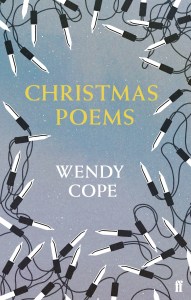
Christmas Poems by Wendy Cope (Review)

Christmas Poems by Wendy Cope

Blurb

For more than thirty years Wendy Cope has been one of the nation’s most popular and respected poets. Christmas Poems collects together her best festive poems, including anthology favourites such as ‘The Christmas Life’, together with new and previously unpublished work. Cope celebrates the joyful aspects of the season but doesn’t overlook the problems and sadness it can bring. With lively illustrations to accompany the words, it is a book to enjoy this Christmas and in years to come.

Review

I bought this book in October when I was in Bath and I was really excited because I thought this little book would be a perfect festive read in December. At only 48 pages long this did not take me long to read and was a perfect diversion from the Christmas prep. 

As you probably know by now if you have been following me for any length of time I was never a huge poetry fan but since I have been blogging I have been making an effort to get into poetry. Since doing this I have found quite a few favourite poets that I enjoy to read and I am always looking for new poets to read. Wendy Cope is one of these new poets for me. 

Certain poems within this book I could really relate to. Cope was a primary school teacher for 15 years and a piano player and her reflections on playing for children’s services I can relate to as I teach piano and woodwind in a primary school and know all about the Christmas services and the many renditions of Little Donkey. 

I will be honest there were only a few poems that I really enjoyed in this book because I found quite a few of the poems rather depressing and not very helpful for getting into the festive spirit. However, I like Cope’s style as a poet and will definitely be checking out more of her poems. 

The illustrations in this book are by Michael Kirkham and were excellent and really added to the poems. Without the illustrations the book would have been a lot shorter. 

Overall, I found this little book of poems an accomplished read but not really my cup of tea. It sadly wasn’t the festive read I was looking for but I appreciate the skill of Wendy Cope. I give this book 3 out of 5 Dragons. 

🐲🐲🐲

Purchase Links

Book Depository | Bookshop.org | Foyles | Waterstones | Wordery

(All purchases made using one of the above affiliate links gives a small percentage of money to myself with no extra cost to yourself. All proceeds go towards the upkeep of this blog. Thank you ever so much, your support is gratefully received.)

About the poet

Wendy Cope was educated at Farringtons School, Chislehurst, London and then, after finishing university at St Hilda’s College, Oxford, she worked for 15 years as a primary school teacher in London.

In 1981, she became Arts and Reviews editor for the Inner London Education Authority magazine, ‘Contact’. Five years later she became a freelance writer and was a television critic for ‘The Spectator magazine’ until 1990.

Her first published work ‘Across the City’ was in a limited edition, published by the Priapus Press in 1980 and her first commercial book of poetry was ‘Making Cocoa for Kingsley Amis’ in 1986. Since then she has published two further books of poetry and has edited various anthologies of comic verse.

In 1987 she received a Cholmondeley Award for poetry and in 1995 the American Academy of Arts and Letters Michael Braude Award for light verse. In 2007 she was one of the judges for the Man Booker Prize.

In 1998 she was the BBC Radio 4 listeners’ choice to succeed Ted Hughes as Poet Laureate and when Andrew Motion’s term of office ended in 2009 she was once again considered as a replacement.

She was awarded the OBE in the Queen’s 2010 Birthday Honours List.

Etsy