On Murder Considered as One of the Fine Arts by Thomas De Quincey (Review)

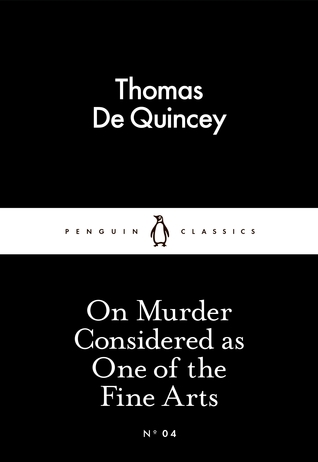
On Murder Considered as One of the Fine Arts by Thomas De Quincey

24874332

About the author

Thomas_de_Quincey's_Portrait

Thomas De Quincey was born on the 15th August 1785 and died on the 8th December 1859. He was an English essayist best known for Confessions of an English Opium-Eater.

Blurb

The provocative early-nineteenth-century essayist casts a blackly comic eye over the aesthetics of murder through the ages.

Review

So on to the fourth Penguin Little Black Classics book and this one really took me out of my comfort zone. I picked this book up thinking normally I would never dream of reading a book about murder being a fine art and to be honest after this I do not think I will read another book about murder being an art form.

I did struggle a great deal with this book and I really did not see the comic side in it that is mentioned in the blurb. I found it very hard to get into and very disturbing that people seem to enjoy studying murder. I also did not like the fact that murder was referred to as an art form. However it wasn’t all bad, I did find certain little stories inside it interesting, for instance the story about Descartes was very interesting.

I think it was a disturbing essay and it made me wonder what type of mind Quincey has to come up with this essay. However the essay was an eye opener about things that were happening in that point of history. However I didn’t really enjoy the book and wouldn’t read it again. This is why sadly I have only given the book 1 Dragon out of 5.

To purchase this book from Waterstones please click here.

Lady Book Dragon.

ZgghdPq7QriVnWGm%gye1Q

The Saga of Gunnlaug Serpent-tongue by Anon (Review)

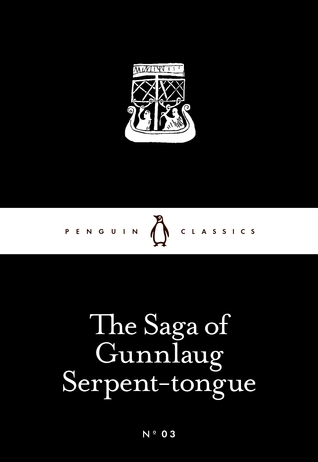
The Saga of Gunnlaug Serpent-tongue

24874331

About the author

The author is sadly anonymous but this is a well known Icelandic saga composed at the end of the 13th century.

Blurb

Ranging across Scandinavia, England and Ireland, a Viking-age epic of two poets in doomed pursuit of Helga the Fair

Review

This is the third book of the Penguin Little Black Classics and a quick little read of just 52 pages. The book contains 25 verses of skaldic poetry which are scattered through the story.

This book is essentially a love story, where two poets are in pursuit of Helga the Fair, both travel around earning glory and renown hoping to make themselves worthy of Helga’s hand in marriage.

I enjoyed this book to begin with and found the verses of poetry enjoyable, however as the story went on I found the poetry began to get on my nerves and broke up the flow of the story. I must admit I started to skim read it as I could not bare it any longer, the story was still really good though. The thing I found a struggle to get used to in the beginning was the big lists of names, but once I got used to the style this was ok. A lot of store is held in one’s ancestors and family in this book so great lists of names are often given, even if those characters are not featured in the story.

I also enjoyed how the characters travelled around Scandinavia, England and Ireland and the accompanying adventures. It was interesting learning about the kings and rulers of that time and what they were like. The other element I enjoyed was how Christianity moved across the countries and the old ways were forgotten. This was considered a really good thing in the book but I wonder whether everyone was so willing to drop the old ways and take on the new faith. In my opinion I think this element is seen through rose tinted glasses by the author.

“All the men who have been mentioned were living at the same time, and it was about this time that the best thing ever to have happened in Iceland occurred: the whole country became Christian and the entire population abandoned the old faith.”

This is an excellent little book, which will not take long to read and was a good introduction for me to Icelandic sagas. I enjoyed reading the book but because the poetry got on my nerves I only give this book 3 Dragons out of 5.

To purchase this book please click here

Lady Book Dragon

Jk5Do+utQu2UpqqTwRKS+A

Dr Jekyll and Mr Hyde by Robert Louis Stevenson (Review)

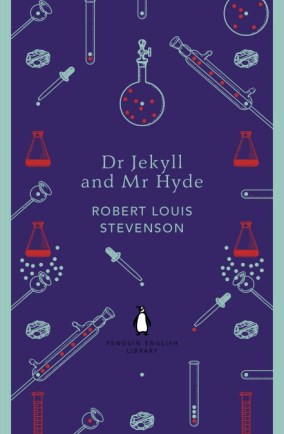
Dr Jekyll and Mr Hyde by Robert Louis Stevenson

image

About the author

220px-Robert_Louis_Stevenson_by_Henry_Walter_Barnett_bw

Robert Louis Stevenson was born in Edinburgh in 1850. He studied law at Edinburgh University. Stevenson was against the Presbyterianism of both Edinburgh’s professional classes and his devout parents, but the influence of Calvinism started his fascination with evil. After much travelling Stevenson eventually settled in Samoa with his wife, he passed away at the age of 44.

Blurb

Published as ‘shilling shocker’ in 1886, Robert Louis Stevenson’s dark psychological fantasy gave birth to the popular idea of the split personality. Set in a hellish, fog-bound London, the story of outwardly respectable Dr Jekyll, who unleashes his deepest cruelties and most murderous instincts when he transformed into sinister Edward Hyde, is a Gothic masterpiece and a chilling exploration of humanity’s basest capacity for evil.

This edition also includes Stevenson’s sinister story ‘The Bottle Imp’.

Review

This is another book I am ashamed to say I have never read and just recently I bought a lovely little edition from Waterstones and it has been sat on my TBR pile ever since. I decided it would be a good book to discover Robert Louis Stevenson’s work as I have never read any of his work before.

The first and main story is Dr Jekyll and Mr Hyde and I went into it with high hopes, however it quickly started to disappoint. Mr Utterson the lawyer and good friend of Dr Jekyll is a perfect gentleman and shows the reader that you would be blessed to consider him your friend. Mr Utterson in fact was my favourite character and he was probably the only reason I kept reading. Mr Hyde was also a good character, he was bad to the bone and showed a man with no morals to guide him or conscience, he was happy with his actions, showed no remorse and was dangerous to all around him.

Dr Jekyll is the character which I disliked greatly! He was weak and pathetic he had bad desires within him and a perverted mind that lay hidden because of his status in society and his title. We have no idea what horrors he performed in his past but they are hinted at, now due to getting older the desires are still there but he can not act upon them without losing everything or facing the gallows. Then Mr Hyde comes along, Mr Hyde is Jekyll’s answer to everything, Hyde does all the horrors and faces the gallows and Jekyll remains the good Dr. In my opinion Jekyll is evil, he just does not show it.

Jekyll tries to reform himself but this soon fails and Hyde starts to take over. Hyde was always going to take over because Jekyll is weak but also enjoys what Hyde does, if he was truly horrified and repulsed by Hyde’s actions he would have beaten Hyde and got his life back. Jekyll did not deserve the life he had or the dedicated friends like Mr Utterson in my opinion because he was as guilty as Mr Hyde.

This story annoyed me greatly because Dr Jekyll is shown in a light where the reader should feel sorry for him but I disagree with that. Dr Jekyll was weak and evil and in my opinion worse than Mr Hyde because he had the power to stop Hyde but did not. This story on its own would have only got 2 Dragons from me.

The second story in this book is The Bottle Imp and that was my favourite out of the two. This story is about a magical imp that lives in a bottle and can grant you any wishes, however it comes with conditions that could leave the owner going to hell.

The story contains many topics greed, love, hopelessness, despair, faith, courage and much more. I really enjoyed how Stevenson came up with the story and the morals behind it. Keawe is not a greedy man he does not ask for millions off the imp he asks for enough for his dream house that he can live in for the rest of his life and enjoy it. Kokua is the woman that Keawe falls in love with and risks everything for and she in turn risks everything for him. Their love is so strong they will do anything for each other. Others in this story do not show such selflessness and greed is the dominant trait in their characters. These two people are not greedy they just want to live happily together for the rest of their lives, but can they?

A real love story that was beautiful to read and not too long. I gave this one 4 out of 5 Dragons, so overall balancing the results I gave the book 3 out of 5 Dragons.

Lady Book Dragon

nfKQmLblR5OSoy++qWyUYA

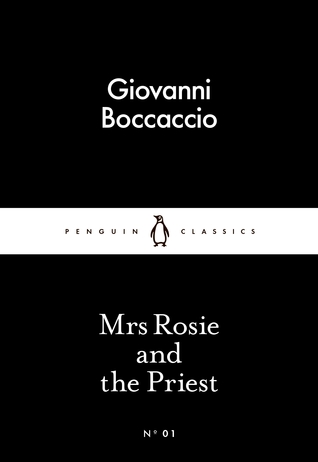
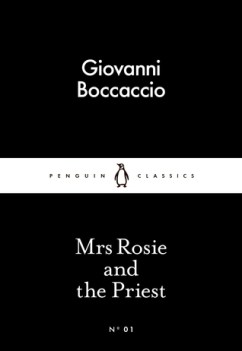
Mrs Rosie and the Priest by Giovanni Boccaccio (Review)

Mrs Rosie and the Priest by Giovanni Boccaccio
24874328

About the author

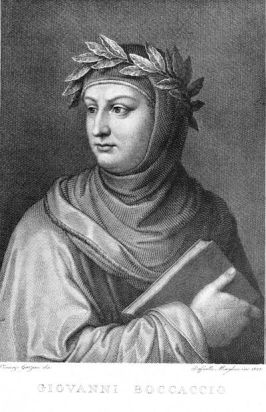
400px-boccaccio_by_morghen

Giovanni Boccaccio was born on the 16th June 1313 in the Republic of Florence and died in 1375. He was an Italian writer, poet and an important Renaissance humanist. Boccaccio wrote his imaginative literature mostly in Italian vernacular, as well as other works in Latin. He was unusual for medieval writers because he did not follow the formulaic models for character and plot.

Blurb

Bawdy tales of pimps, cuckolds, lovers and clever women from the fourteenth-century Florentine masterpiece The Decameron.

Review

When the Penguin Little Black Classics first came out I slowly started buying them and reading them, however moving house and forgetting which box they were all kept in did not help. I just recently found them all and have started to read them from the beginning with the hope of this time reading them all, so here is my first review.

I have already read this book once and I loved it, reading it for a second time I loved it even more. I forgot just how amusing medieval literature can be. I am going to review each of the four stories individually.

Andreuccio’s da Perugia’s Neapolitan adventures

This story is about a young man called Andreuccio who is the son of a horse dealer, he hears that horses are trading well in Naples and so takes a lot of money to Naples to trade horses and make more money. However things do not go as planned.

Poor Andreuccio is not the brightest of men and falls victim to fraud. Then he has a load of other adventures after the fraud. I found this story highly amusing and to be honest felt no sympathy for Andreuccio as really he should have known better. The part I particularly enjoyed was where he got covered in poo and could be smelt everywhere, if that does not teach him a lesson to be more vigilant than I do not know what will.

A very funny read and nice and short.

Ricciardo da Chimica loses his wife

Ricciardo is a judge who has more brain than muscle and thinks his way of life would also please a wife. His mistake is the type of wife he chooses, he goes for a very beautiful, young wife who will be expecting more than Ricciardo can provide in the bedroom department and life in general. Bartolommea is the unfortunate wife of Ricciardo but then she gets a better offer.

Another amusing read, now I know I should be on the side of Ricciardo but to be honest I felt sorry for Bartolommea, she ended up married to a much older man who makes any excuse possible to avoid physical contact with her. In my opinion this story has the moral of do not bite off more than you can chew and not be greedy, otherwise you will get your comeuppance.

Mrs Rosie and the Priest

Well what a naughty priest! This is my favourite story in the book because I can not help but smile about this naughty little priest. I have this image of a short dumpy priest wearing a cloak, winking at women. I do feel sorry for Mrs Rosie as she was very wronged by the priest and could do nothing about it.

A brilliant little story, that made me giggle.

Patient Griselda

This is my least favourite story of the book. I can not believe that one husband can be so cruel to his wife and she does nothing but patiently take it. It made me angry to think a woman would stand so much, I know times were different then but still, how did she not run away.

Poor Griselda is tested to the limits by her husband to see if she is a good wife, it is mainly for him to prove to his friends that he has chosen, created and tested the best wife like he said he would.

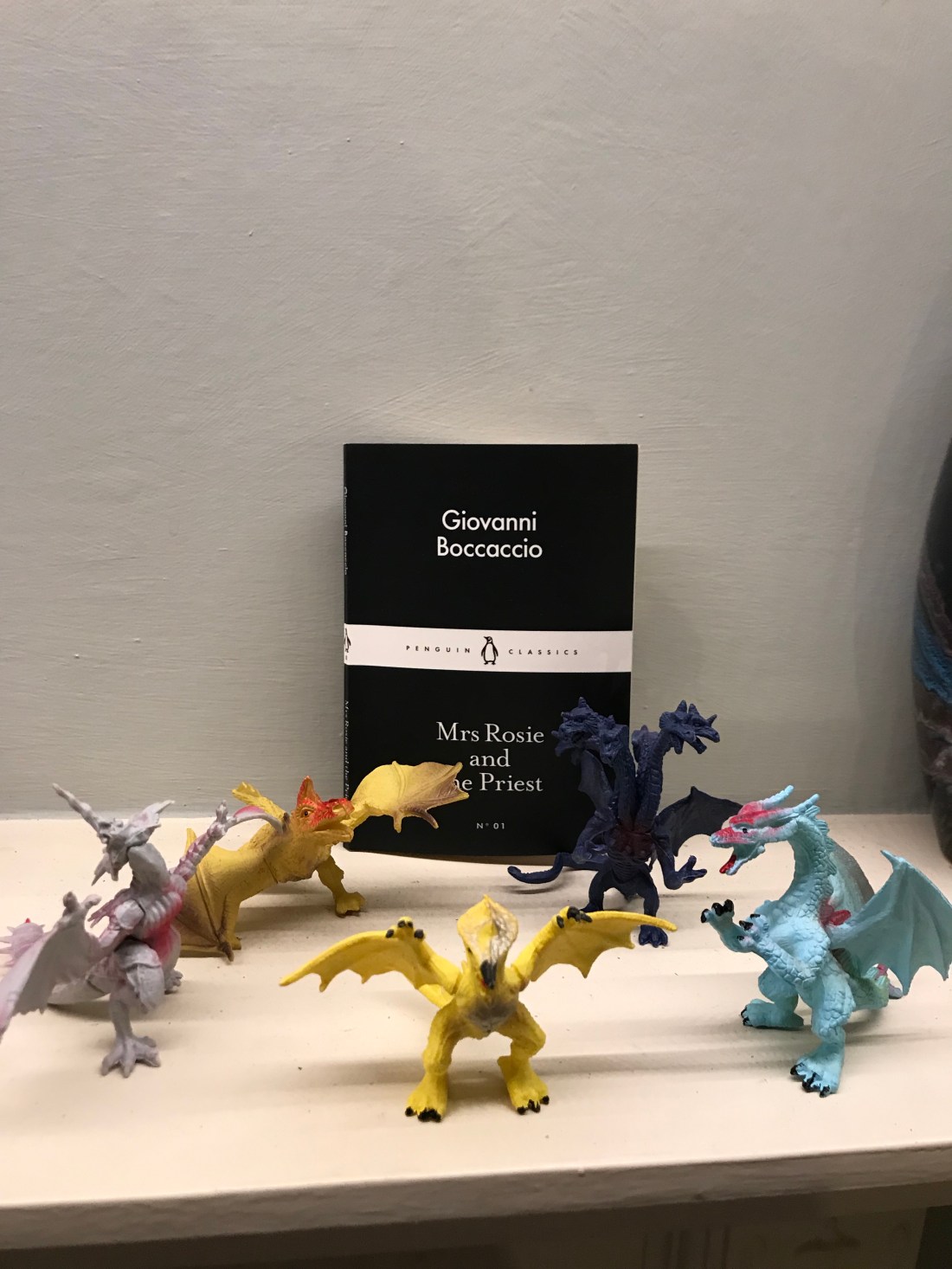
I gave the whole book 5 out of 5 Dragons because I enjoyed it so much and desperately want to read the whole of The Decameron. Even though I was not keen on the last story the other three I loved so much I still give the book full marks. I think it is a fantastic start to the start of the Penguin Little Black Classics and I can not wait to read them and see what I discover.

Lady Book Dragon.
0ztj682wscs5w6dpeb9swg

The Nutcracker by E. T. A. Hoffmann (Review)

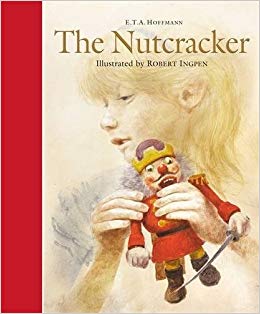
The Nutcracker by E. T. A. Hoffmann, illustrated by Robert Ingpen, translated by Anthea Bell

51os0TZO4+L._SX258_BO1,204,203,200_

About the author

220px-eta_hoffmann_2

Ernst Theodor Amadeus Hoffmann was born in 1776 in Konigsbarg, Prussia (which is now Kaliningrad, Russia). His educational background was law, but his real love was music. As a young man he moved to Germany hoping to begin a musical career, he went on to become a composer, director and conductor. As a way to help his income he took up writing in his thirties. He wrote four novels and approximately fifty stories and novellas and was possibly one of the most influential writers of his time. He passed away in 1822.

About the illustrator

newrobertingpen

Robert Ingpen was born in 1936 in Geelong, Australia. He studied illustration art and book design at The Royal Melbourne Institute of Technology. In 1986 he was awarded the Hans Christian Anderson Medal for his contributions to children’s literature and he has been honoured with Membership of the Order of Australia.

About the translator

merlin_145529961_2cf09403-8b2b-438d-adcb-a2cd173e5938-articlelarge

Anthea Bell was born in 1936 and was an English translator of literary works, her speciality was children’s literature. She translated French, German and Danish into English. She is best known for translating the Astrix comics into English. She past away on the 18th October 2018.

Blurb

The Nutcracker is well-loved by many, and is perhaps best known as the inspiration for Tchaikovsky’s famous ballet, performed as a favourite Christmas spectacle the world over. The ballet was based on a French retelling of the story, and Hoffmann’s German original is rarely translated in its entirety. This version includes the familiar tale of the gentle young girl and her love for the enchanted Nutcracker – a Christmas gift from her enigmatic Godfather Drosselmeier – who leads the toy soldiers in a dramatic battle against the sinister Mouse King, and whisks her away to the Kingdom of Toys. But it also retains the original ‘story within the story’, told to Marie by Drosselmeier when she is ill in bed: The Tale of the Hard Nut, about the cursed Princess Pirlipat, which explains the background of how the poor Nutcracker came to be.

Review

I do love reading Christmas stories on the run up to Christmas as amongst the chaos of preparing for Christmas they provide some calm. Very sorry this review is rather late. I actually forgot to do this review with the chaos of Christmas and New Year and it was only when I started sorting and tidying up books that I realised I had not written the review.

Anyway back to The Nutcracker by E.T.A Hoffmann and translated by Anthea Bell with the wonderful illustrations by Robert Ingpen. I love the story of the Nutcracker and have previously read the translated versions by Alexander Dumas and Joachim Neugroschel. However I found Dumas’ translation very difficult to follow as it lacked fluency and did not have the story within a story. I believe the ballet is based on Dumas’ translation. Bell’s translation however flows beautifully and made the book a joy to read, including The Tale of the Hard Nut also helps the story make sense and helps the reader understand how the Nutcracker came to be.

The Nutcracker is a wonderful fairytale story for all ages young and old with some very subtle morals hidden in there. I loved Marie’s young innocence and Godfather Drosselmeir’s kindness with a hidden layer of something sinister. Fritz, Marie’s brother however is a little trying for me and is clearly just a spoilt child, who probably due to being the only son has been allowed to get away with a lot more than his older and younger sisters. Luise the older sister I feel for, as she is not mentioned much and her character is not greatly expanded and she seems to be rather ignored by her siblings and parents.

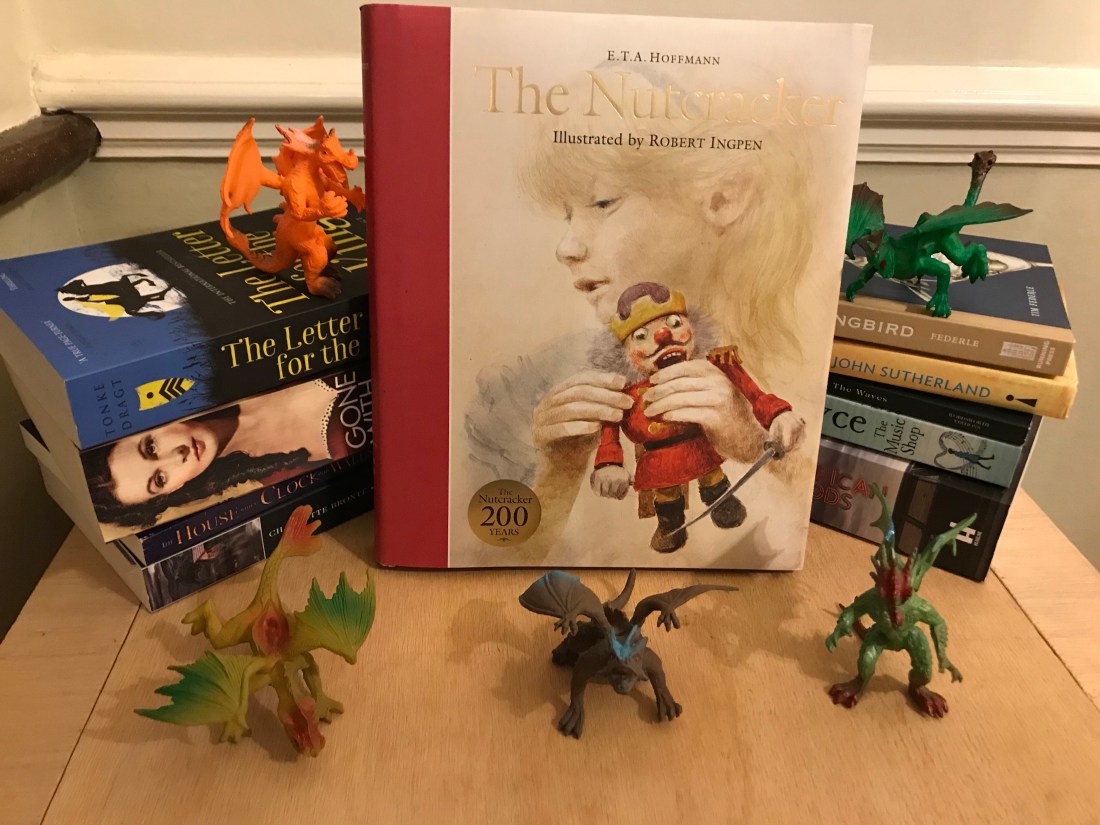
The beautiful illustrations in the book are stunning and really aid your imagination in visualising the story. And of course the main lesson that you learn from Marie at the end is a lovely ending to the story. It really is a timeless story that can not help bring a smile to your face and make you look forward to Christmas.

I highly recommend this book and translation and look forward to reading it again on a future Christmas. I have given this book a very fiery 5 Dragons out of 5 Dragons.

Lady Book Dragon.
fhgp1jesttgjoas13ufhja

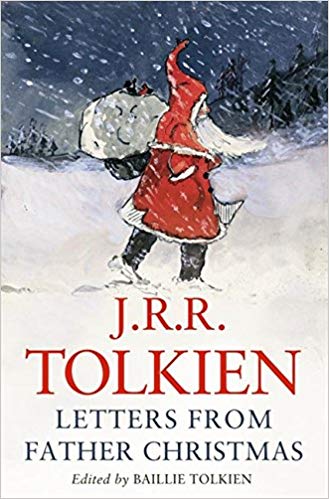
Review 22: Letters from Father Christmas by J. R. R. Tolkien

Letters from Father Christmas by J. R. R. Tolkien, illustrated by J. R. R. Tolkien

51PlIDaoTDL._SX327_BO1,204,203,200_

About the author and illustrator

IMG_3689

John Ronald Reuel Tolkien was born on the 3rd January 1892 in Bloemfontein. He moved to England when he was three years old and was home schooled with his younger brother and taught by his mother. Tolkien served in the First World War and after the war he established a distinguished academic career and was recognised as one of the finest philologists in the world. He is best known as the creator of Middle Earth and the author of The Hobbit and The Lord of the Rings trilogy. He was awarded a CBE and an honorary Doctorate of Letters from Oxford University in 1972. He died on 2nd September 1973 at the age of 81.

Blurb

Every December an envelope bearing a stamp from the North Pole would arrive for J. R. R. Tolkien’s children. Inside would be a letter in a strange spidery handwriting and a beautiful colour drawing. They were from Father Christmas, telling wonderful tales of life at the North Pole.

  • How all the reindeer got loose and scattered presents all over the place.
  • How the accident-prone Polar Bear climbed the North Pole climbed the North Pole and fell through the roof of father Christmas’s house into the dining-room.
  • How he broke the Moon into four pieces and made age Man in it fall into the back garden.
  • How there were wars with the troublesome horse of goblins who lived in the caves beneath the house!

Sometimes the Polar Bear would scrawl a note, and sometimes Ilbereth the Elf would write in his elegant flowing script, adding yet more life and humour to the stories.

Review

I got this book off my best friend for my birthday as she knows I love all things Tolkien and she knew I had not got this book. I am so pleased I saved this book for Christmas as it really put me in a Festive mood and made me smile from ear to ear.

The first letter in the book is sent in 1920 to John, Tolkien’s oldest child and we meet Father Christmas, the letter is only short but there is a beautiful drawing of Father Christmas that could easily be made into a Christmas card. There is then a gap and the next letter is in 1923, then basically from then on there is a letter until 1943 when Tolkien’s children are all too old for Father Christmas.

The first letters are sent to just John and then Michael and Christopher are added and finally Priscilla, although as each child reaches a certain age and they stop writing to Father Christmas they are dropped off the letters. Although good old Father Christmas always asks after the older children and pets in the house, so they are not forgotten.

Some letters are very short if Father Christmas is busy that year and some are very long, especially if Father Christmas has a tale to tell the children. Father Christmas has a helper called Polar Bear who is in fact a Polar Bear, a very special bear who does not age and is very strong but also rather clumsy and causes poor Father Christmas a great deal of extra work. Eventually Father Christmas also gets some Elves to help him get everything ready for Christmas.

The effort Tolkien put into the letters is amazing, the handwriting is unique to Father Christmas and is shaky like a very old man is writing and the illustrations are stunning. I loved reading all the letters and I can imagine how Tolkien’s children must have been so excited when the letters arrived each year. It really is like magic, Tolkien made sure his children believed in the wonder of magic and fairytales, the things all children should believe in and let their imaginations run wild.

This edition of the book is beautiful, it has all the pictures of the original letters so we can see all the handwriting Tolkien created and opposite is a typed up version so the reader can read the text with ease. Then there are also all the illustrations in colour with the letters. The fact that the book is also printed on excellent quality shiny paper is perfect for showing off Tolkien’s work.

chu045QySa63FyrJk9F1Qw

I gave this book 4 out of 5 stars because of the magic and beauty it had but it did not get the full 5 stars because it made me sad at the end when the children were too old for letters off Father Christmas. In my opinion you are never too old for Father Christmas and believing in the magic.

Lady Book Dragon.

The Nutcracker

It’s nearly Christmas!!!

Last night I finally started The Nutcracker. I must admit I usually start this a lot earlier in December but due to being ill for a week and catching up with work and Christmas decorating, my reading has fallen a big behind but I hope I will be back on track soon.

Yesterday I had a lovely day spent with my husband and parents. It began with my husband and I performing a recital for a Christmas Tree Festival at the church my husband plays organ at. Then we came home for a quick breather, I even managed to do a bit of reading. I finished one book and read another very short book. Then we picked my parents up and went to see the new Mary Poppins film, followed by dinner out. The film was fantastic and it was wonderful to spend time with my husband and parents and not be having to rush off somewhere. It was a chance to relax, smile and share a laugh.

I have two reviews waiting to be written but I promise they will be up soon. I decided to watch Father Ted last night instead of writing reviews. Apologies but it was the first ever episode and I had never seen it before.

I hope you all have a wonderful day and are all ready for Christmas.

Lady Book Dragon.

Review 20: The Snowman by Michael Morpurgo

The Snowman (A new story inspired by the original tale by Raymond Briggs) by Michael Morpurgo and illustarted by Robin Shaw

516Ce29lajL._SX352_BO1,204,203,200_

About the author

fullsizeoutput_b49

Michael Morpurgo has written over 130 books, many of them award winning. His best known work is War Horse which has also been turned into a stage play and a film. In 2003 he was made Children’s Laureate. He set up a charity with his wife called Farms for City Children and in 1999 he was awarded an MBE for his charitable work. In 2017 he was awarded a Knighthood for his charitable work and literature.

About the illustrator

profile_robin_shaw

Robin Shaw is an award winning animator and illustrator, he is also a director of animated commercials. He has worked closely with Raymond Briggs in the past and was part of the directing team of The Snowman and the Snowdog. In 2017 he designed a series of animated sequences for Paddington 2.

Blurb

When James wakes to see snow falling one December morning, he rushes outside to make a snowman. With coal eyes, an old green hat and scarf, and a tangerine nose, the snowman is perfect. James can hardly bear to inside that evening and leave him. But in the middle of the night, he wakes and creeps out to see his snowman again- and to his amazement, the snowman comes to life…

Review

Firstly, I have a confession, I have never read The Snowman by Raymond Briggs but I have watched it on television many, many times. I have only seen The Snowman and the Snowdog once and it almost destroyed me emotionally so I have never seen it again. So when I saw this book sat on the supermarket shelf I immediately picked it up. I was a little worried as I always fear rewrites as most of the time they are never as good as the original, but then I saw it was done by Michael Morpurgo and realised I should have no fears because the man is a genius.

I was so pleased I trusted my instincts, as the story was wonderful, another triumph by Morpurgo. The story is based around James a little boy who suffers with a stammer and who is desperate to have a friend. James lives with his parents on a farm and for Christmas his grandma is staying with them at the farm. Grandma’s favourite story to read James at bedtime is The Snowman by Raymond Briggs.

During the night James’ wish is answered and it snows and so he builds a snowman, a giant of a snowman who towers above everyone wearing a green scarf and hat with a big tangerine nose. James loves this snowman and wants to spend all day with him, he is also really proud of his new friend and is desperate for his family to meet the snowman. Finally at nighttime he leaves the snowman but then in the night something magical happens, and James is not the only one to witness the magic of the snowman.

The story is very similar to the original but with a few subtle differences but this is what makes it a different tale to stand on its own. The story is full of magic and is very respectful of the original, this is just like a sequel to the original in fact. I also loved that when Morpurgo was approached to write this story he was worried and so approached Raymond Briggs who thankfully gave his blessing. The respect that Morpurgo has for Raymond Briggs’ story is humbling and comes through in his version of The Snowman.

I loved the character of James, I felt sorry for him, happy for him and he just made me smile and think aww. I also really liked Grandma, she is a Grandma who still believes in magic. I think this is a fantastic book for children and adults and a perfect read for around Christmas. The illustrations were also beautiful and really added to the story. I hope it gets turned into an animated film, as I think it would be perfect. I gave this book 5 stars out of 5 stars.

Plus I loved the extras at the end of the story, the Christmas traditions from other countries and the perfect method for making the best snowman.

Lady Book Dragon

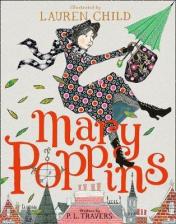
Review 17: Mary Poppins by P. L. Travers

Mary Poppins by P. L. Travers

9780008289362

About the author

Pamela Lyndon Travers was born in Australia in 1899 and her birth name was Helen Lyndon Goff. She was first published in her teenage years and also worked briefly as a Shakespearean actress. At the age of 25 she emigrated to England and changed her name to Pamela Lyndon Travers, she adopted the pen name P. L. Travers in 1933, when she started writing the Mary Poppins series. Walt Disney tried for years to get the rights for Mary Poppins to be made into a film, he even visited her several times at her house in London. Eventually Disney obtained the rights and the film Mary Poppins film was released in 1964. Travers did write many other novels, poetry and works of non-fiction but she is mainly remembered for Mary Poppins. She received an OBE in 1977 and died in 1996.

Blurb

When Mary Poppins arrives at their house on a gust of the East Wind, and slides up the banister, Jane and Michael Banks’s lives are turned magically and wonderfully upside down…

Review

Another book off my Christmas reading list finished and enjoyed. I’ve never read any of the Mary Poppins stories before but I have watched the film many times over, I used to happily sing along to all the songs and must admit I still do. I must admit I am looking forward to the new film coming out but only because one of my students stars in the film. I am not usually a fan of remakes if truth be told. When Waterstones emailed advertising this book I ordered it straight away and got a signed copy, always a thrill.

The first thing I noticed was that the story is abridged which was a little disappointing but the gorgeous illustrations more than made up for that. The story is based around the Banks family who are in need of another nanny and that is where Mary Poppins comes in.

The Banks family consists of Mr Banks the father and head of the house who is rather tight with money and goes out to work each day at the bank. Mrs Banks is the mother and is always out being very busy doing things and making sure the house is running correctly. The children are Michael and Jane the two oldest and the main characters of the story and the young twins John and Barbara who have a chapter of their own but are not otherwise really mentioned. Then there is Mrs Ellen who is the cook, Ellen the maid and Robertson Ay who is the butler but who is also a little useless.

Michael and Jane are rather naughty children and have driven away another Nanny and so Mary Poppins turns up to be the new Nanny. Mary Poppins instantly comes across as different to the children, to begin with she seems to arrive with the wind and then she sits at the bottom of the banister and slides up the staircase. The children know that Mary is different and soon begin to realise her ways and methods. The other thing I love about the children is their view of the world, a good example of this is the fact that they think their dad physically makes money at the bank. When I read this I had the image of Mr Banks sat there cutting out and minting coins and this is what I think the children also imagine their father does each day at work. I found the image adorable and it put a big smile on my face. Travers is a talented writer in this respect and fully understands the way a child’s mind works.

Mary Poppins was a bit of a surprise to me, firstly I could not believe how vain she is, she is constantly looking at her own reflection and deliberately wears clothes and hats that she knows are different and look good on her. The two children get frustrated with her when they go out as she constantly stops at windows to look at herself. In this respect I do not think she sets a good example to the children and I would not like to be around a person who did this either so I understand the children’s frustration. Mary Poppins is also very bossy which I was not happy about but she did get results from the children so I suppose it worked. I also found it odd how she called all birds sparrows, even pigeons, thankfully the children knew better.

I did not find Michael and Jane to be very naughty and thought that the previous nanny must have had a very low threshold of behaviour for the children to drive her to leave. I found the children inquisitive and just like normal happy high spirited children but maybe my opinion is a modern opinion and the time the story was written children were still meant to be seen and not heard.

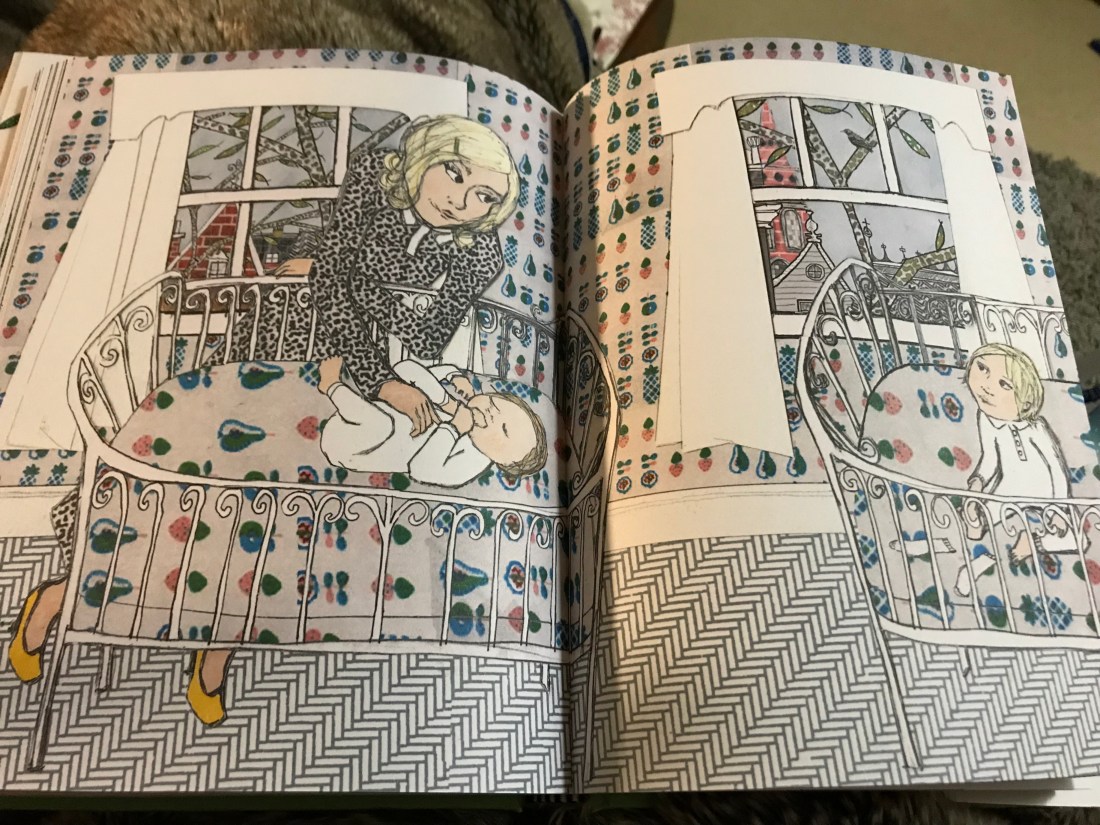
My favourite chapter was in fact the chapter based around John and Barbara and how when they reach the age of one everything changes. I found this chapter really sweet and it made me smile, it also made me a little sad but in a good way. The illustrations for this chapter also reminded me greatly of the TV series that Child created called Charlie and Lola. The other highlight of this chapter was the cheeky starling.

I did enjoy this book and I want to read the full version and maybe some of the sequels but it did disappoint in some areas, the main being Mary Poppins, she just came across as grumpy. The best characters were the children I loved their naivety and their undying love of Mary Poppins even though they can see her flaws they still love her and have also learnt how to get what they want from her. The other reason I enjoyed this book so much was the illustrations, Child is very talented and she really made the story come alive. I only gave this book 3 out 5 stars because it felt like a lot had been cut from the story and it seemed to detract from the storyline and at times felt rushed and disjointed. Also I struggled to accept Mary Poppins at times.

A beautiful book well worth the read and I will happily recommend it to children and adults. I will leave you with my favourite illustration from the book.

fullsizeoutput_b1f

Lady Book Dragon

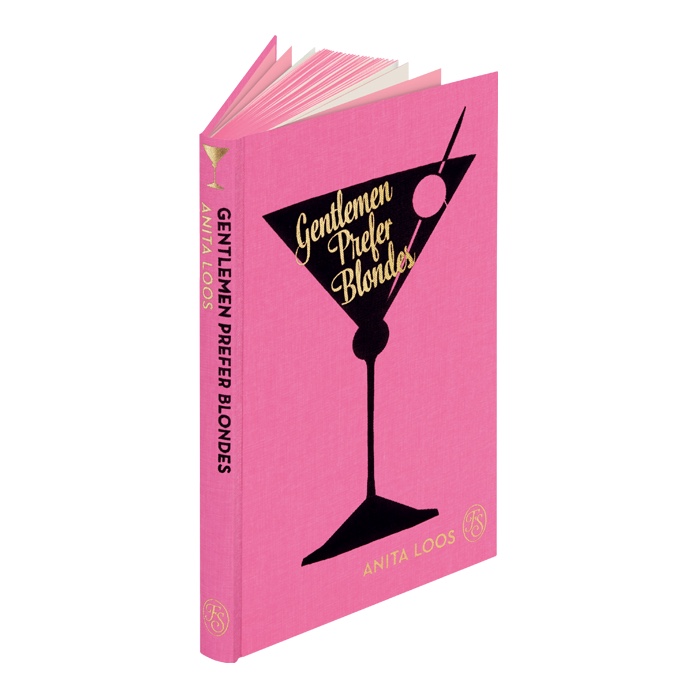
Review 13: Gentlemen Prefer Blondes by Anita Loos

Gentlemen Prefer Blondes by Anita Loos

About the author

Loos was an American screenwriter, playwright, and author born in 1889. She is best known for her novel Gentlemen Prefer Blondes. She wrote scripts from 1912 till her death in 1981 and was the first scriptwriter on the payroll of Triangle Film Corporation. She wrote a great many of the Douglas Fairbanks films and did the stage adaptation of Collette’s Gigi.

Blurb

With these deceptively simple words Lorelei Lee, a not-so-dumb blonde with a single-minded devotion to orchids, diamonds and champagne, embarks on what Edith Wharton was to call, perhaps not entirely seriously, ‘the great American novel’. Written in diary form, Lorelei Lee’s life makes for an outrageous, witty read. Capturing the carefree attitude of the glamorous jazz age, the flighty Lorelei moves from suitor to suitor, from scandalous situation to frivolous engagement, ever in search of the elusive millionaire who could provide her own happy ending.

With the help of her wise-cracking friend and protector Dorothy, Lorelei learns to spot a gentleman ‘whom you can call up at any time and ask him to go shopping and he is delighted’ at a hundred paces, dances with the Prince of Wales, and travels to Paris to enjoy ‘the Eyeful Tower’. Sharp, hilarious and undeniably endearing, Gentlemen Prefer Blondes would be immortalised by the 1953 musical starring Marilyn Monroe, and Anita Loos herself was so impressed by the success of her creation that she ended up dyeing her hair …

Review

Gosh this book was annoying! I got this book a couple of years ago free from The Folio Society because I had spent so much money with them, however I do remember it was meant to be another book but they had sold out and so they sent me this one instead. 

I struggled with this book, I know the book is written in diary form and Loos included grammatical and spelling errors but it was these errors that drove me mad. I just found them over the top and I know they were there to add to the feel of a diary but it just upset me, I wanted to correct all the errors with a big red pen. 

The diary belongs to Lorelei who is an American society girl who is moving through life going from one suitor to the other getting as many presents as she can out of them and looking for the richest man she can find to eventually marry or sue in court. Lorelei has a friend Dorothy who helps her in this quest. Lorelei starts the diary to help her become educated as she keeps saying she is an educated girl and just wants to read books and see the all education she can.

The first thing I worked out was that Lorelei is really not very educated, she pretends to be and tells the men she meets she is but in fact she is severely lacking. She is educated in one department and that department is using men to get what she wants and she can work out a rich man and poor man just by looking at them. I did like the fact that all the books she was given to read she found some excuse not to read and when she went to museums she just complained about her aching feet. This made me laugh a little bit but then it turned to despair.

I had high hopes for this book and I think I had in mind of something like The Great Gatsby but sadly I did not enjoy it like I did The Great Gatsby. Lorelei was just too annoying for me, I know it is set in a different time but she just came across as too immature and money grabbing. She just used men for her own advantage and only thought of shopping and champagne. I started to feel really sorry for all the men she took shopping and then discarded. She’s lazy and sleeps in till silly times basically because she is hungover all the time. The more I think of her character the more she annoys me and to be honest I would not like a person of her character anywhere near me. 

I am sorry that my review is so against the general grain of all the other reviews out there and I know that this book is considered a great American classic but I found it very hard to digest. I did not believe the spelling and grammatical errors were necessary and certainly deterred me from the book. Also I could not believe that such an annoying character could exist but I have found her. Until now I thought it was Jane Austen’s Emma who was the most annoying heroine in the literary world, but no she has moved to second place as Lorelei has taken her crown. I think it is most likely that it is because I prefer a strong female lead who does not depend on men to get through life and Lorelei just does not fit into this category.

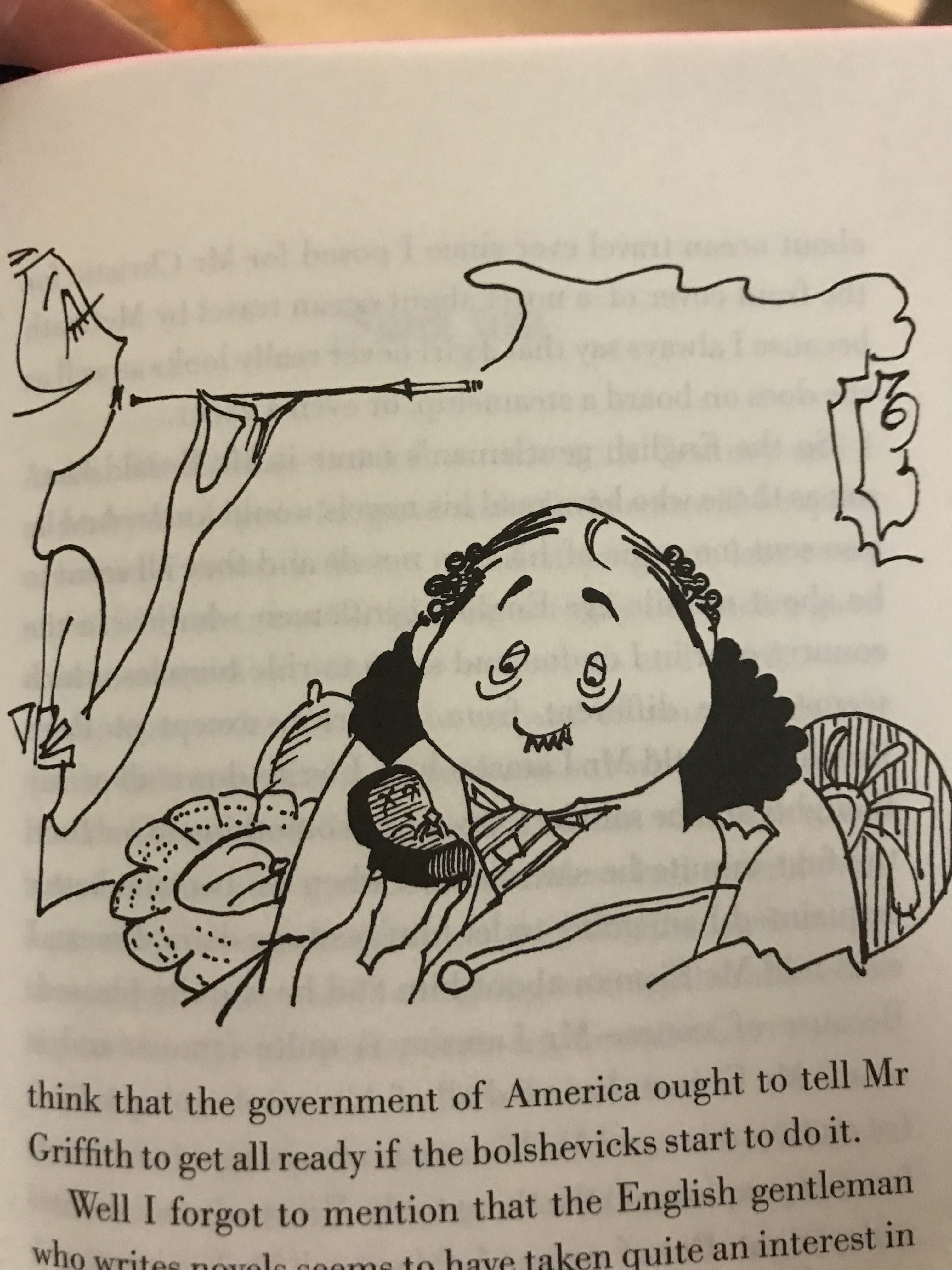
The other area I did not enjoy was the illustrations. I found they lacked finesse and I doubt I will be keen to read another book with illustrations by Ffolkes.

All in all a massive disappointment for me, thankfully it is not a long book and I got it for free from The Folio Society. Just 1 star out of 5 from me.

Lady Book Dragon.